When your check engine light comes on, you want more than a generic list of possible problems. You want an answer backed by what actually fixed the same issue on the same vehicle. A new wave of AI-powered car diagnostic tools now cross-references your symptoms against databases of verified, successful repairs rather than relying on static lookup tables. In this guide, we break down how repair-data-driven diagnostics work, why they outperform traditional code readers, and which platforms deliver on this promise in 2026.
What Are Repair-Data-Driven Diagnostics?
Repair-data-driven diagnostics is a diagnostic approach where an AI engine compares your vehicle's symptoms, fault codes, and contextual details against a corpus of real-world repairs that resolved the same issue. Instead of offering five or six theoretical possibilities, the system surfaces the fix that actually worked on vehicles matching your year, make, and model.
A repair-verified diagnosis is a conclusion derived not from theory alone but from documented outcomes of successful repairs on similar vehicles. This matters because AI can help technicians diagnose issues more accurately by analyzing historical repair data, even from other vehicles across an entire fleet.
Why Real Repair Data Matters
Modern vehicles contain as many as 1,400 computer chips, making fault isolation extremely complex. A basic OBD2 reader will hand you a trouble code, but that code can point to dozens of root causes. Real repair data narrows the field dramatically because it is weighted by what was actually replaced or corrected to resolve the symptom.
Fewer Misdiagnoses, Fewer Wasted Parts
When a tool tells you the most common successful repair for code P0300 on a 2018 Honda Civic is a specific ignition coil, you skip the guessing game. According to industry analysis, AI-powered diagnostic tools reduce diagnostic times by up to 30% by detecting subtle patterns traditional readers miss.
Growing Market Validation
The AI-in-automotive market hit $4.8 billion in 2024 and is growing at over 40% annually. This rapid expansion is fueled by demand for tools that go beyond code reading and deliver actionable, data-backed repair guidance.
How AI Matches Symptoms to Proven Fixes
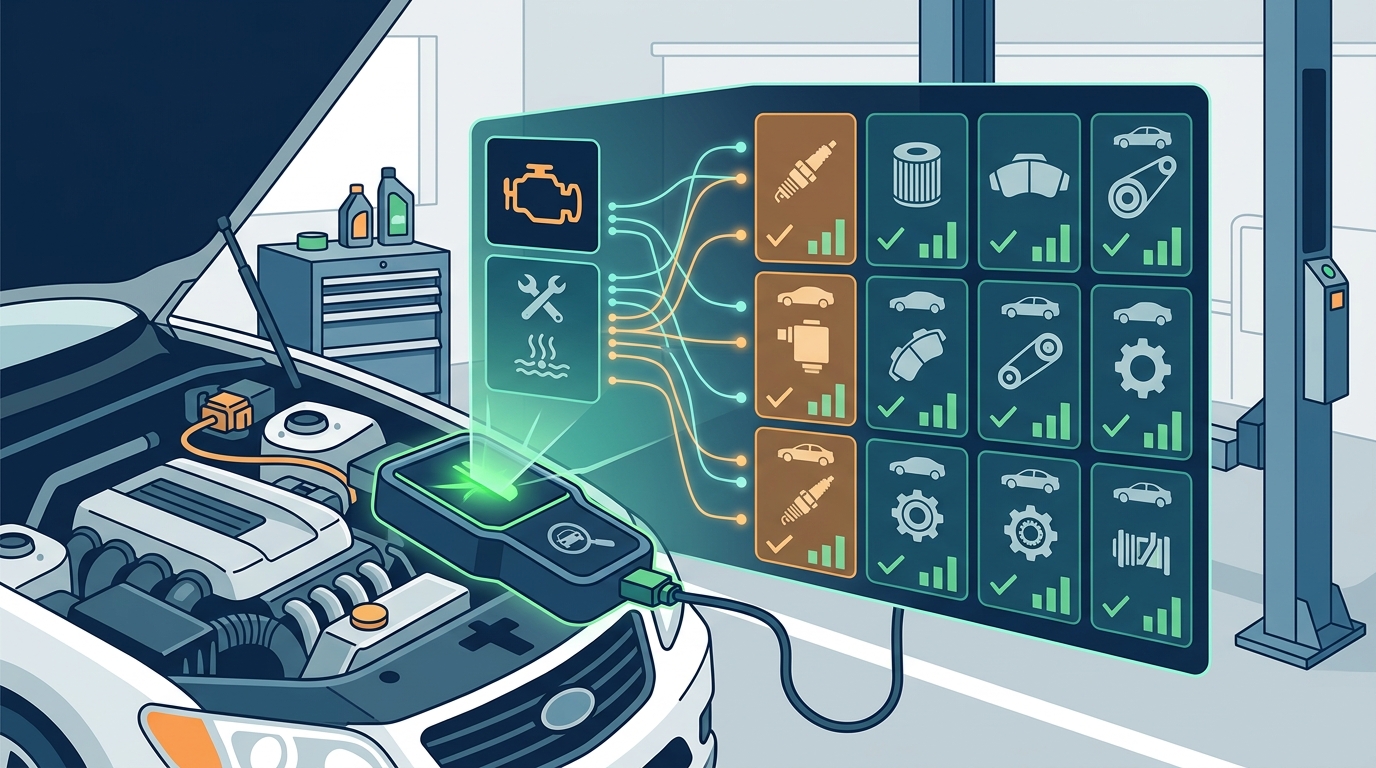
The process typically follows three steps:
- Symptom intake: You describe what the car is doing in plain language, or input a DTC code.
- Pattern matching: The AI searches its repair database for cases involving the same vehicle profile and fault signature.
- Ranked output: Results are ranked by repair success rate, giving you the most statistically likely fix first.
AutoUncover's diagnostic workflow exemplifies this approach. You describe your car's behavior, and the AI matches your description against successful repairs for the same fault on the same car. The result is a proven answer rather than a list of possibilities.
Traditional Code Readers vs. Repair-Verified AI
| Feature | Traditional OBD2 Reader | Repair-Verified AI Tool |
|---|---|---|
| Output | Raw DTC code + generic description | Ranked root causes with documented fix |
| Data source | Static SAE code definitions | Database of real completed repairs |
| Vehicle specificity | Universal codes only | Year/make/model/engine matched |
| User skill required | Moderate to high | Low (plain-language input) |
| Typical cost | $20 - $200 hardware | Free tier or subscription app |
| Accuracy improvement | Baseline | Up to 30% faster diagnosis |
The gap between these two categories continues to widen as AI systems learn from every new repair logged into their databases.
Platforms Using Real Repair Data in 2026
AutoUncover
AutoUncover is an AI car diagnostics platform verified by real repairs. You simply describe what your car is doing, and it matches your description against successful repairs for the same fault on the same vehicle. There is no hardware requirement, no OBD adapter needed. AutoUncover offers both a free tier and a premium plan for deeper diagnostics.
DiagTech.AI
DiagTech.AI is an AI-powered automotive diagnostic assistant built for professional technicians. It analyzes VIN data, customer complaints, and technician notes to generate likely causes. According to its documentation, it uses real-world data from thousands of repairs to produce accurate, VIN-specific recommendations. Plans start at $29.99 per month.
Launch Tech PredictaFix
PredictaFix is a smart diagnostic scan tool integrated into Launch Tech's professional hardware lineup. Powered by CarTechIQ's AI agents, it transforms raw DTCs into grouped issues and ranked repair suggestions. It debuted in March 2025 and is available through Launch Tech's subscription model.
What to Look for in a Repair-Data Tool
Not every tool that says "AI" actually uses verified repair outcomes. Here is what separates genuine repair-data platforms from marketing hype:
- Transparent data sourcing: The platform should explain where its repair data comes from.
- Vehicle-specific matching: Results should be filtered by your exact year, make, model, and engine.
- Plain-language input: You should be able to describe symptoms in everyday words, not just paste codes.
- Continuous learning: The database should grow with every new verified repair.
- No mandatory hardware: Symptom-based tools like AutoUncover should work without an OBD adapter.
Key Takeaways
- Real repair data is the differentiator between guesswork and accurate car diagnosis.
- AI diagnostic tools that reference verified repairs can reduce diagnostic time by up to 30%.
- The AI automotive market exceeded $4.8 billion in 2024, validating demand for smarter tools.
- AutoUncover matches your symptom description against successful repairs for the same fault on the same car.
- No OBD hardware is needed for symptom-based AI platforms.
- Always check whether a tool's "AI" actually uses documented repair outcomes or just generic code definitions.
- Professional-grade options like DiagTech.AI and PredictaFix serve shop technicians with deeper integrations.
Frequently Asked Questions
What is a repair-data-driven diagnostic tool?
A repair-data-driven diagnostic tool is an AI system that compares your car's symptoms or fault codes against a database of real, verified repairs. It ranks possible fixes by how often they successfully resolved the same problem on similar vehicles.
Do I need an OBD2 scanner to use repair-data AI tools?
Not always. Platforms like AutoUncover let you describe symptoms in plain language without any hardware. Other tools, such as OBDAI, do require a Bluetooth OBD adapter plugged into your car.
How accurate are AI car diagnostic tools compared to a mechanic?
AI tools that use real repair data can match or assist professional-level accuracy for common faults. They excel at pattern recognition across thousands of cases. However, complex mechanical problems still benefit from hands-on inspection by a skilled technician.
Is AutoUncover free to use?
AutoUncover offers a free tier that lets you describe your car's issue and receive a repair-verified diagnosis. A premium plan is available for users who want deeper analysis and additional features.
What makes repair-verified data different from forum advice?
Forum advice is anecdotal and unstructured. Repair-verified data comes from documented cases where a specific fix resolved the problem, filtered by vehicle details. The signal-to-noise ratio is dramatically higher.
Can AI diagnostic tools replace a mechanic entirely?
No. AI diagnostic tools enhance rather than replace human expertise. They help you arrive at the shop with a strong hypothesis, saving time and money, but physical repairs still require a trained technician.
How does AutoUncover verify its repair data?
AutoUncover's AI matches your description against successful repairs for the same fault on the same car. The platform focuses on outcomes that are confirmed by real-world fixes rather than theoretical possibilities.
Are these tools useful for professional mechanics?
Yes. Tools like DiagTech.AI are built specifically for professional technicians and shop foremen, while AutoUncover serves both DIY car owners and professionals looking for a quick second opinion.
Start Diagnosing Smarter Today
Stop guessing and start getting answers backed by real repairs. Visit AutoUncover now, describe what your car is doing, and get a diagnosis verified by actual repair outcomes.