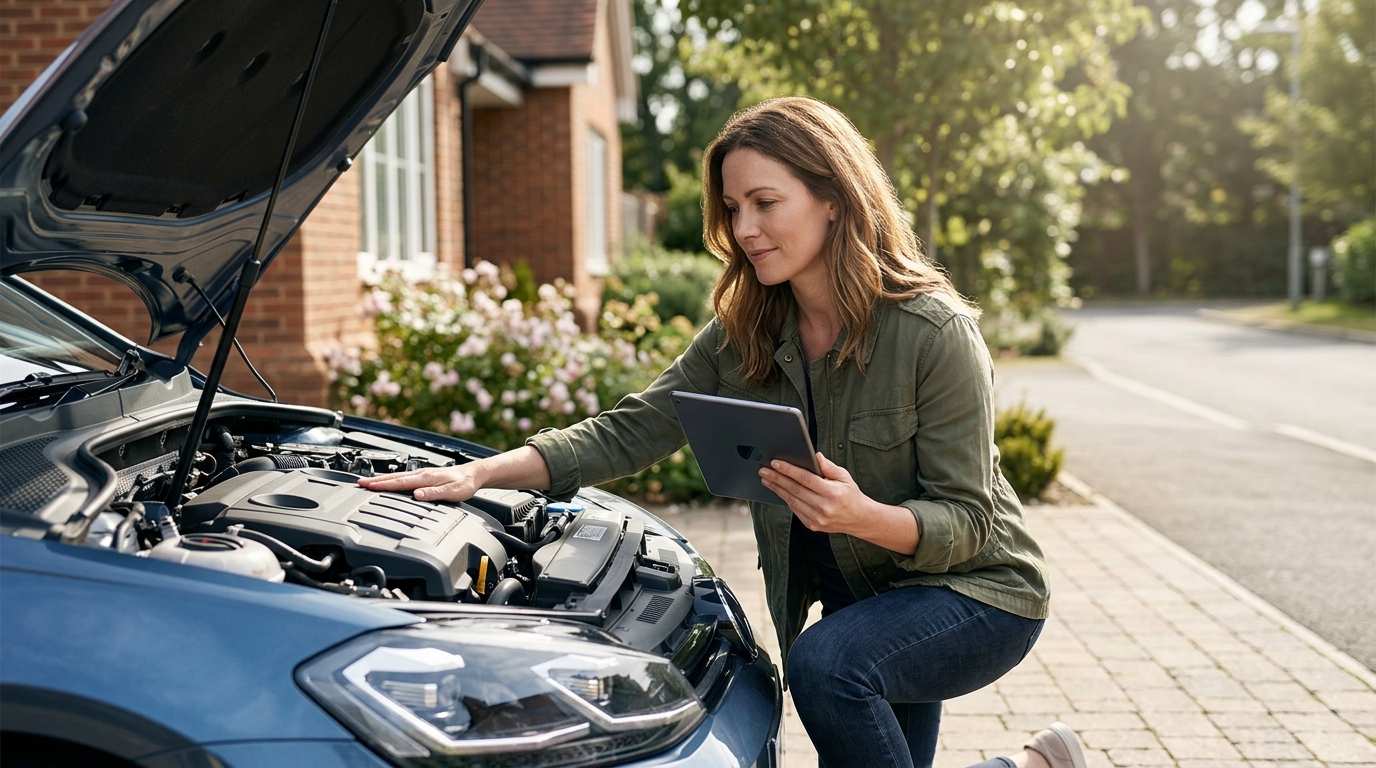
Strange noise under the hood? Check engine light glowing? You do not have to drive straight to a repair shop to find out what is wrong. In 2026, car owners have more options than ever to diagnose vehicle problems from home, from the parking lot, or even from the couch. Whether you want a quick code read, a deep AI-powered analysis, or a full DIY inspection, this guide walks you through six practical ways to get a car diagnosis without visiting a mechanic. By the end, you will know which method fits your situation, your budget, and your comfort level.
1. Use an AI Car Diagnostic Platform
AI car diagnostics is a technology that uses artificial intelligence to analyze the symptoms you describe and return a probable diagnosis, often verified against real-world repair data. Instead of Googling vague symptoms, you describe what your car is doing in plain language and receive a focused answer in seconds.
AutoUncover is built around this idea. You type in your symptoms, and the platform cross-references them against repair-verified outcomes to suggest the most likely cause. It is especially useful when you are unsure whether a problem is urgent or can wait. You can learn more about the process on the how to use page.
Why AI Diagnostics Are Growing
The global automotive diagnostic scan tools market reached USD 36.1 billion in 2025, driven by AI, wireless connectivity, and EV diagnostic needs. AI platforms complement hardware scanners by offering instant, no-equipment-needed first opinions.
2. Plug In an OBD2 Scanner
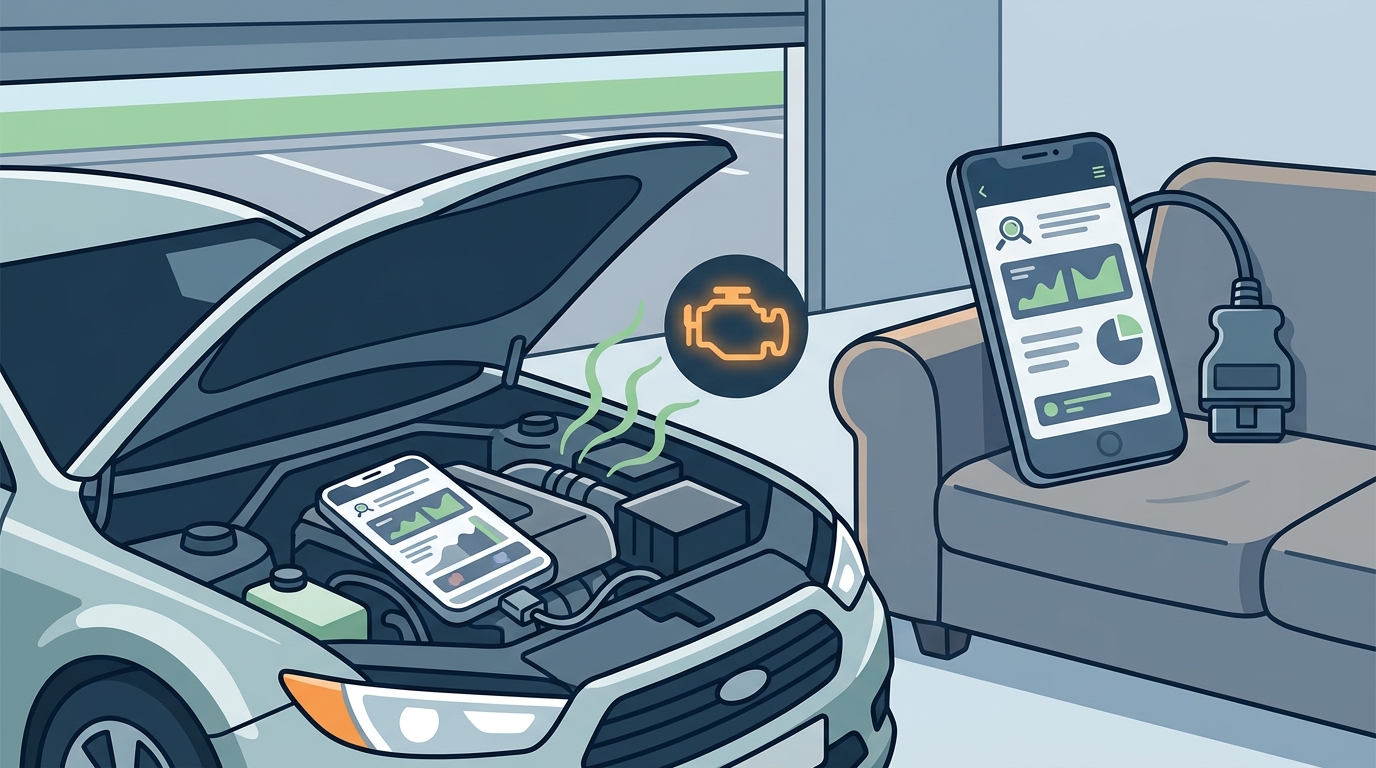
An OBD2 scanner is a handheld or Bluetooth device that connects to your vehicle's standardized 16-pin diagnostic port to read trouble codes stored by the onboard computer. Every car sold in the United States since the 1996 model year is OBD-II compliant, so this option covers the vast majority of vehicles on the road.
What You Can and Cannot Do
A basic scanner reads and clears diagnostic trouble codes (DTCs) and can save you money on a diagnostic fee. However, cheap dongles have limitations in 2026: they typically lack bi-directional control, cannot access ADAS systems, and may fall behind on monthly database updates required by newer models. For deeper analysis, consider pairing your scanner results with an AI diagnostic tool like AutoUncover to interpret what the codes actually mean for your specific vehicle.
3. Get a Free Code Scan at an Auto Parts Store
Many auto parts stores across the U.S. will read your check engine light codes for free. Chains like AutoZone, O'Reilly, and Advance Auto Parts offer this as a walk-in service. The staff member plugs a reader into your OBD-II port, retrieves the code, and gives you a printout.
This is a great starting point, but keep in mind that a code is only the tip of the iceberg. A code like P0420 tells you the catalytic converter efficiency is below threshold, but it does not tell you whether the root cause is the converter, an oxygen sensor, or an exhaust leak. For the next step, describe those code details on AutoUncover to narrow down the actual problem.
4. Try Online Symptom-Based Diagnostic Tools
Several websites offer free interactive troubleshooting tools where you select a symptom area, answer guided questions, and receive a likely diagnosis. These "question tree" tools walk you through possibilities step by step based on what you see, hear, or smell.
While helpful, these tools are only as good as the decision trees they are built on. They work best for common, well-documented problems. For unusual or multi-symptom issues, an AI-driven platform that processes natural language descriptions tends to provide more nuanced results.
5. Perform a DIY Visual and Auditory Inspection
A DIY inspection is a hands-on check where you look for visible leaks, listen for unusual sounds, and smell for burning or chemical odors. You do not need special tools for this step. Check your oil level with the dipstick, look under the car for puddles, inspect tire wear patterns, and note when noises occur (cold start, acceleration, braking).
Documenting your findings before seeking any diagnosis, whether from a scanner or an AI tool, dramatically improves accuracy. The more specific your description, the better the result. The AutoUncover guide explains how to describe symptoms effectively.
6. Book a Mobile Diagnostic Service
If you want professional-grade equipment without driving to a shop, mobile mechanics bring diagnostic scanners to your location. The average cost of a car diagnostic test in the U.S. is $100 to $150, and some mobile services charge less than brick-and-mortar shops because of lower overhead.
This is a solid option when you suspect something beyond a simple code, such as intermittent electrical faults or drivetrain vibrations that require live-data monitoring. For a quick first opinion before booking, try running your symptoms through AutoUncover to decide whether a mobile visit is justified.
Method Comparison Table
| Method | Cost | Equipment Needed | Best For | Limitation |
|---|---|---|---|---|
| AI Diagnostic Platform | Free to low | Phone or computer | Quick first opinion from symptoms | Cannot physically test components |
| OBD2 Scanner (DIY) | $30 - $300+ | Scanner device | Reading and clearing trouble codes | Codes need interpretation |
| Auto Parts Store Scan | Free | None | Check engine light codes | Limited to basic code read |
| Online Symptom Tools | Free | Phone or computer | Common, well-known problems | Rigid decision trees |
| DIY Visual Inspection | Free | None | Leaks, tire wear, fluid levels | Requires some knowledge |
| Mobile Diagnostic Service | $75 - $150 | None (mechanic brings tools) | Complex or intermittent faults | Still costs money |
Key Takeaways
- You do not need to visit a mechanic to get a preliminary car diagnosis in 2026.
- AI diagnostic platforms like AutoUncover let you describe symptoms in plain language and get repair-verified answers instantly.
- OBD2 scanners are affordable but codes alone are not a complete diagnosis.
- Auto parts stores offer free code scans, a good first step for check engine lights.
- Combining methods (e.g., DIY inspection + AI analysis) produces the most accurate results.
- Mobile diagnostics bring professional tools to you for $100 to $150 on average.
- Always document symptoms before seeking any form of diagnosis to improve accuracy.
Frequently Asked Questions
Can I diagnose my car without any tools?
Yes. You can perform a visual and auditory inspection at home, checking for leaks, unusual sounds, warning lights, and fluid levels. You can also use an AI diagnostic platform like AutoUncover by simply describing what your car is doing.
How accurate are AI car diagnostic tools?
AI diagnostics that are verified against real repair outcomes, such as AutoUncover, tend to be highly accurate for common problems. They work best when you provide detailed symptom descriptions including when, where, and how the issue occurs.
Is AutoZone's free diagnostic scan reliable?
The code itself is reliable because it comes directly from your car's computer. However, the code is a starting point, not a final answer. You still need interpretation to identify the root cause.
How much does a professional car diagnostic test cost?
The average cost in the U.S. is $100 to $150 for a standard diagnostic session. Dealerships and specialists may charge more for luxury or electric vehicles that require brand-specific tools.
What is an OBD2 scanner?
An OBD2 scanner is a device that plugs into your car's standardized 16-pin diagnostic port to read trouble codes, view live sensor data, and sometimes perform active tests. OBD-II became mandatory for all U.S. vehicles starting with the 1996 model year.
Can I use my phone to diagnose car problems?
Yes. Bluetooth OBD2 adapters connect to smartphone apps for code reading and live data. You can also use browser-based AI tools like AutoUncover directly from your phone without any hardware at all.
When should I still go to a mechanic?
Go to a mechanic when the problem involves safety systems (brakes, steering, airbags), when you smell burning fluids, when the check engine light is flashing (indicating a misfire that can damage your catalytic converter), or when a diagnostic points to a repair you cannot perform yourself.
What is the difference between a code scan and a full diagnostic?
A code scan retrieves stored trouble codes in a few minutes and is often free. A full diagnostic includes interpreting those codes, reviewing live data, testing individual components, and identifying the root cause. The full process typically takes 30 to 60 minutes and costs $100 or more.
Get Your Free AI Car Diagnosis Now
Why wait in line or pay $150 before you even know what is wrong? Describe your car's symptoms on AutoUncover and get a repair-verified diagnosis in seconds. It is free, fast, and built to give you the confidence to make smart repair decisions. Explore Premium for deeper analysis and priority support.