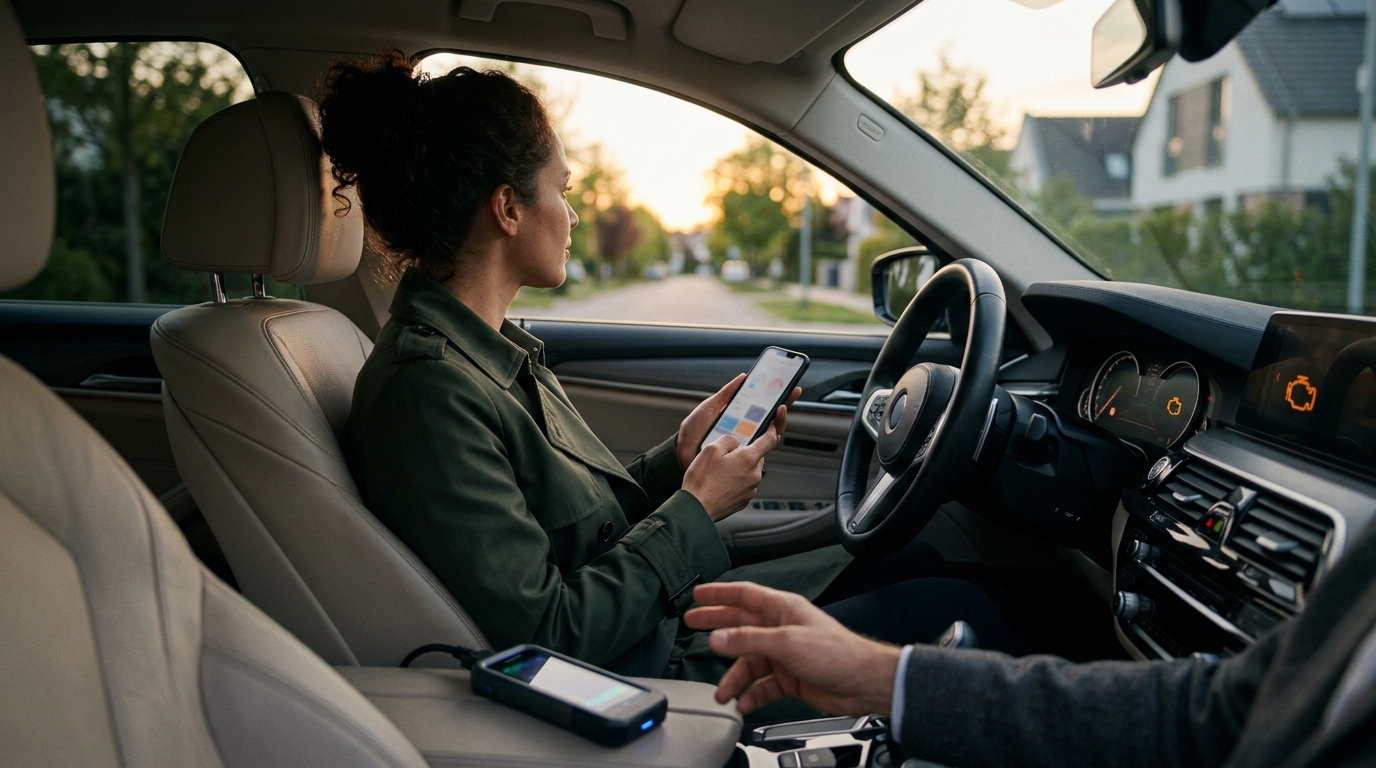
Your check engine light just came on, and now you are staring at a vague dashboard warning that tells you something is wrong without telling you what. The good news? You do not need to pay a mechanic $150 just to read a five-character code. Several tools, from handheld OBD2 scanners to AI-powered diagnostics platforms like AutoUncover, can help you figure out what is going on in minutes. In this guide, we walk you through every option available, how each one works, and which approach saves you the most time and money.
What Is the Check Engine Light?
The check engine light (CEL) is a warning indicator on your vehicle's dashboard that alerts the driver to a potential problem within the engine or emissions system. It is part of your car's onboard diagnostics (OBD-II) system, which has been federally required on all light-duty vehicles sold in the U.S. since the 1996 model year.
A solid check engine light typically signals a non-urgent issue, while a flashing light may indicate a severe problem such as an engine misfire that requires immediate attention. Either way, the light alone will not tell you what is wrong. You need a diagnostic tool to read the stored trouble code.
Types of Check Engine Light Diagnostic Tools
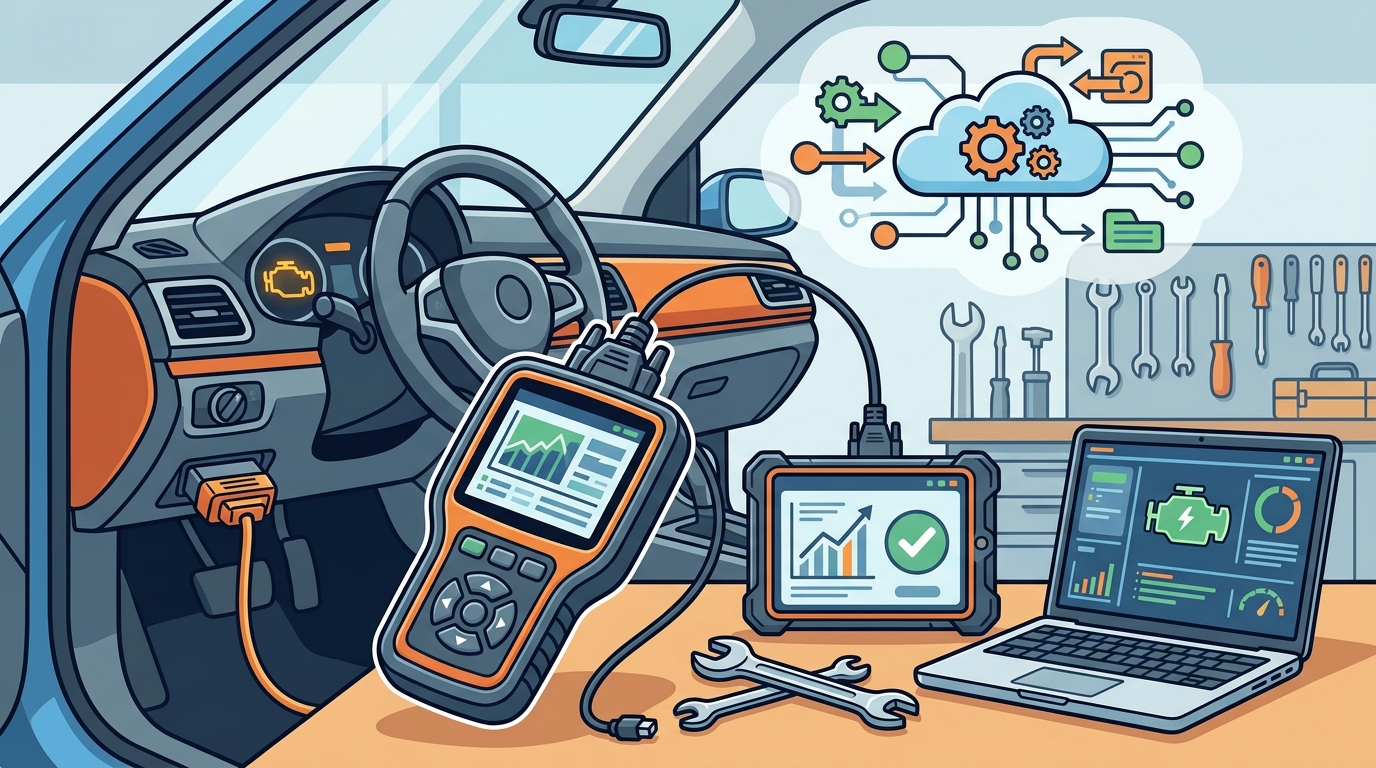
There are three main categories of tools that can help you decode your check engine light:
1. Handheld OBD2 Code Readers
An OBD2 code reader is a small device that plugs into your vehicle's diagnostic port, usually located under the dashboard on the driver's side. It reads and displays diagnostic trouble codes (DTCs) stored by the engine control unit. Budget models like the ANCEL AD310 start around $20, while advanced bidirectional scanners like the Autel MK808Z can cost several hundred dollars.
2. Bluetooth OBD2 Adapters with Smartphone Apps
Bluetooth OBD2 adapters, such as the BlueDriver Pro, connect to your phone and use an app to display codes, live data, and repair guidance. These are popular because your smartphone becomes the display, keeping costs low while delivering rich diagnostic information.
3. AI-Powered Online Diagnostic Platforms
AI car diagnostics platforms let you describe your car's symptoms in plain language and receive a probable diagnosis without any hardware at all. AutoUncover's AI diagnostic tool takes this a step further by verifying its results against real repair outcomes, giving you confidence before you visit a shop.
How OBD2 Scanners Work
Every OBD2 scanner communicates with your car through a standardized 16-pin connector. When you plug it in and turn the ignition on, the scanner queries the engine control module for any stored DTCs. Each code is a five-character alphanumeric string, such as P0420, that points to a specific system or circuit.
However, a trouble code does not always identify the root cause. A code pointing to an oxygen sensor, for example, could actually stem from a vacuum leak or exhaust issue. That is why interpreting codes correctly matters as much as reading them.
AI Car Diagnostics: The Modern Alternative
AI car diagnostics is the use of artificial intelligence to analyze vehicle symptoms and suggest probable causes without requiring physical scan tools. Instead of plugging anything in, you simply describe what your car is doing on AutoUncover, and the platform cross-references your description against thousands of verified repairs.
This approach is especially useful when you do not own a scanner, when you want a second opinion before paying for a repair, or when a DTC code leaves you more confused than informed. Because AutoUncover's diagnoses are verified by real repair data, they bridge the gap between raw trouble codes and actionable answers.
Free Diagnostic Options at Auto Parts Stores
If you prefer an in-person scan, major auto parts retailers offer free check engine light reading. AutoZone's Fix Finder service and O'Reilly Auto Parts' VeriScan tool will scan your vehicle's OBD-II port at no charge and hand you a printed report with possible causes and suggested parts.
These services are convenient, but they focus on selling parts rather than diagnosing root causes. For a more thorough understanding of what your car actually needs, pairing a free scan with an AI-powered diagnosis from AutoUncover gives you both the raw code and an intelligent interpretation.
Tool Comparison Table
| Tool Type | Cost | Hardware Needed | Skill Level | Diagnosis Depth |
|---|---|---|---|---|
| Basic OBD2 Code Reader (e.g., ANCEL AD310) | $20 - $40 | Yes | Beginner | Code only |
| Advanced OBD2 Scanner (e.g., Autel MK808Z) | $300 - $500 | Yes | Intermediate | Codes + live data + bidirectional |
| Bluetooth Adapter + App (e.g., BlueDriver Pro) | $100 - $120 | Yes (adapter) | Beginner | Codes + guided repair info |
| Free Store Scan (AutoZone / O'Reilly) | Free | No | Beginner | Code + basic report |
| AI Diagnostics (AutoUncover) | Free / Premium | No | Beginner | Symptom-based diagnosis verified by real repairs |
Key Takeaways
- Your check engine light signals a problem but never tells you exactly what is wrong on its own.
- OBD2 scanners read diagnostic trouble codes, but codes point to affected circuits, not always root causes.
- AI diagnostics platforms like AutoUncover let you describe symptoms in plain English and get repair-verified answers without any hardware.
- Free scans at AutoZone and O'Reilly are helpful starting points but are designed primarily to sell parts.
- Bluetooth adapters such as the BlueDriver Pro offer a good balance of cost and guided repair data.
- Pairing a DTC code with an AI diagnosis gives you the most complete picture before visiting a mechanic.
- A flashing check engine light is urgent and may indicate an engine misfire requiring immediate attention.
Frequently Asked Questions
What is the cheapest way to diagnose a check engine light?
The cheapest option is a free scan at an auto parts store like AutoZone or O'Reilly. For an entirely at-home option, you can use AutoUncover's free AI diagnostic tool by describing your car's symptoms online.
Can I diagnose my check engine light without an OBD2 scanner?
Yes. AI-powered platforms allow you to describe what your car is doing and receive a probable diagnosis. AutoUncover provides symptom-based diagnoses verified against real repair outcomes, no scanner required.
What does a flashing check engine light mean?
A flashing check engine light usually indicates a severe engine misfire. You should reduce speed, avoid heavy acceleration, and get the vehicle inspected as soon as possible to prevent catalytic converter or engine damage.
How much does a dealership charge to read check engine codes?
Dealerships and independent repair shops typically charge $100 to $150 for a diagnostic scan. You can avoid this fee entirely by using a personal OBD2 scanner or a free AI diagnostic tool.
Are AI car diagnostic tools accurate?
Accuracy varies by platform. AutoUncover differentiates itself by verifying AI diagnoses against real-world repair data, which helps filter out the guesswork that raw trouble codes often introduce.
What is OBD-II?
OBD-II (On-Board Diagnostics II) is a standardized vehicle diagnostic protocol required in all cars and light trucks sold in the United States since 1996. It allows scanners and diagnostic tools to communicate with your vehicle's computer systems.
Do I still need a mechanic after using a diagnostic tool?
A diagnostic tool identifies probable causes, but complex repairs still require professional expertise and specialized equipment. Use your diagnostic results to have an informed conversation with your mechanic and avoid unnecessary upsells.
Will disconnecting the battery reset my check engine light?
Disconnecting the battery can clear stored codes and turn off the light temporarily, but it does not fix the underlying issue. The light will likely return once the vehicle's computer completes its diagnostic cycle again.
Get Your Diagnosis Now
Stop guessing and start knowing. Head to AutoUncover.com, describe what your car is doing in your own words, and get an AI-powered diagnosis verified by real repairs. It takes less than a minute, costs nothing to start, and puts you in control before you spend a dollar at the shop.