
Most car diagnostic tools stop at reading a fault code and spitting out a generic list of possibilities. But a growing number of AI-powered platforms now go further by cross-referencing your symptoms against millions of verified repair outcomes. The result is a diagnosis grounded in what actually fixed the problem, not just what might be wrong. If you have ever wondered whether any tool can truly leverage real-world repair intelligence, the answer is yes, and the options are expanding fast. Below, we break down how these tools work, which ones stand out, and how AutoUncover fits into the picture.
What Is Real Repair Data and Why Does It Matter?
Real repair data is a structured record of actual vehicle symptoms, the diagnostic steps taken, and the confirmed fix that resolved the issue. Unlike generic code definitions pulled from a static database, repair data reflects outcomes from thousands of real-world jobs.
This distinction matters because modern vehicles are extraordinarily complex. Some contain as many as 1,400 computer chips, making symptom-to-cause mapping far more difficult than it was a decade ago. Tools that reference verified fixes reduce guesswork and help car owners avoid unnecessary part replacements.
How AI Diagnostic Tools Use Repair Data
AI diagnostic systems work by pulling information from a vehicle's onboard computer, sensor readings, and maintenance history, then comparing that data against millions of repair records to identify what is actually wrong. The AI in automotive market hit $4.8 billion in 2024 and is growing at over 40% annually, which signals massive investment in this approach.
Pattern Recognition at Scale
Machine learning models spot correlations that even experienced technicians might miss. By processing information at a scale humans simply cannot match, these systems rank root causes by probability rather than presenting a flat list of maybes.
Continuous Learning
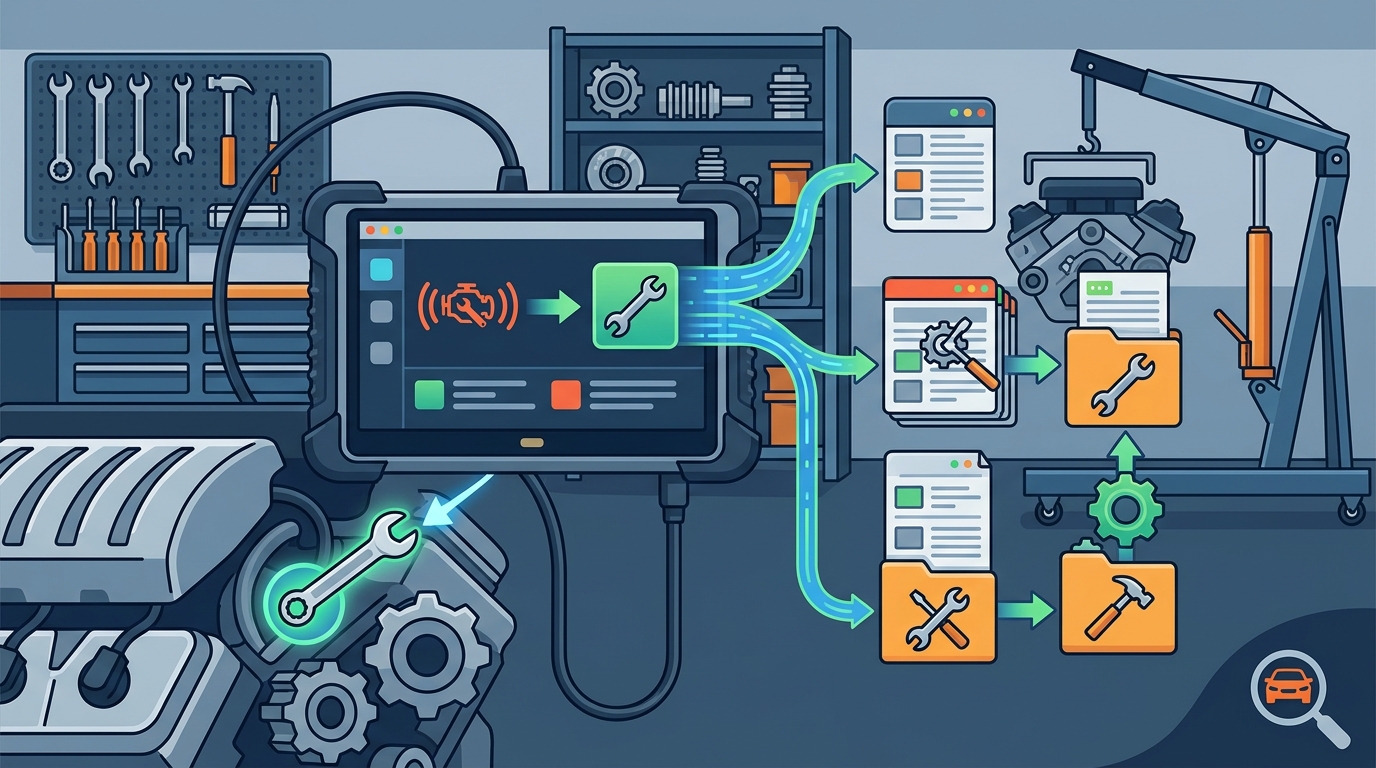
Unlike static repair manuals, AI systems continuously learn and update, adapting to emerging vehicle technologies and refining their models with every new case. Connected car platforms can share data across millions of vehicles, allowing a single car to benefit from the entire global fleet's learned solutions.
Tools That Tap Into Verified Repair Intelligence
AutoUncover
AutoUncover is an online AI car diagnostics platform verified by real repairs. You simply describe what your car is doing, and the system returns an accurate diagnosis backed by confirmed repair outcomes. No hardware dongle is required, and results are designed to help you make informed decisions about maintenance and repair.
DiagTech.AI
DiagTech.AI is an AI-powered automotive diagnostic assistant built for professional technicians. It uses real-world data from thousands of repairs to produce VIN-specific recommendations. Most users report saving 30 to 60 minutes per diagnostic job.
Launch Tech PredictaFix
PredictaFix, powered by CarTechIQ, transforms raw DTCs into grouped issues and ranked repair suggestions. It debuted in March 2025 inside select Launch Tech professional scan tools.
Feature Comparison Table
| Feature | AutoUncover | DiagTech.AI | PredictaFix |
|---|---|---|---|
| Uses real repair data | Yes, verified outcomes | Yes, thousands of cases | Yes, via CarTechIQ |
| Hardware required | No | No | Yes (scan tool) |
| Target audience | Car owners & DIYers | Professional technicians | Pro & DIY scan tool users |
| VIN-specific results | Symptom-based | Yes | Yes |
| Free tier available | Yes | Free trial | Subscription only |
| Plain-language output | Yes | Professional language | Code-to-fix mapping |
The AutoUncover Approach: Verified by Real Repairs
What sets AutoUncover apart is its verification layer. Every diagnosis is cross-checked against real repair outcomes, so you are not just getting AI speculation. You describe your symptoms in plain English, and the platform returns prioritized causes with evidence from confirmed fixes.
This makes it especially useful for everyday car owners who want trustworthy guidance before visiting a shop. Explore AutoUncover Premium for deeper diagnostic reports and priority processing.
Limitations to Keep in Mind
AI diagnostic tools enhance rather than replace human expertise. While AI can quickly identify common issues, skilled technicians remain essential for complex mechanical and electrical problems that require hands-on inspection. AI features are most useful when they explain fault codes in plain language and suggest next steps tied to real symptoms, but they do not replace confirming basics like battery voltage and connector condition.
Data quality also matters. The more detail you provide about your symptoms, the more accurate the diagnosis. Vague descriptions lead to vague results regardless of how sophisticated the AI is.
Key Takeaways
- Real repair data is a structured record of verified symptoms, diagnostics, and confirmed fixes, not generic code definitions.
- AI diagnostic tools compare your vehicle's data against millions of repair outcomes to rank root causes by probability.
- AutoUncover delivers AI diagnostics verified by real repairs with no hardware required.
- DiagTech.AI and PredictaFix also leverage real repair intelligence, primarily for professional technicians.
- The AI automotive market exceeded $4.8 billion in 2024, signaling rapid growth in repair-data-backed tools.
- AI supplements but does not replace hands-on mechanical expertise.
- Providing detailed symptom descriptions significantly improves diagnostic accuracy.
Frequently Asked Questions
What does "verified by real repairs" mean?
It means the diagnostic output is cross-referenced against outcomes from actual repair jobs where the fix was confirmed to resolve the problem. AutoUncover uses this approach to ensure recommendations reflect what truly works.
Do I need an OBD-II scanner to use a repair-data-backed tool?
Not necessarily. Platforms like AutoUncover work from plain-language symptom descriptions alone. Hardware-based tools like PredictaFix do require a compatible scan tool.
How accurate are AI car diagnostic tools?
Accuracy depends on the quality of input data and the depth of the repair database. Tools trained on large volumes of confirmed repair outcomes tend to deliver higher first-time fix rates than generic code readers.
Are these tools only for professional mechanics?
No. AutoUncover is built for everyday car owners. DiagTech.AI targets professionals, while PredictaFix serves both pro and advanced DIY users. The market offers options at every skill level.
How much do repair-data-backed diagnostic tools cost?
Prices vary widely. AutoUncover offers a free tier. DiagTech.AI charges $29.99 per month or $299.99 per year. PredictaFix is bundled with Launch Tech scan tool subscriptions.
Can AI diagnostics predict future problems?
Yes. Predictive maintenance systems analyze sensor data and maintenance records to flag problems before they cause breakdowns. Toyota's Smarter Plant Solution, for example, reduced unplanned downtime by 30% using this approach.
Will AI replace my mechanic?
No. AI diagnostic tools enhance rather than replace human expertise. The best results come from combining AI speed and pattern recognition with a technician's hands-on experience.
What is the difference between a code reader and an AI diagnostic tool?
A code reader is a device that retrieves fault codes stored in your vehicle's computer. An AI diagnostic tool is a system that interprets those codes alongside symptoms, repair history, and sensor data to identify the most likely root cause and recommended fix.
Get a Diagnosis Backed by Real Repairs
Stop guessing and start with evidence. Visit AutoUncover, describe what your car is doing, and receive a diagnosis verified by real repair outcomes. It takes minutes, requires no hardware, and could save you hundreds on unnecessary parts.