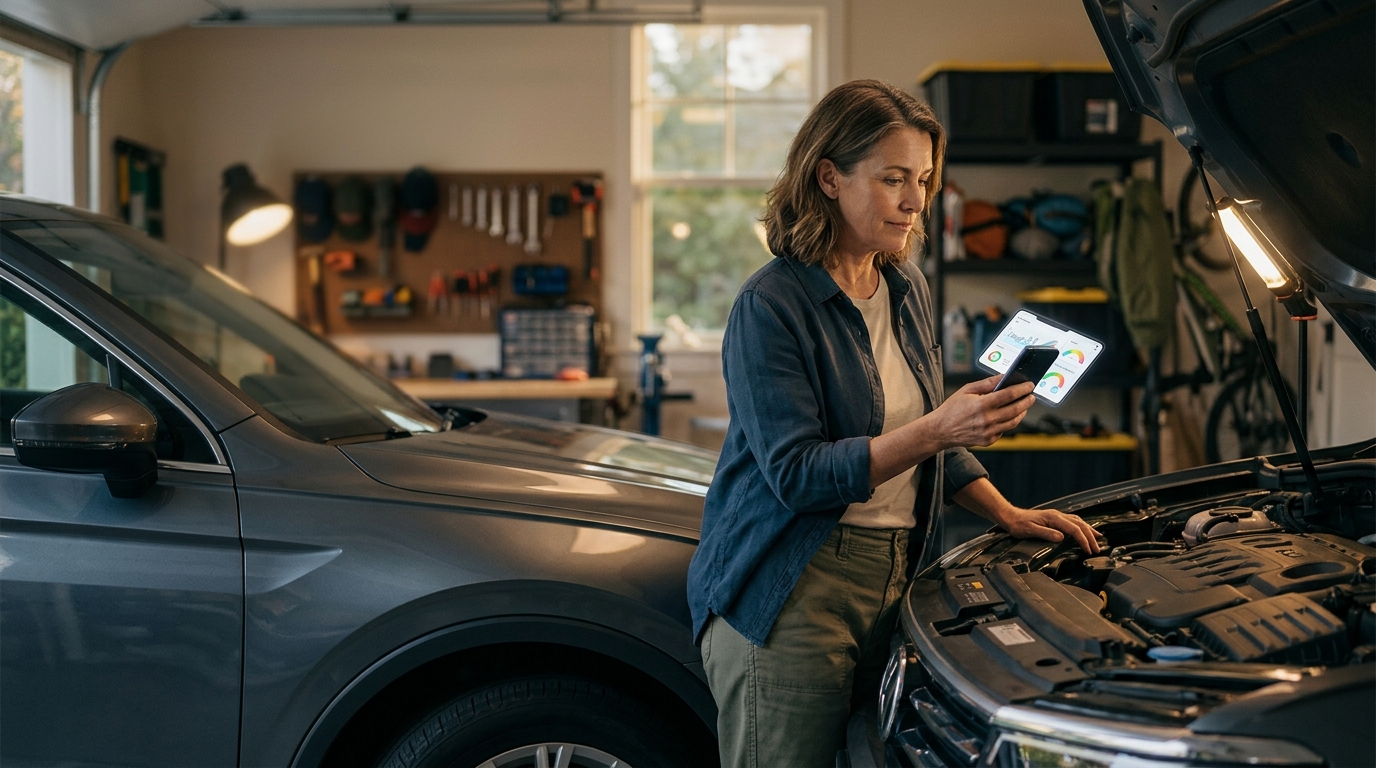
When your check engine light flickers on or your car starts making a strange noise, the first instinct is to drive straight to a mechanic. But a shop visit often means a diagnostic fee of $100 to $150, plus hours of waiting. The good news? In 2026, you have more options than ever to diagnose car problems on your own. From AI-powered platforms to handheld OBD2 scanners and free services at auto parts stores, getting answers about your vehicle no longer requires an appointment. Below, we break down six practical ways to get a car diagnosis without setting foot in a repair shop.
1. AI Car Diagnostic Platforms
An AI car diagnostic platform is an online tool that uses artificial intelligence to analyze your vehicle's symptoms and suggest probable causes. Instead of plugging in hardware, you simply describe what your car is doing, such as a rough idle, grinding brakes, or a flickering dashboard light.
AutoUncover is one such platform that lets you type in your symptoms and receive a diagnosis verified by real repair outcomes. This approach bridges the gap between guesswork and a professional inspection, giving you actionable information before you decide on next steps. You can learn more about the process on the how to use AutoUncover page.
Why AI Diagnostics Are Growing
The global automotive diagnostic scan tools market reached USD 36.1 billion in 2025, with AI and wireless connectivity driving rapid growth. AI tools are becoming a first step for car owners who want clarity before committing to a repair bill.
2. OBD2 Scanners and Code Readers
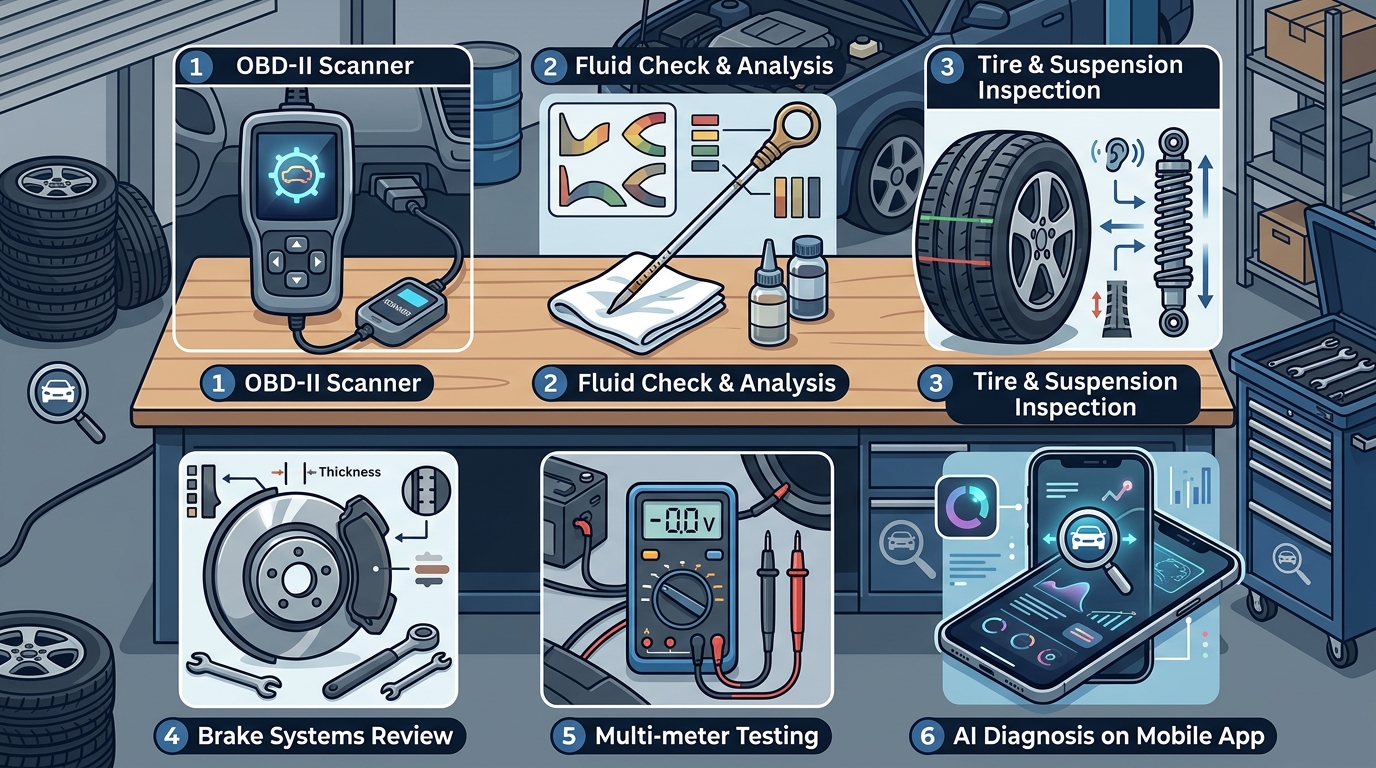
An OBD2 scanner is a handheld or Bluetooth device that plugs into your vehicle's onboard diagnostics port to read and clear trouble codes. Every gas-powered car sold in the U.S. since 1996 has an OBD-II port, making these tools universally compatible with most vehicles on the road.
Basic code readers start around $50, while professional-grade scanners with bidirectional control can exceed $5,000. For most DIYers, a mid-range Bluetooth scanner that pairs with a smartphone app offers the best balance of capability and convenience. As AutoTech WSS notes, having even a basic tool to read DTC codes can save money on a diagnostic fee.
Limitations to Know
A scan tool is only as powerful as its user. Reading a code tells you what system flagged a fault, but not necessarily the root cause. Pairing scanner results with an AI diagnostic tool like AutoUncover can help you interpret codes in plain language and understand what repairs are actually needed.
3. Free Scans at Auto Parts Stores
Many auto parts retailers offer complimentary OBD scans. AutoZone's Fix Finder service, for example, reads check engine codes and provides a printed report in under a minute. Advance Auto Parts offers a similar service at most locations.
These free scans are a great starting point, but they typically cover only basic engine codes. They will not diagnose transmission, ABS, or airbag issues. For a deeper analysis, you can take the codes you receive and enter them into AutoUncover's AI diagnostic tool to get a fuller picture of what might be wrong.
4. Your Car's Built-In Diagnostic System
A built-in diagnostic system is the onboard computer that monitors your vehicle's sensors and alerts you through dashboard warning lights. Modern vehicles can display basic diagnostic information through the infotainment screen, including tire pressure alerts, oil life percentages, and engine fault indicators.
While these systems are helpful for catching obvious issues, they rarely provide the specificity needed to make a repair decision. They are best used as an early warning that something deserves further investigation with a scanner or AI platform.
5. Mobile Diagnostic Services
If you prefer a professional opinion but do not want to visit a shop, mobile mechanics bring diagnostic equipment to your driveway. Services are available through apps and local providers in most U.S. metro areas. Expect to pay a premium for the convenience; mobile diagnostic fees can run higher than shop rates, especially in remote locations.
Before booking a mobile service, consider whether a quick symptom check on AutoUncover might answer your question instantly and for free. If the AI diagnosis points to something complex, a mobile mechanic visit may be a smart next step.
6. Cost Comparison: DIY vs. Mechanic Diagnosis
| Method | Typical Cost | Depth of Diagnosis | Convenience |
|---|---|---|---|
| AI Platform (e.g., AutoUncover) | Free to low cost | Symptom-based, verified by repairs | Instant, from any device |
| OBD2 Scanner (own device) | $50 - $300+ (one-time) | Code-level, system-specific | At home, requires hardware |
| Auto Parts Store Scan | Free | Basic engine codes only | Requires store visit |
| Mobile Mechanic | $75 - $200 | Full professional inspection | Comes to you |
| Repair Shop Visit | $100 - $150 | Comprehensive | Requires appointment and travel |
As the table shows, AI diagnostic platforms and free store scans sit at the low end of cost while still providing actionable information. For many common issues, starting with a free option can help you decide whether a paid professional diagnosis is truly necessary.
Key Takeaways
- You do not need to visit a mechanic to get an initial car diagnosis in 2026.
- AI platforms like AutoUncover let you describe symptoms and receive a diagnosis verified by real repairs.
- Basic OBD2 scanners start at around $50 and work with any 1996+ U.S. vehicle.
- Auto parts stores such as AutoZone offer free check engine light scans.
- The average mechanic diagnostic fee in the U.S. ranges from $100 to $150.
- Mobile mechanics bring diagnostics to your location but charge a premium for convenience.
- Combining multiple methods, such as an AI check plus a code scan, gives the most complete picture before committing to repairs.
Frequently Asked Questions
Can I diagnose my car without any tools?
Yes. AI diagnostic platforms like AutoUncover require no hardware. You simply describe what your car is doing, and the platform provides a diagnosis based on verified repair data.
Are free auto parts store scans accurate?
Free OBD scans at stores like AutoZone are accurate for reading engine trouble codes. However, they do not cover all vehicle systems, so follow-up investigation may be needed for complex issues.
How much does a mechanic charge for a diagnostic test?
The average cost of a car diagnostic test in the U.S. is $100 to $150, though dealerships and specialists may charge more for advanced diagnostics.
What is an OBD2 scanner?
An OBD2 scanner is a device that connects to your vehicle's standardized diagnostic port to read error codes stored by the engine management computer. It is the same technology mechanics use, available in consumer-friendly versions.
Is AI car diagnosis reliable?
AI car diagnosis is increasingly reliable, especially when backed by real-world repair verification. AutoUncover cross-references its AI outputs against actual repair outcomes, which improves accuracy over time. That said, AI diagnostics work best as a first step before physical inspection for serious issues.
Do I still need a mechanic after using an AI diagnostic tool?
For many common problems, an AI diagnosis gives you enough information to decide on a repair path. For safety-critical systems like brakes or steering, a hands-on inspection by a qualified technician is still recommended.
Can I use my smartphone as a car diagnostic tool?
Yes, when paired with a Bluetooth OBD2 adapter, your smartphone can function as a diagnostic scanner. Several apps turn your phone into a code reader with live data streaming. You can also use browser-based AI tools like AutoUncover directly from your phone without any adapter.
Get Your Free AI Car Diagnosis Now
Stop guessing and stop overpaying for answers. Visit AutoUncover.com right now, describe what your car is doing, and get a diagnosis backed by real repair data. It takes less than two minutes, and it could save you hundreds of dollars.