
That glowing amber icon on your dashboard can trigger instant anxiety. The check engine light tells you something is wrong but never tells you what. According to CarMD research, about 20% of American drivers simply ignore the check engine light altogether. The good news? You do not need to be a trained mechanic or pay $100+ at a dealership to find out what is happening under the hood. Several tools, from handheld OBD2 scanners to AI-powered diagnostic platforms like AutoUncover, can help you decode the problem quickly and affordably.
What Is the Check Engine Light?
The check engine light, also called the malfunction indicator lamp (MIL), is a dashboard warning controlled by your vehicle's onboard diagnostics system (OBD-II). When sensors detect an issue with the engine, emissions, or transmission, the car's computer stores a diagnostic trouble code (DTC) and illuminates the light.
A steady light indicates a non-urgent problem you should investigate within a day or two. A flashing light signals a severe issue, usually an active misfire, that can damage your catalytic converter if you keep driving. Either way, diagnosing the root cause quickly saves money and prevents bigger repairs.
Common Causes Behind the Light
According to repair industry data, the most common triggers are a loose gas cap (25% of cases), a failed oxygen sensor (20%), a bad catalytic converter (15%), mass airflow sensor issues (10%), and worn spark plugs or ignition coils (10%). Repair costs range from $0 for a loose gas cap to $2,500 for a catalytic converter replacement.
Industry studies show that roughly 45 million check engine lights illuminate annually in the United States. Many of these are inexpensive fixes that drivers delay unnecessarily. Getting a quick diagnosis is the first step to peace of mind.
OBD2 Scanners: The Traditional Approach
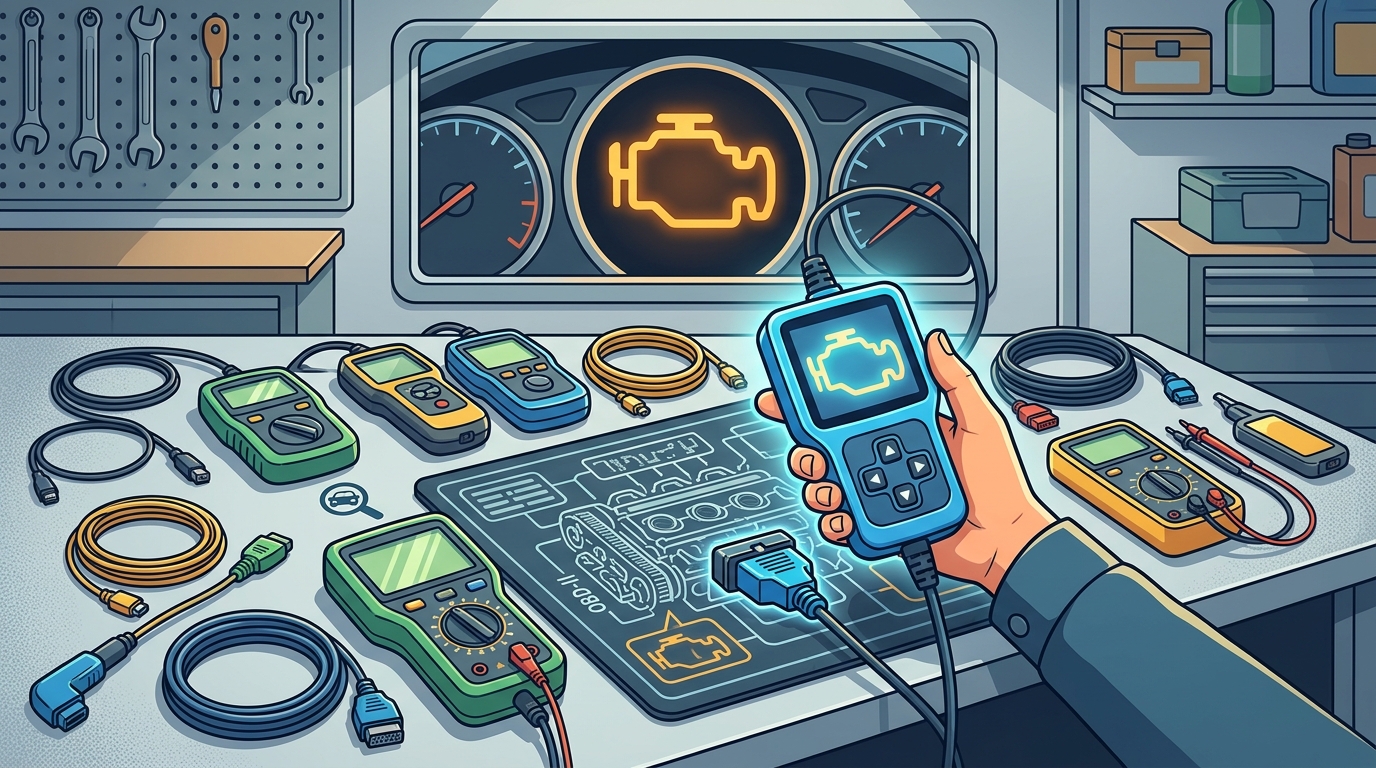
An OBD2 scanner is a handheld or Bluetooth device that plugs into your car's diagnostic port, typically located under the steering column, and reads stored trouble codes. Popular consumer models include the ANCEL AD310, BlueDriver, FIXD, and the Foxwell NT301.
Budget Options ($30 to $60)
Entry-level scanners read and clear codes, display live data, and run I/M readiness checks for emissions testing. They work with most 1996-and-newer vehicles. The Launch CR529, priced around $38, is widely regarded as one of the best value OBD-II scanners available in 2026.
Mid-Range Options ($60 to $200)
These add ABS, SRS, and transmission code reading. The Autel MaxiLink ML629 pulls ABS and SRS codes alongside engine and transmission data, putting it ahead of most sub-$100 tools.
Limitations of Hardware Scanners
A code reader gives you a five-character DTC, but interpreting what that code means for your specific vehicle requires mechanical knowledge. A P0420 code, for example, could indicate a failing catalytic converter, a bad oxygen sensor, or an exhaust leak. Without context, you are still guessing.
AI Car Diagnostics: The Smarter Alternative
AI car diagnostics is the use of artificial intelligence to interpret vehicle symptoms and diagnostic data, providing plain-language explanations of what is likely wrong. Instead of just handing you a code, AI platforms analyze your symptoms, vehicle details, and known repair patterns to deliver an actionable diagnosis.
Platforms like AutoUncover let you simply describe what your car is doing, such as "rough idle and check engine light flashing," and receive an accurate diagnosis verified against real repair outcomes. No scanner hardware required. No mechanical expertise needed.
Tool Comparison: OBD2 vs. AI Diagnostics
| Feature | OBD2 Scanner | AI Diagnostics (AutoUncover) |
|---|---|---|
| Cost | $30 to $300+ hardware | Free to start; premium plans available |
| Hardware Required | Yes (physical device) | No (use any phone or computer) |
| Output | Raw trouble codes | Plain-language diagnosis with next steps |
| Interpretation | User must research codes | AI explains cause and recommended fix |
| Verification | None | Verified by real repair data |
| Vehicle Coverage | 1996+ OBD-II vehicles | All makes and models |
| Ease of Use | Moderate (plug in, navigate menus) | Easy (type symptoms, get answer) |
Both approaches have value. An OBD2 scanner is useful to have in your glove box for clearing codes or running quick emissions checks. But if your goal is to understand why the light came on and what to do about it, AI diagnostics bridges the knowledge gap.
How AutoUncover Works
AutoUncover is an online platform specializing in AI car diagnostics verified by real repairs. You describe your vehicle's symptoms in everyday language, and the platform returns a diagnosis with likely causes, estimated repair costs, and recommended next steps.
Step-by-Step
- Visit AutoUncover's how-to-use page and enter your vehicle details.
- Describe what your car is doing: noises, warning lights, performance changes.
- Receive an AI-generated diagnosis verified against real-world repair records.
- Decide whether to DIY the fix or bring informed questions to your mechanic.
Explore AutoUncover Premium for deeper diagnostics and priority support. Knowing the likely issue before walking into a shop gives you leverage to avoid unnecessary upsells and make confident repair decisions.
Key Takeaways
- The check engine light signals a stored diagnostic trouble code but does not tell you the root cause on its own.
- About 25% of check engine lights are triggered by something as simple as a loose gas cap.
- Budget OBD2 scanners ($30 to $60) can read codes but require you to interpret them.
- AI diagnostic tools like AutoUncover translate symptoms into plain-language diagnoses verified by real repairs.
- A flashing check engine light is an emergency; pull over and do not continue driving.
- Approximately 45 million check engine lights turn on each year in the U.S., many for affordable fixes.
- Getting a quick diagnosis, whether from a scanner or an AI tool, prevents small problems from becoming expensive ones.
Frequently Asked Questions
What is the cheapest way to diagnose a check engine light?
Many auto parts stores like AutoZone and O'Reilly's offer free OBD2 scans in-store. You can also use a free AI diagnostic tool like AutoUncover to describe your symptoms and get an instant diagnosis from any device.
Can I drive with the check engine light on?
A steady check engine light usually means the issue is not immediately dangerous, but you should diagnose it within a few days. A flashing check engine light indicates a severe misfire. Pull over safely and stop driving to prevent catalytic converter damage.
What does an OBD2 scanner actually do?
An OBD2 scanner is a device that connects to your vehicle's onboard diagnostics port and reads stored trouble codes. It can also display live sensor data, run emissions readiness checks, and clear codes after repairs are made.
How is AI car diagnostics different from an OBD2 scanner?
An OBD2 scanner gives you a raw code like P0300. AI car diagnostics interprets your symptoms, vehicle history, and known repair patterns to explain the likely cause in plain language and suggest next steps, no hardware needed.
Is AutoUncover free to use?
AutoUncover offers a free diagnostic experience where you describe your car's symptoms and receive an AI-powered diagnosis. A premium tier is available for deeper analysis and priority support.
What are the most common check engine light causes?
The top five causes are a loose gas cap, a failed oxygen sensor, a bad catalytic converter, mass airflow sensor problems, and worn spark plugs or ignition coils. Together, these account for roughly 80% of all check engine light events.
Do I still need a mechanic if I use an AI diagnostic tool?
AI diagnostics help you understand the problem and its urgency before visiting a shop. For complex or safety-critical repairs, a qualified mechanic should perform the actual work. The advantage is walking in informed rather than relying solely on the shop's assessment.
Find Out What Your Check Engine Light Means Right Now
Stop guessing and start diagnosing. Visit AutoUncover.com, describe what your car is doing, and get an AI-powered diagnosis verified by real repairs. It takes less than two minutes and could save you hundreds on unnecessary shop visits.