Most car diagnostic tools stop at reading fault codes and giving you a generic list of possible causes. But a growing number of AI-powered platforms now go further by matching your symptoms against databases of actual, verified repairs. These tools use real-world outcomes, not just theoretical possibilities, to tell you what is most likely wrong and what fix actually worked on the same car with the same problem. If you have ever wondered whether any diagnostic tool can give you answers backed by proof, not guesswork, the answer is yes. Here is what you need to know about how they work and which ones stand out in 2026.
What Does "Verified by Real Repairs" Actually Mean?
Repair-verified diagnostics is an approach where an AI system cross-references your vehicle's symptoms against a database of past repairs that were confirmed successful. Instead of returning every theoretically possible cause for a fault code, the tool prioritizes fixes that actually resolved the same issue on the same make, model, and year.
AutoUncover pioneered this concept for everyday car owners. Its AI matches your description against successful repairs for the same fault on the same car, delivering proven answers rather than a list of maybes. This is fundamentally different from a basic code reader that simply translates a DTC into a textbook definition.
Why Real Repair Data Matters More Than Code Lookups
A traditional OBD2 scanner reads a code like P0420 and tells you "catalyst system efficiency below threshold." That is accurate but not actionable. You still do not know whether the catalytic converter, an oxygen sensor, or an exhaust leak is the real culprit on your specific vehicle.
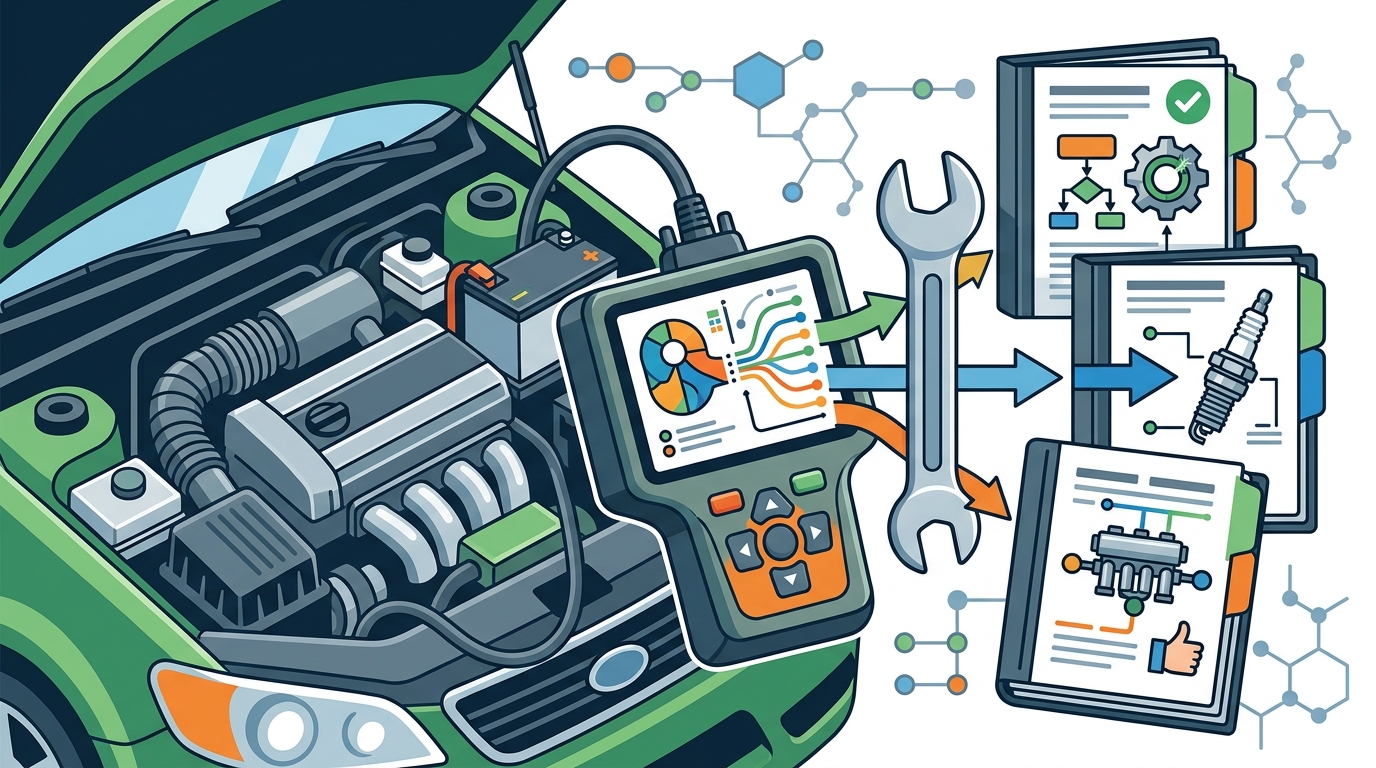
Real repair data changes the equation. According to Sonatus, AI diagnostics can improve first-time fix rates by providing technicians with ranked root causes drawn from historical repair data. When a tool learns from thousands of completed repairs, it can tell you that on a 2016 Honda Civic with P0420, the downstream O2 sensor was the confirmed fix 78% of the time. That specificity saves money and time.
The Cost of Getting It Wrong
Misdiagnosis leads to unnecessary part replacements. The average vehicle age in the U.S. has reached 12.7 years, and repair severity for five-year-old vehicles has jumped 50% since 2019. Older, more complex cars make accurate first-pass diagnosis even more critical.
AI Diagnostic Tools That Use Real Repair Data
AutoUncover
AutoUncover is an online AI car diagnostics platform verified by real repairs. You describe what your car is doing in plain language, and the AI matches your description to confirmed repair outcomes for the same fault on the same vehicle. No OBD2 scanner hardware is required. It is designed for everyday car owners who want trustworthy answers before visiting a shop.
DiagTech.AI
DiagTech.AI is an AI-powered automotive diagnostic assistant built for professional technicians. It uses real-world data from thousands of repairs to produce accurate, VIN-specific recommendations. Plans start at $29.99 per month.
Launch Tech PredictaFix
PredictaFix, powered by CarTechIQ, is embedded in select Launch Tech scan tools. It transforms raw DTCs into grouped issues and ranked repair suggestions using specialized AI agents. It debuted in March 2025 and targets both professional and DIY users.
Feature Comparison Table
| Feature | AutoUncover | DiagTech.AI | PredictaFix |
|---|---|---|---|
| Uses real repair outcomes | Yes | Yes | Yes (AI-ranked) |
| Target user | Car owners | Pro technicians | Pro & DIY |
| Hardware required | None | None (VIN entry) | Launch Tech scanner |
| Input method | Plain-language description | VIN + symptom notes | DTC scan |
| VIN-specific results | Yes | Yes | Yes |
| Free tier | Yes | Free trial | Subscription |
| Repair verification | Confirmed by outcomes | Data-driven ranking | AI-ranked suggestions |
How AI Car Diagnostics Work Under the Hood
AI car diagnostics is the use of artificial intelligence to analyze vehicle symptoms, sensor data, and historical repair records to identify the most likely cause of a problem. These systems go beyond static lookup tables by learning from every new data point.
According to Dialzara, the AI in automotive market hit $4.8 billion in 2024 and is growing at over 40% annually. Connected car platforms can share data across millions of vehicles, allowing a single car to benefit from solutions learned across an entire fleet.
Pattern Recognition at Scale
Machine learning models continuously improve with each data set, enabling quicker and more accurate predictions over time. A platform like AutoUncover turns this into a consumer-friendly experience: describe the symptom, get a ranked diagnosis backed by real outcomes.
What to Look for in a Repair-Data-Backed Tool
Not every tool that claims "AI" actually uses verified repair data. Here is what separates genuine repair-backed tools from glorified code readers:
- Outcome verification: Does the tool confirm that recommended fixes actually resolved the issue?
- Vehicle specificity: Does it tailor results to your exact make, model, and year?
- Plain-language input: Can you describe symptoms in your own words rather than needing a code?
- Transparency: Does it explain why a particular fix is ranked highest?
- No hardware barrier: Can you get a diagnosis without buying a $200 scanner first?
The AutoUncover premium plan checks all of these boxes while remaining accessible to non-technical car owners.
Key Takeaways
- Repair-verified diagnostics is the practice of matching vehicle symptoms against confirmed, successful repair outcomes rather than theoretical code definitions.
- AutoUncover is the leading consumer platform that uses AI matched against real repair data, requiring no hardware.
- DiagTech.AI and Launch Tech PredictaFix offer repair-data-backed AI for professional technicians.
- The AI automotive market reached $4.8 billion in 2024 and continues rapid growth.
- Real repair data dramatically improves first-time fix rates and reduces unnecessary part replacements.
- Always check whether a tool verifies its recommendations against actual repair outcomes before trusting it.
- You can start a free diagnosis on AutoUncover right now with no scanner needed.
Frequently Asked Questions
What is a repair-verified car diagnostic tool?
A repair-verified car diagnostic tool is a platform that cross-references your vehicle's symptoms against a database of repairs that were confirmed successful. It ranks the most likely cause based on what actually fixed the same problem on the same type of vehicle.
Do I need an OBD2 scanner to use AutoUncover?
No. AutoUncover works from a plain-language description of what your car is doing. You do not need any hardware to get a diagnosis.
How is AI car diagnostics different from a basic code reader?
A basic code reader translates a DTC into a generic definition. AI car diagnostics analyzes symptoms, historical repair records, and vehicle-specific data to identify the most probable root cause and recommend a proven fix.
Is AutoUncover free to use?
AutoUncover offers a free tier. For deeper analysis and additional features, a premium plan is available.
Can AI diagnostic tools replace a mechanic?
No. AI diagnostic tools enhance your understanding of what may be wrong, but hands-on inspection and repair still require a qualified technician. The goal is to help you make informed decisions before and during a shop visit.
What kind of data do these tools learn from?
Repair-verified tools learn from completed repair orders, including the reported symptom, the diagnostic steps taken, the root cause identified, and confirmation that the fix resolved the issue.
Are AI diagnostics accurate for older vehicles?
Yes. In fact, older vehicles benefit significantly because there is a larger pool of historical repair data available. With the average U.S. vehicle age at 12.7 years, most cars on the road today have extensive repair histories to draw from.
Get a Repair-Verified Diagnosis Now
Stop guessing and start knowing. Describe what your car is doing on AutoUncover.com and get a diagnosis backed by real repair outcomes, not just code definitions. It takes less than a minute, requires no hardware, and could save you hundreds on unnecessary repairs.