
That glowing check engine light on your dashboard can trigger instant anxiety. You know something is wrong, but what exactly? The good news is that several tools exist today that can help you figure out the problem without an expensive trip to the mechanic. From traditional OBD2 scanners to modern AI-powered diagnostic platforms like AutoUncover, car owners now have more options than ever. This guide breaks down your choices, compares costs, and shows you the fastest path to a reliable diagnosis.
What Is a Check Engine Light?
A check engine light (CEL) is a dashboard warning indicator connected to your vehicle's onboard diagnostics system. When your car's Engine Control Module (ECM) detects an issue with the engine, emissions, or related systems, it stores a Diagnostic Trouble Code (DTC) and illuminates the CEL. According to the Car Care Council, roughly 10% of all cars on U.S. roads have a check engine light on at any given time.
Ignoring this warning can lead to catalytic converter damage, reduced fuel economy, or even a failed emissions test. The key is reading the stored fault code so you can understand the root cause.
Traditional OBD2 Scanners Explained
An OBD2 scanner is a hardware device that plugs into the 16-pin diagnostic port found in most vehicles built after 1996. It reads the DTCs stored by your car's computer and displays them as alphanumeric codes like P0420 or P0300. You can explore what these codes mean on the AutoUncover fault code library.
Types of OBD2 Scanners
Basic code readers cost as little as $20 and display raw codes. Mid-range models ($50 to $150) add live data, freeze frame analysis, and I/M readiness checks. Professional-grade scanners from brands like Autel and Launch can cost $300 or more and cover ABS, SRS, and transmission modules.
Limitations of Hardware Scanners
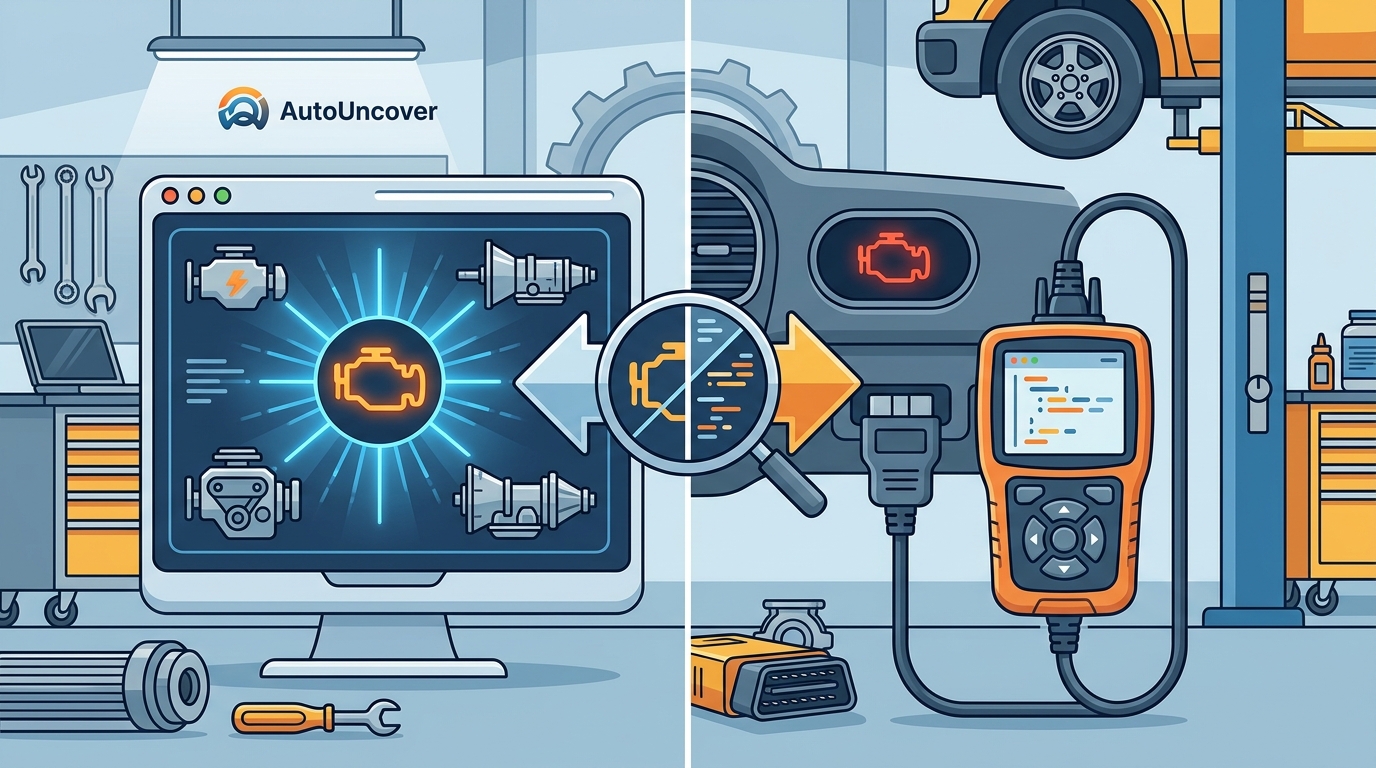
While OBD2 scanners tell you the code, they rarely tell you the fix. A code like P0171 (System Too Lean) could stem from a vacuum leak, a faulty MAF sensor, or worn fuel injectors. You still need expertise to interpret the data.
How AI Car Diagnostics Work
AI car diagnostics is a technology that uses artificial intelligence to analyze vehicle symptoms and fault codes, then recommend likely causes and repairs. Platforms like AutoUncover let you simply describe what your car is doing, and the AI returns a diagnosis verified by real repair data.
Unlike a basic scanner, AI diagnostics cross-references your symptoms against thousands of confirmed repair outcomes. This means you get not just a code, but an actionable explanation. You can learn how to use the AutoUncover platform in just a few steps.
No Hardware Required
One major advantage of AI diagnostics is that you do not need to purchase any physical device. You describe the issue online, and the platform processes your input instantly. This makes it especially useful for drivers who want a quick answer before deciding whether to visit a shop.
OBD2 Scanners vs AI Diagnostics: Side-by-Side
| Feature | Basic OBD2 Scanner | Pro OBD2 Scanner | AI Diagnostics (AutoUncover) |
|---|---|---|---|
| Cost | $20 to $50 | $150 to $500+ | Free to start; premium plans available |
| Hardware needed | Yes | Yes | No |
| Reads fault codes | Yes | Yes | Yes (via symptom input) |
| Explains likely cause | No | Limited | Yes, verified by real repairs |
| Covers all systems | Engine only | Engine, ABS, SRS, transmission | All systems via symptom analysis |
| Live data stream | No | Yes | Not applicable |
| Ease of use | Moderate | Requires training | Describe symptoms in plain language |
For most car owners who just want to understand why their check engine light came on, an AI diagnostic tool provides faster, more understandable results. For technicians who need real-time sensor data, a professional OBD2 scanner remains essential.
Common Fault Codes and What They Mean
When your check engine light turns on, the stored code gives you a starting point. Here are five of the most frequently seen codes:
- P0420 - Catalyst System Efficiency Below Threshold. Often caused by a failing catalytic converter or oxygen sensor.
- P0300 - Random/Multiple Cylinder Misfire Detected. Could indicate worn spark plugs, ignition coil issues, or fuel delivery problems.
- P0171 - System Too Lean (Bank 1). Frequently linked to vacuum leaks or a dirty MAF sensor.
- P0455 - EVAP System Large Leak Detected. A loose gas cap is the most common culprit.
- P0128 - Coolant Thermostat Below Regulating Temperature. Typically means your thermostat is stuck open.
A Diagnostic Trouble Code is a standardized alphanumeric identifier that pinpoints which vehicle system or component triggered the warning light. You can look up any code in the AutoUncover fault code database.
When to Use Each Tool
Choosing the right tool depends on your situation and skill level. Here are three practical scenarios:
Scenario 1: Quick Peace of Mind
Your check engine light just came on and you want to know if it is safe to keep driving. An AI diagnostic tool like AutoUncover gives you an instant answer based on your symptom description, without buying any equipment.
Scenario 2: DIY Repair at Home
You are comfortable under the hood and want live data to confirm a diagnosis. A mid-range OBD2 scanner with freeze frame and live data features is the right pick. After reading the code, cross-reference it on the fault code lookup page for repair context.
Scenario 3: Pre-Purchase Inspection
Buying a used car? A code reader can reveal whether the seller recently cleared codes to hide problems. As automotive experts note, if a fault persists after clearing, the check engine light will return within a few miles.
Key Takeaways
- Yes, there are tools that help you figure out your check engine light, from $20 OBD2 scanners to free AI platforms.
- An OBD2 scanner is a hardware device that reads diagnostic trouble codes from your car's computer.
- AI car diagnostics platforms like AutoUncover let you describe symptoms in plain language and receive repair-verified diagnoses.
- Basic OBD2 scanners read codes but do not explain the likely cause or repair steps.
- The most common check engine codes (P0420, P0300, P0171) each have multiple possible causes that require interpretation.
- AI diagnostics require no hardware purchase and work instantly from any device with internet access.
- For the most complete picture, combine a code reader with an AI diagnostic tool for both raw data and expert-level interpretation.
Frequently Asked Questions
What is the cheapest way to diagnose a check engine light?
The cheapest approach is to use a free AI diagnostic tool like AutoUncover, which requires no hardware. Simply describe your car's symptoms online and receive an AI-generated diagnosis backed by real repair data. If you prefer a physical device, basic OBD2 code readers start around $20.
Can I use my phone to read check engine codes?
Yes. Bluetooth OBD2 adapters (around $15 to $30) pair with smartphone apps to display codes on your phone. Alternatively, AI diagnostic platforms work directly in your mobile browser with no adapter needed.
Will the check engine light go off by itself?
Sometimes. If the issue was temporary (like a loose gas cap), the ECM may clear the code after several successful drive cycles. Persistent problems will keep the light on until the root cause is repaired.
What does it cost to have a mechanic diagnose the check engine light?
Most repair shops charge $80 to $150 for a diagnostic scan. Dealerships may charge $100 to $200. Many auto parts stores like AutoZone and O'Reilly offer free code reads, though they only provide the code without a detailed diagnosis.
Is an AI diagnostic as accurate as a professional mechanic?
AI diagnostics are highly accurate for identifying likely causes based on symptom patterns and verified repair outcomes. However, they cannot physically inspect components. For complex or safety-critical issues, always confirm with a qualified technician.
What is the difference between a code reader and a scan tool?
A code reader is a basic device that reads and clears diagnostic trouble codes. A scan tool is a more advanced device that adds live data streaming, freeze frame analysis, and often bidirectional controls for testing components.
Do all cars have an OBD2 port?
All gasoline vehicles sold in the U.S. since 1996 are required to have an OBD2 port. Most diesel vehicles from 1997 onward also comply. Vehicles older than 1996 use the earlier OBD1 standard, which varies by manufacturer.
Can AI diagnostics work without knowing the fault code?
Yes. That is a key advantage of platforms like AutoUncover. You describe what your car is doing (strange noises, rough idle, warning lights) and the AI identifies probable causes without requiring a specific DTC.
Get Your Free AI Car Diagnosis Now
Stop guessing about your check engine light. Visit AutoUncover.com and describe what your car is doing. The AI will analyze your symptoms, cross-reference real repair data, and deliver an accurate diagnosis in seconds. No scanner needed, no appointment required. Explore premium features for deeper analysis and priority support.