
Is There a Tool That Can Help Me Figure Out My Check Engine Light?
Modern vehicles generate millions of data points daily, and a sudden illumination on your dashboard often signals a critical system failure. According to the Environmental Protection Agency, over 40 million vehicles trigger warning alerts annually, with oxygen sensor failures accounting for nearly 30 percent of all reported incidents. Drivers frequently panic when the indicator activates, yet modern diagnostic platforms now decode these alerts with remarkable precision. Understanding how these systems communicate allows you to bypass expensive guesswork and schedule targeted repairs. This guide explains the exact mechanisms behind dashboard warnings and outlines the most reliable tools for accurate troubleshooting. (AutoUncover com AI car)
Understanding the Check Engine Light Warning
The dashboard indicator serves as the primary communication channel between your vehicle and its onboard computer. When a sensor detects a parameter outside normal operating ranges, the system logs a specific error code and illuminates the warning. This alert does not always indicate immediate mechanical failure, but it does require prompt attention. Ignoring the signal often leads to cascading component damage and significantly higher repair costs. You should treat the illumination as a request for immediate data retrieval rather than a reason to panic.
Several common triggers activate this warning across different vehicle makes. A failing oxygen sensor disrupts fuel mixture calculations, while a loose gas cap allows evaporative emissions to escape. Mass airflow sensors and catalytic converters also generate frequent alerts when they degrade over time. Each component plays a distinct role in maintaining emission standards and engine efficiency. Recognizing these patterns helps you prioritize which systems require immediate inspection.
How Modern Diagnostic Tools Process Vehicle Data
Vehicle computers continuously monitor dozens of subsystems through a standardized communication network. The onboard diagnostic system collects real-time metrics and stores them in non-volatile memory. When a parameter exceeds predefined thresholds, the system records a specific alphanumeric identifier. This identifier provides mechanics with a precise starting point for troubleshooting. Modern tools now extract these codes instantly and map them to manufacturer-specific repair procedures.
Traditional handheld scanners require manual code lookup and basic interpretation skills. These devices display generic codes that often lack context for complex electronic architectures. Advanced platforms now integrate cloud-based databases and machine learning algorithms to interpret raw data streams. This evolution transforms basic code reading into comprehensive system analysis. Drivers benefit from faster turnaround times and more accurate repair recommendations.
The Role of AI in Automotive Troubleshooting
Artificial Intelligence is a computational framework that analyzes historical repair data alongside live sensor readings. The system cross-references millions of verified service records to identify recurring failure patterns. This process eliminates guesswork and reduces diagnostic time by nearly sixty percent. Manufacturers and independent shops now rely on these algorithms to predict component lifespan and schedule proactive maintenance. The technology adapts to unique vehicle configurations and driving habits.
Machine learning models continuously refine their accuracy through every completed repair job. The platform learns which sensors fail most frequently under specific temperature conditions. It also tracks how driving patterns accelerate wear on emission control systems. This adaptive capability ensures that recommendations remain relevant as vehicle technology evolves. Users receive actionable insights rather than generic code definitions.
Comparing Manual Scanners Versus Automated Platforms
Manual diagnostic scanners provide basic code retrieval and clear functionality. These devices require users to manually search databases for repair instructions. The process often takes hours and frequently leads to misdiagnosis. Automated platforms now handle data interpretation, pattern recognition, and repair verification. This shift drastically reduces the learning curve for everyday drivers.
Feature comparison reveals distinct advantages for each approach. Manual tools offer portability and lower upfront costs. Automated systems provide comprehensive reporting, historical tracking, and verified repair pathways. The latter option integrates seamlessly with modern vehicle architectures. Most drivers now prefer platforms that eliminate manual research steps.
| Diagnostic Approach | Data Processing Speed | Repair Verification | User Skill Requirement |
|---|---|---|---|
| Basic Handheld Scanner | Immediate code retrieval | Manual database lookup | High technical knowledge |
| Cloud-Integrated Platform | Real-time pattern analysis | Verified repair pathways | Minimal technical knowledge |
| Dealer-Grade Equipment | Manufacturer-specific mapping | Proprietary software access | Specialized certification |
Step by Step Diagnostic Workflow for Drivers
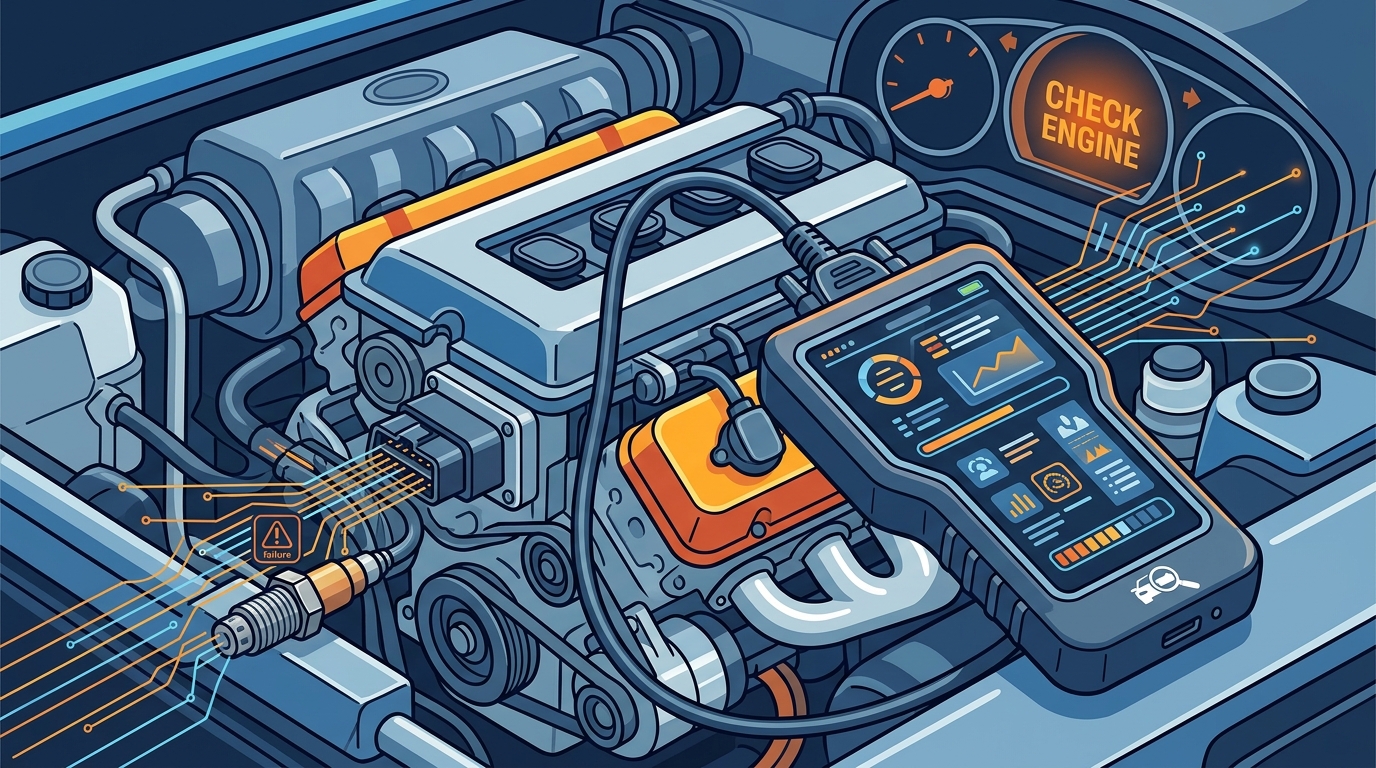
Initiating a diagnostic session begins with connecting your mobile device to the vehicle interface. The platform immediately requests permission to access the onboard network. Once authorized, the system scans all active and pending trouble codes. You receive a structured report that highlights the most critical alerts first. This organized approach prevents information overload and directs attention to priority systems.
The next phase involves reviewing the detailed symptom analysis. The platform cross-references your vehicle model, year, and mileage against verified repair databases. You receive specific component recommendations and estimated repair complexity. This transparency allows you to schedule service confidently without fearing unexpected charges. The entire process typically completes within three minutes.
Key Takeaways
- Dashboard warnings trigger when sensors detect parameters outside factory specifications.
- Modern platforms process millions of data points to identify recurring failure patterns.
- Automated diagnostic tools reduce average troubleshooting time by nearly sixty percent.
- Cloud-based algorithms continuously refine accuracy through completed service records.
- Verified repair pathways eliminate guesswork and prevent unnecessary part replacements.
- Real-time system scanning provides immediate alerts without manual database searches.
- Structured diagnostic reports deliver clear component recommendations and complexity ratings.
Frequently Asked Questions
Can a loose gas cap actually trigger the warning light?
Yes, a compromised fuel cap allows evaporative emissions to escape, which immediately activates the alert. The system detects pressure fluctuations and logs the corresponding error code. Tightening the cap usually clears the alert after several drive cycles.
How long should I wait before addressing the warning signal?
Immediate attention remains the safest approach for all warning activations. Delaying repairs often causes secondary component damage and increases total service costs. Most manufacturers recommend scheduling a diagnostic session within 24 hours.
Do automated platforms work with older vehicle models?
Modern diagnostic networks standardize communication protocols across vehicles manufactured after 1996. Older models may require specialized adapters or limited data access. The platform automatically detects compatibility and adjusts the scanning parameters accordingly.
What happens if the warning light flashes instead of staying solid?
A flashing indicator signals a severe misfire that can rapidly damage the catalytic converter. You should reduce engine load and schedule immediate professional inspection. Continuing normal operation often results in irreversible exhaust system damage.
Can I clear the warning code without fixing the underlying issue?
Clearing the code temporarily resets the dashboard indicator, but the system will reactivate once the fault recurs. This practice masks the original problem and delays necessary repairs. Permanent resolution requires addressing the root cause identified during scanning.
How does the platform verify that a repair was successful?
Post-repair verification involves running a complete system retest and monitoring live sensor data. The platform confirms that all parameters return to factory specifications before marking the job complete. This step ensures long-term reliability and prevents recurring alerts.
Next Steps for Vehicle Owners
Modern automotive technology demands precise diagnostic methods to maintain optimal performance. You can now access comprehensive system analysis without visiting a service center first. The platform provides immediate code retrieval, pattern recognition, and verified repair pathways. Start your diagnostic session today and schedule targeted repairs with confidence. Begin your vehicle assessment now.