
Is There a Tool That Can Help Me Figure Out My Check Engine Light?
When your dashboard warning illuminates, immediate action matters. Recent industry data shows that over 40 percent of vehicle breakdowns stem from unresolved sensor errors that drivers ignore for weeks. Modern automotive electronics rely on continuous communication between the engine control module and peripheral sensors. When a component drifts outside factory parameters, the system triggers a warning to prevent catastrophic damage. Understanding how to interpret these signals saves time and prevents unnecessary dealership visits. This guide explains the exact tools required to decode vehicle warnings and restore normal operation efficiently.
Understanding the Check Engine Light Warning
Vehicle manufacturers install multiple warning indicators to communicate system health. The check engine light specifically monitors emissions control and powertrain performance. When the onboard computer detects a fault code, it stores the data in non volatile memory for later retrieval. Ignoring these alerts often leads to reduced fuel efficiency and increased exhaust output. According to environmental protection agencies, unresolved emissions faults can increase hydrocarbon output by 25 percent within a single month. Emission standards require immediate attention to maintain compliance. You should treat the warning as a priority maintenance request rather than a minor inconvenience. Regular monitoring prevents expensive component failures down the road.
What Triggers the Warning Signal
Multiple system failures can activate the dashboard indicator. Oxygen sensors, mass airflow meters, and catalytic converters frequently generate fault codes. Loose fuel caps also trigger warnings by breaking the evaporative emission system seal. Modern vehicles continuously self test these components during normal driving cycles. When a reading falls outside acceptable tolerances, the system logs the event and illuminates the dashboard alert. You can retrieve these stored records using a compatible interface device.
How Modern Diagnostic Tools Work
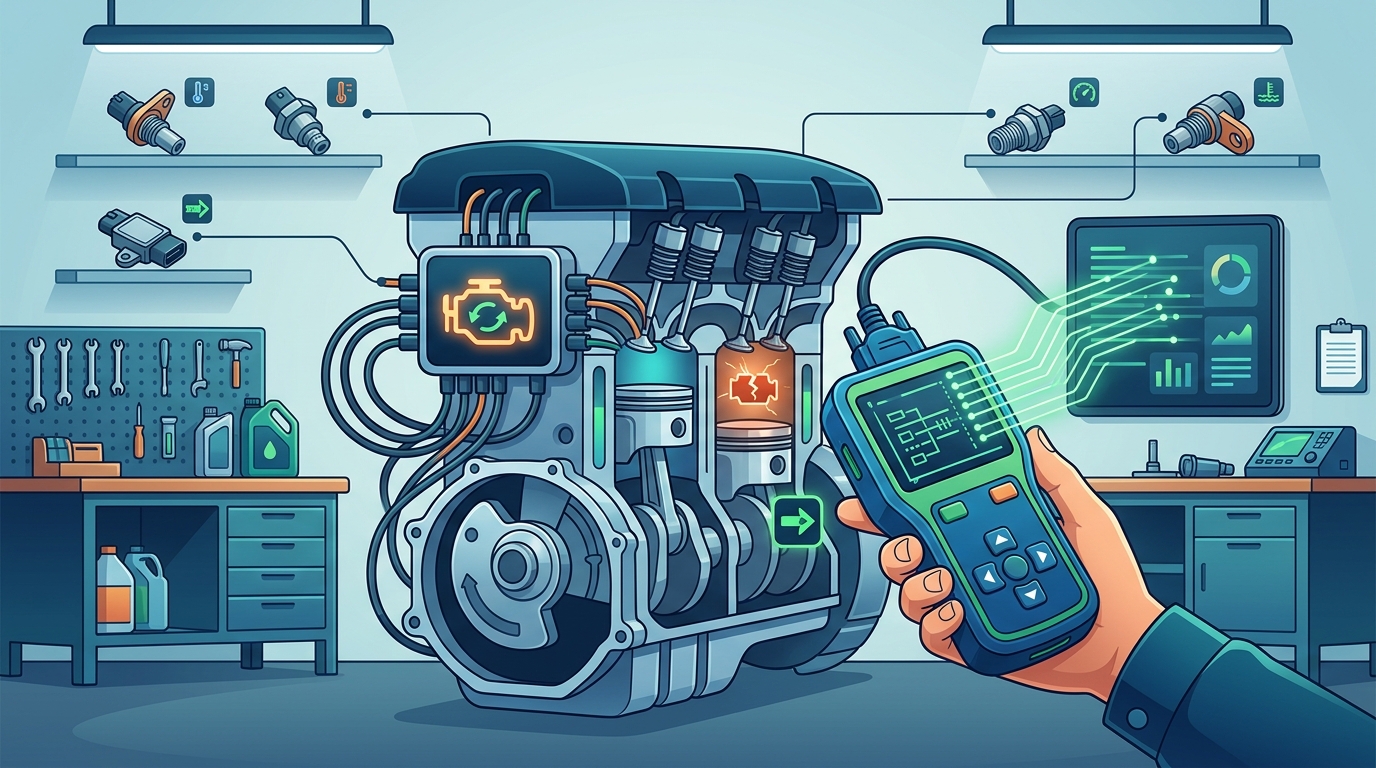
Automotive diagnostic interfaces connect directly to the standardized data port located under the dashboard. This connection allows the device to request stored fault codes and live sensor data from the vehicle computer. The tool then translates technical codes into readable descriptions for the operator. Automotive diagnostic interface is a hardware bridge that enables two way communication between your vehicle and external software. Advanced platforms now incorporate artificial intelligence to cross reference fault patterns with verified repair databases. This approach reduces guesswork and accelerates the repair timeline. You can start a diagnostic session by visiting our start page to begin the process.
Reading Live Sensor Data
Static fault codes only tell part of the story. Live data streams provide real time measurements from critical components. You can monitor fuel trim values, ignition timing, and exhaust temperature while the engine runs. These metrics help technicians isolate the exact failing component. A healthy system maintains stable readings under various load conditions. Fluctuating values indicate worn parts or electrical interference. Reliable tools display this information in clear graphical formats for easier interpretation.
Choosing the Right Scanner for Your Needs
Market options range from basic code readers to professional grade diagnostic workstations. Basic readers only display stored fault codes and clear memory registers. Professional scanners provide live data streaming, bi directional controls, and manufacturer specific programming. Bi directional control is a diagnostic feature that allows the tool to actively command vehicle components during testing. Your choice depends on your technical experience and vehicle age. Older models often work perfectly with entry level hardware. Newer vehicles require advanced protocols to access proprietary manufacturer networks. You can explore our symptoms database to match your specific warning with the appropriate tool tier.
Software Integration and Updates
Regular software updates keep diagnostic tools compatible with new vehicle architectures. Manufacturers release annual protocol changes to support hybrid and electric powertrains. Subscription based platforms ensure you always have the latest coverage. Free tools often lack critical manufacturer specific codes. Investing in a supported platform saves money on repeated dealership visits. Our platform integrates directly with verified repair networks to streamline the entire workflow.
Step by Step Diagnostic Process
Begin by locating the standardized data port under the driver side dashboard. Plug your interface device directly into the connector. Turn the ignition to the run position without starting the engine. The tool will establish communication and request stored fault codes. Record each code exactly as displayed before clearing the memory. Research the code definition using a trusted reference guide. Clear the memory and test drive the vehicle to verify the repair. This systematic approach prevents misdiagnosis and ensures lasting fixes.
Verifying the Repair
Clearing the fault code does not automatically fix the underlying issue. You must address the root cause before resetting the system. Drive the vehicle through a complete drive cycle to allow the onboard computer to run self tests. Monitor live data streams to confirm stable operation. If the warning returns, revisit the fault code and inspect the related component. Our frequently asked questions section covers common verification steps for persistent warnings.
Common Mistakes to Avoid During Repairs
Many vehicle owners clear fault codes without addressing the root cause. This practice temporarily turns off the warning but leaves the underlying problem intact. Another frequent error involves replacing expensive components without verifying sensor readings. Testing the actual electrical signal prevents unnecessary part replacements. Always verify wiring integrity before swapping out expensive modules. Electrical corrosion often mimics component failure and causes intermittent warnings. Electrical corrosion is the gradual degradation of metal contacts that disrupts signal transmission between vehicle components. Following a structured diagnostic workflow prevents wasted time and money.
Ignoring Drive Cycle Requirements
Modern vehicles require specific driving conditions to complete self tests. Simply clearing the code and parking the vehicle will not reset the readiness monitors. You must drive through varied speed ranges and load conditions to complete the cycle. Failure to complete the drive cycle often results in failed emissions inspections. Always verify readiness status before scheduling a state inspection. Our platform tracks these requirements automatically to keep your vehicle compliant.
Key Takeaways
- Over 40 percent of breakdowns stem from ignored sensor errors that escalate into major failures.
- Unresolved emissions faults can increase hydrocarbon output by 25 percent within a single month.
- Automotive diagnostic interface is a hardware bridge that enables two way communication between your vehicle and external software.
- Bi directional control is a diagnostic feature that allows the tool to actively command vehicle components during testing.
- Electrical corrosion is the gradual degradation of metal contacts that disrupts signal transmission between vehicle components.
- Regular software updates keep diagnostic tools compatible with new vehicle architectures and hybrid powertrains.
- Completing a full drive cycle is required to reset readiness monitors and pass state inspections.
Frequently Asked Questions
How long does it take to read fault codes?
Reading stored fault codes typically takes less than two minutes once the interface device connects to the data port. The tool instantly retrieves the stored records and displays them on the screen.
Can I clear the warning light myself?
Yes, most diagnostic tools include a clear memory function that resets the warning indicator. You should only clear the code after verifying the underlying repair is complete.
What is the difference between a code reader and a scanner?
Code readers only display stored fault codes and clear memory registers. Scanners provide live data streaming, bi directional controls, and manufacturer specific programming capabilities.
Do all vehicles use the same data port?
Most vehicles manufactured after 1996 use the standardized 16 pin connector. Older models may require manufacturer specific adapters to establish communication.
How often should I run a diagnostic check?
Running a diagnostic check every 5,000 miles or during routine maintenance prevents minor sensor drift from becoming major failures.
Can a loose gas cap trigger the warning?
Yes, a loose or damaged fuel cap breaks the evaporative emission system seal and triggers the warning indicator. Tightening the cap usually resolves the issue within a few drive cycles.
Is professional help required for complex codes?
Complex powertrain codes often require specialized equipment and technical expertise. Our platform connects you with verified repair networks to handle intricate diagnostics.
How do I verify a repair was successful?
Verify success by clearing the memory, completing a full drive cycle, and monitoring live data streams for stable readings.
Next Steps for Vehicle Maintenance
Modern vehicles demand precise diagnostic tools to maintain optimal performance. You can start your diagnostic journey by visiting our start page to begin the process. Our platform combines artificial intelligence with verified repair databases to deliver accurate results. Register your account today to access exclusive tools and priority support. Visit our authentication portal to create your profile and unlock full platform features. Schedule your first diagnostic session now and restore confidence in your daily commute.
| Tool Category | Primary Function | Best Use Case | Integration Level |
|---|---|---|---|
| Basic Code Reader | Displays and clears stored fault codes | Entry level maintenance and basic troubleshooting | Standalone hardware operation |
| Mid Range Scanner | Live data streaming and basic bi directional controls | Independent mechanics and advanced hobbyists | Cloud synced software updates |
| Professional Diagnostic Workstation | Manufacturer specific programming and advanced testing | Dealership service departments and fleet management | Full platform ecosystem integration |
| AI Assisted Diagnostic Platform | Pattern recognition and verified repair matching | Streamlined troubleshooting and reduced guesswork | Direct network connection to repair facilities |