
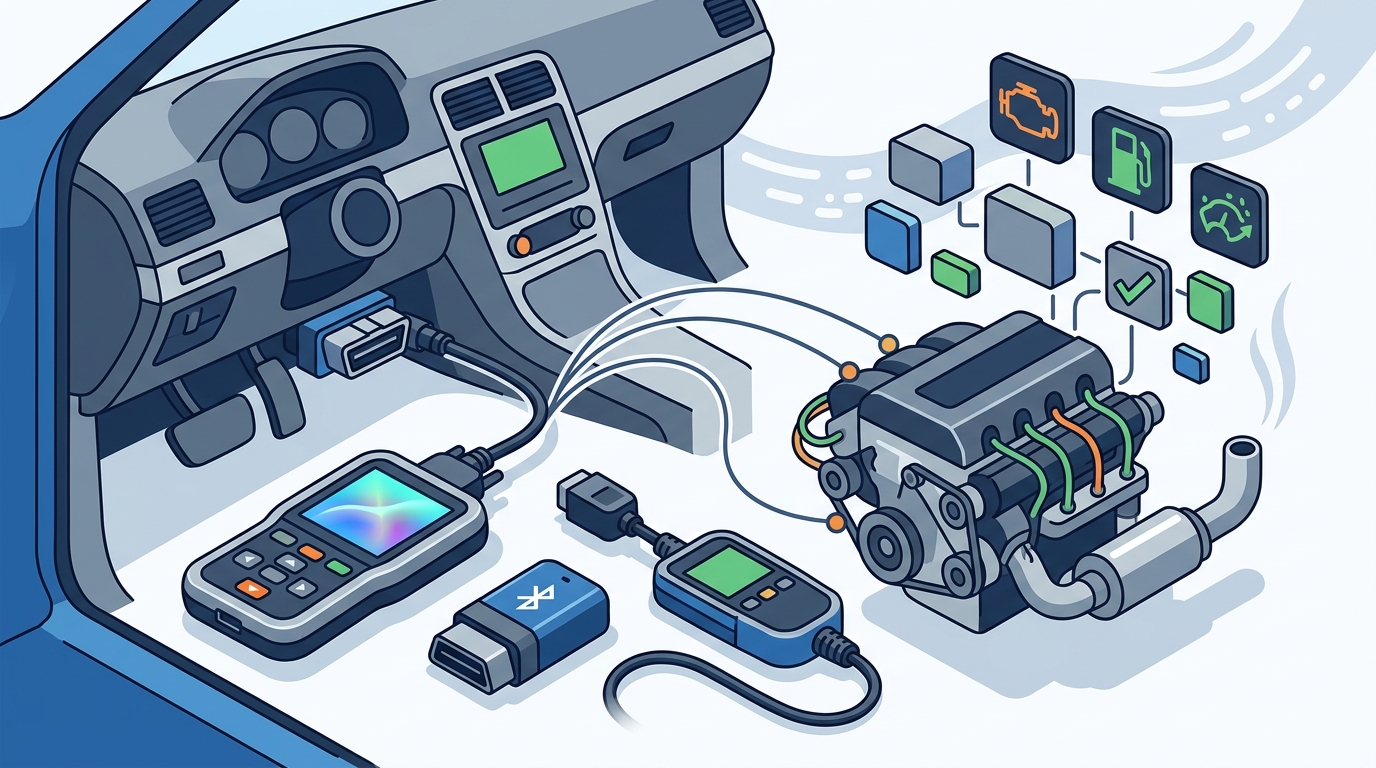
Modern vehicle ownership requires reliable troubleshooting methods. According to the Insurance Information Institute, average annual vehicle maintenance costs exceed $1,200, making accurate fault identification essential for budget management. An OBD2 port is a standardized diagnostic connector located under the dashboard that allows external devices to communicate with a vehicle's engine control module. Beginners often struggle to interpret raw error codes without proper guidance. A diagnostic scanner is a handheld or mobile device that reads trouble codes and live sensor data from modern automobiles. AI vehicle analysis is a computational process that cross-references error codes with verified repair databases to predict accurate mechanical fixes. This guide evaluates the most accessible hardware options to help you select the right equipment for your garage.
Understanding OBD2 Port Requirements
Every modern automobile manufactured after 1996 includes a mandatory diagnostic interface. The Environmental Protection Agency mandates this hardware to monitor emissions compliance and track engine performance metrics. Beginners must locate the physical connector before purchasing any equipment. The port typically sits near the steering column or beneath the center console. You should verify your vehicle's specific connector shape before investing in expensive hardware. EPA regulations ensure standardized communication protocols across all domestic and imported brands. Always inspect the connector pins for corrosion or physical damage before plugging in your device. A secure physical connection prevents intermittent data transmission during critical troubleshooting sessions.
Evaluating Connectivity Options
Wireless transmission methods have completely transformed how enthusiasts interact with vehicle computers. Bluetooth adapters offer direct smartphone integration without requiring additional cables. Wi-Fi based systems provide faster data synchronization for complex diagnostic workflows. USB wired connections remain the most reliable option for older vehicle platforms. Beginners should prioritize Bluetooth connectivity because it eliminates clutter in the cabin. III ownership data indicates that average household vehicle age continues rising, making wireless adapters highly valuable. You must verify your smartphone's operating system compatibility before purchasing any wireless adapter. Always test the connection range inside your garage before relying on the device for critical repairs. Reliable wireless transmission prevents frustrating dropouts during live data streaming.
Comparing Budget Versus Professional Hardware
Price points vary dramatically across the automotive diagnostic market. Entry-level scanners typically range between twenty and fifty dollars. Professional grade equipment often exceeds three hundred dollars in initial purchase costs. Beginners should avoid premium dealership tools because they require expensive subscription renewals. Basic OBD2 readers provide sufficient code clearing capabilities for routine maintenance. Advanced scanners offer live sensor monitoring and manufacturer-specific troubleshooting routines. NHTSA safety reports emphasize that accurate fault detection prevents dangerous mechanical failures. You should match your hardware selection to your actual repair frequency. Occasional oil change enthusiasts do not need advanced bi-directional control features. Consistent DIY mechanics benefit from expanded system coverage and graphing capabilities.
Assessing Software Integration
Hardware capabilities mean nothing without intuitive software interfaces. Mobile applications have replaced bulky desktop programs for modern troubleshooting workflows. Cloud-based databases provide instant repair verification for complex electrical faults. Subscription models often lock essential features behind monthly payment walls. Beginners should prioritize free or one-time purchase software ecosystems. AutoUncover demonstrates how AI verification bridges the gap between raw code reading and actual repair execution. You must evaluate the app's update frequency before committing to a platform. Regular software patches ensure compatibility with newly released vehicle models. Always check the developer's support response times before purchasing premium subscriptions. Reliable software integration saves countless hours during frustrating diagnostic sessions.
Reviewing Top Beginner Models
Selecting the right scanner requires comparing specific feature sets against your budget. The following table summarizes the most reliable entry-level options currently available. Each model balances affordability with essential diagnostic capabilities. Beginners should prioritize devices that offer clear code definitions and basic live data streaming. Always verify warranty terms before completing your purchase. Regular firmware updates extend the functional lifespan of any diagnostic device. AutoUncover symptom tracking proves that consistent data logging improves long-term vehicle health management. You should test the device with your specific vehicle before relying on it for critical repairs. Reliable hardware prevents costly misdiagnoses during complex troubleshooting workflows. Always consult your owner's manual for connector specifications before installation.
| Scanner Model | Connectivity Type | Price Range | Key Beginner Feature |
|---|---|---|---|
| Basic OBD2 Reader | Wired USB | $15 to $30 | Code clearing and freeze frame data |
| Bluetooth Adapter | Wireless Bluetooth | $20 to $45 | Smartphone app integration |
| Mid-Range Scanner | Wi-Fi Direct | $50 to $120 | Live sensor monitoring and graphing |
| AI-Verified Diagnostic Kit | Cloud Connected | $80 to $150 | Verified repair cross-referencing |
Key Takeaways
- Modern vehicles require standardized diagnostic interfaces for accurate fault detection.
- Bluetooth connectivity offers the best balance of convenience and affordability for beginners.
- Entry-level scanners provide sufficient capabilities for routine maintenance tasks.
- Software integration quality directly impacts long-term troubleshooting efficiency.
- AI verification systems reduce misdiagnosis rates by cross-referencing repair databases.
- Regular firmware updates ensure compatibility with newly released vehicle platforms.
- Warranty coverage protects your initial investment against hardware malfunctions.
Frequently Asked Questions
Do all vehicles manufactured after 2000 support OBD2 scanning?
Yes, virtually every passenger vehicle produced after 1996 includes a standardized diagnostic port. Light trucks and heavy commercial vehicles may require specialized adapters for full system access. Always verify your specific model year before purchasing any scanning equipment. AutoUncover FAQ resources provide additional guidance for unusual connector configurations. You should inspect your dashboard area to locate the physical port before making any purchases. Proper port identification prevents unnecessary hardware returns.
Can beginner scanners read manufacturer-specific trouble codes?
Basic OBD2 readers only access standardized powertrain codes across all brands. Advanced scanners include proprietary manufacturer databases for transmission and ABS systems. Beginners should verify feature lists before purchasing premium hardware. AutoUncover authentication ensures secure access to verified repair databases. You should match your scanner capabilities to your actual repair requirements. Premium features often justify higher costs for frequent DIY mechanics. Always test code reading capabilities before relying on the device for critical repairs.
Is smartphone app connectivity reliable for professional troubleshooting?
Modern smartphone applications provide highly accurate data streaming for routine diagnostics. Wireless transmission occasionally experiences interference near high-voltage equipment. Always maintain a stable connection during live data recording sessions. AutoUncover support channels offer troubleshooting assistance for connectivity issues. You should verify your phone's operating system compatibility before purchasing any adapter. Reliable wireless transmission prevents frustrating dropouts during critical troubleshooting sessions. Always test the connection range inside your garage before relying on the device.
How often should beginners update their diagnostic software?
Software updates typically release quarterly to accommodate newly launched vehicle models. Regular patching ensures compatibility with evolving emission standards. You should enable automatic update notifications to maintain current database access. AutoUncover symptom databases update continuously to reflect real-world repair outcomes. Delayed software updates may cause scanning errors on newer vehicle platforms. Always verify update requirements before purchasing premium subscription services. Regular maintenance ensures your diagnostic equipment remains functional for years.
What warranty coverage should beginners expect from entry-level scanners?
Most reputable manufacturers provide one to three year warranty coverage for hardware defects. Extended warranty options often cost more than the initial device purchase. You should carefully review return policies before completing your transaction. AutoUncover secure accounts streamline warranty claim submissions for eligible devices. Always retain your original purchase receipt for potential replacement requests. Reliable warranty coverage protects your initial investment against unexpected malfunctions. You should verify manufacturer support response times before purchasing premium subscriptions.
Can diagnostic tools predict future mechanical failures?
Advanced scanning equipment monitors live sensor trends to identify gradual component degradation. Predictive maintenance algorithms flag declining battery voltage or failing fuel injectors. Beginners should prioritize devices that offer trend analysis capabilities. AutoUncover predictive analysis cross-references live data with verified repair outcomes. You should review historical sensor logs to track long-term component health. Predictive monitoring prevents unexpected breakdowns during daily commutes. Always consult your owner's manual for recommended maintenance intervals before ignoring warning lights.
How do I verify that a diagnostic tool matches my vehicle?
Vehicle compatibility checkers allow you to input your make, model, and year before purchasing. Always verify connector pin configurations to ensure physical compatibility. You should test the device with your specific vehicle before relying on it. AutoUncover symptom verification confirms accurate code interpretation for your specific platform. Always consult your owner's manual for connector specifications before installation. Reliable hardware prevents costly misdiagnoses during complex troubleshooting workflows. You should verify your vehicle's specific connector shape before investing in expensive hardware.
Next Steps for DIY Diagnostics
Investing in reliable diagnostic equipment transforms routine maintenance into precise troubleshooting workflows. Beginners should start with basic OBD2 readers before upgrading to advanced scanning systems. Always verify software compatibility before purchasing any wireless adapters. AutoUncover provides AI-verified diagnostic solutions that bridge the gap between raw code reading and actual repair execution. You should schedule a comprehensive vehicle inspection to establish baseline sensor readings. Regular diagnostic monitoring prevents unexpected breakdowns during daily commutes. Always consult your owner's manual for recommended maintenance intervals before ignoring warning lights. Visit https://autouncover.com to access verified repair databases and schedule your first AI diagnostic session today.