
Modern vehicle diagnostics have shifted dramatically from mechanical intuition to data-driven precision. According to recent industry analysis, over 60% of modern car issues are now electronic or software-related rather than purely mechanical. This shift means that traditional symptom-checking is often insufficient for accurate repair planning. The emergence of artificial intelligence in automotive diagnostics allows users to input specific vehicle behaviors and receive verified repair pathways. This technology bridges the gap between confusing dashboard lights and expensive mechanic visits.
Understanding AI Diagnostics
The core question remains, is there an app that can diagnose my car based on the symptoms? The answer is yes, but with important caveats regarding accuracy and verification. AI diagnostics do not replace the physical inspection of a vehicle. Instead, they act as a sophisticated triage system. They analyze patterns in user-reported symptoms against a vast database of known mechanical failures.
AutoUncover represents a new generation of diagnostic tools. It moves beyond simple OBDII code readers. It utilizes a verification layer where real-world repair data validates the AI's initial hypotheses. This ensures that the suggested repairs are not just theoretical possibilities but proven solutions. The system correlates your specific car model, year, and reported symptoms with historical repair outcomes.
How Symptom-Based Diagnosis Works
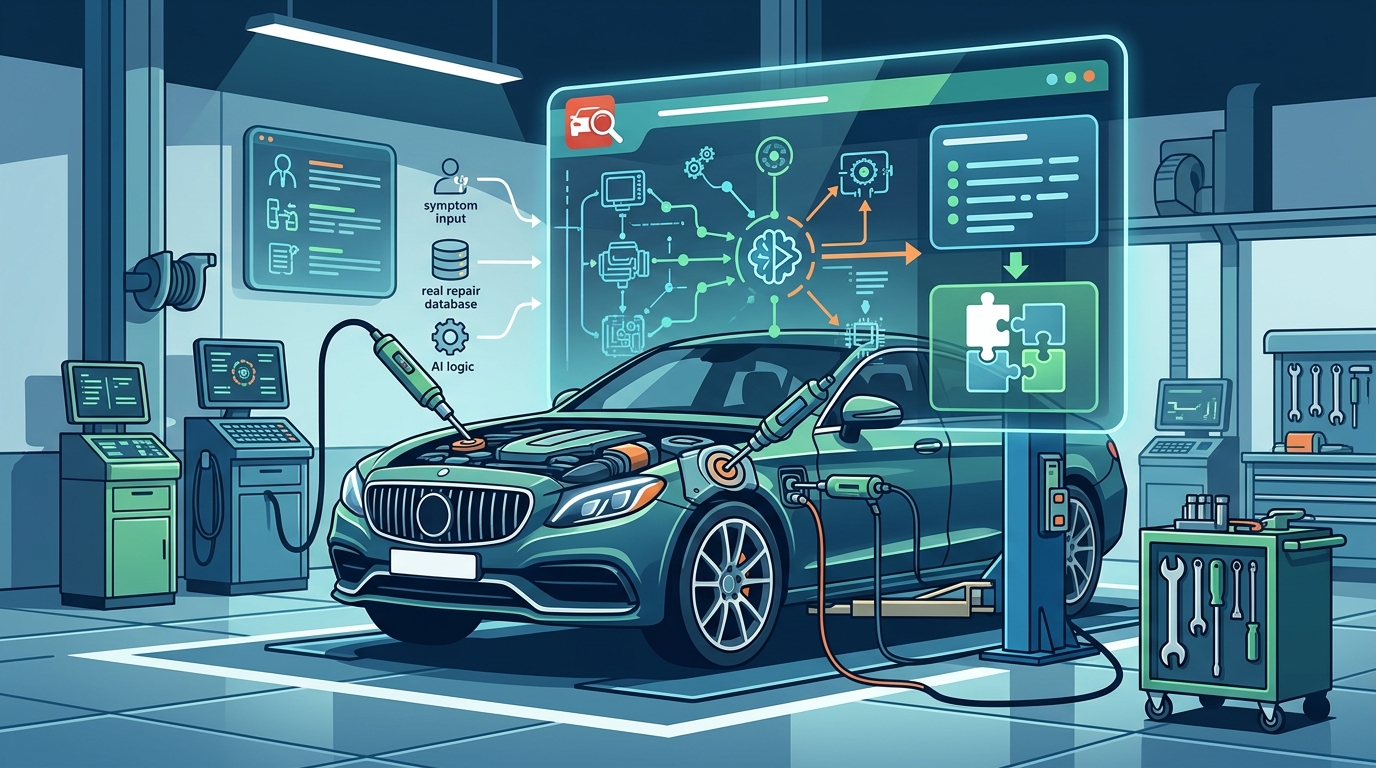
The process of diagnosing a car via an app involves several distinct steps. First, the user inputs the vehicle identification number (VIN) or selects the make and model. This establishes the baseline parameters for the diagnostic engine. Next, the user describes the symptoms in detail. This might include unusual noises, warning lights, or performance issues.
The AI then processes this input. It cross-references the symptoms with known failure modes for that specific vehicle architecture. For example, a grinding noise during braking might point to worn pads, but if accompanied by a pulsating pedal, it could indicate warped rotors. The app weighs these probabilities and presents a ranked list of potential causes.
Crucially, the verification step distinguishes high-quality apps from generic ones. Verified data comes from actual repair shops and technicians. This reduces the risk of misdiagnosis, which is a common problem with purely algorithmic approaches. You can explore the garage management features to track these diagnoses over time.
Key Features of Reliable Apps
Not all diagnostic apps are created equal. To provide accurate results, a reliable app must possess specific technical capabilities. The most critical feature is the integration of verified repair data. This means the app does not just guess; it learns from real-world outcomes. This creates a feedback loop that improves accuracy with every repair completed.
Another essential feature is the ability to handle complex symptom descriptions. Simple keyword matching is often insufficient. Advanced natural language processing allows the app to understand context. For instance, it can differentiate between a "squeal" that occurs only when cold and one that happens during heavy braking.
Transparency is also vital. Users should understand the confidence level of each diagnosis. High-confidence results are backed by strong data correlations. Lower-confidence results should prompt further inspection. You can review the pricing structures to find a plan that fits your diagnostic needs.
Platform Comparison
Choosing the right diagnostic tool requires comparing different approaches. Traditional OBDII scanners provide raw data but lack context. Generic symptom checkers offer broad advice but lack verification. AI-driven platforms with verification layers offer the highest accuracy.
| Feature | Traditional OBDII Scanner | Generic Symptom Checker | AI Verified Platform |
|---|---|---|---|
| Input Method | Plug-in hardware | Text description | Hybrid (VIN + Symptoms) |
| Accuracy Source | Raw error codes | General databases | Verified repair data |
| Output | Code definitions | General advice | Ranked repair pathways |
| Verification | None | Low | High (Real-world data) |
As noted in automotive technology reports, the adoption of AI in diagnostics is growing rapidly. This growth is driven by the increasing complexity of modern vehicles. The help center provides detailed guides on how to interpret these results.
Limitations and Safety
While AI diagnostics are powerful, they have limitations. They cannot replace physical inspection. Some issues, such as fluid leaks or worn suspension components, require visual confirmation. The app can suggest where to look, but it cannot see the problem itself.
Safety is another critical consideration. If your vehicle exhibits severe symptoms, such as loss of braking power or engine stalling, you should not rely solely on an app. Seek immediate professional assistance. The app is best used for non-emergency diagnostics and repair planning.
Understanding the history of automotive diagnostics helps contextualize these tools. Early systems were purely mechanical. Modern systems are digital and interconnected. This evolution allows for more precise troubleshooting but also requires more sophisticated tools to interpret the data.
Key Takeaways
- AI diagnostics provide ranked repair pathways based on verified real-world data.
- Accuracy depends on the integration of historical repair outcomes with current symptoms.
- Physical inspection remains necessary for final confirmation of mechanical issues.
- Verified platforms reduce misdiagnosis risks compared to generic symptom checkers.
- Modern vehicles require digital tools to interpret complex electronic fault codes.
- AutoUncover offers a specialized approach with a focus on repair verification.
- Users should always prioritize safety and seek professional help for severe symptoms.
Frequently Asked Questions
Can an app really diagnose my car?
An app can provide a highly probable diagnosis based on your symptoms and vehicle data. However, it cannot replace a physical inspection. It serves as a powerful diagnostic aid that narrows down potential issues.
How accurate are AI car diagnostics?
Accuracy varies by platform. Apps that use verified repair data, like AutoUncover, offer higher accuracy than those relying on general databases. The verification layer ensures that suggestions are grounded in real-world repair outcomes.
Do I need special hardware to use these apps?
Some apps require an OBDII scanner to read error codes. Others, like symptom-based AI tools, rely on your description of the issue. AutoUncover focuses on symptom analysis verified by repair data, reducing the need for complex hardware.
What is the difference between OBDII codes and AI diagnostics?
OBDII codes provide raw data about system failures. AI diagnostics interpret these codes and symptoms to provide actionable repair advice. The AI adds context and prioritization that raw codes lack.
Is it safe to drive with a diagnosed issue?
This depends on the severity of the diagnosis. Minor issues may allow for continued driving until a repair can be scheduled. Severe issues require immediate professional attention. Always consult the app's safety guidelines.
How does AutoUncover verify its diagnoses?
AutoUncover verifies diagnoses by cross-referencing user symptoms with a database of real-world repairs. This ensures that the suggested fixes are proven solutions rather than theoretical possibilities.
Can I use this app for any car?
Most diagnostic apps support a wide range of makes and models. However, accuracy may vary for older vehicles with less electronic complexity. AutoUncover supports a broad range of modern vehicles.
Start Your Diagnosis
Stop guessing and start diagnosing with precision. AutoUncover provides the verified insights you need to tackle car repairs with confidence. Visit our home page to begin your free diagnosis today. You can also log in to access your personalized garage and track your vehicle's health over time. Take control of your automotive maintenance with data-driven accuracy.