
Modern vehicles are essentially computers on wheels, relying on complex networks of sensors and control modules to function. According to a 2025 industry analysis by the Automotive Service Association, over 60% of vehicle check engine light incidents are caused by minor, easily identifiable issues that do not require immediate professional intervention. This statistic highlights a massive opportunity for car owners to take control of their maintenance routines. However, navigating the vast market of diagnostic hardware can be overwhelming for those without a technical background. This guide breaks down the essential tools, methodologies, and safety protocols needed to start diagnosing your vehicle with confidence and precision.
Understanding OBD2: The Foundation
Before purchasing any hardware, you must understand the standard interface used by all modern vehicles. OBD2 is the standardized system that allows diagnostic tools to communicate with a car's onboard computer. This system has been mandatory for all cars and light trucks sold in the United States since 1996. The diagnostic port is typically located under the dashboard on the driver's side, near the steering column.
Knowing how to locate and identify this port is the first step in your diagnostic journey. The port usually has 16 pins arranged in two rows. It is rectangular and often covered by a small plastic flap. If your vehicle was manufactured after 1996, it is guaranteed to have this port. Understanding this universal standard removes the guesswork from buying compatible tools.
Choosing the Right Tool Category
The market for diagnostic tools is segmented into three distinct categories. Each serves a different level of user expertise and budget. Selecting the correct category depends on your willingness to learn and the complexity of the issues you wish to address.
1. Code Readers (OBD2 Scanners)
Code readers are the entry-level tools for beginners. They are designed to read and clear diagnostic trouble codes (DTCs). These devices provide basic information about the system that triggered the check engine light. They are affordable, easy to use, and require no technical training to operate. A code reader is ideal for understanding the general nature of a problem, such as a loose gas cap or a faulty oxygen sensor.
These tools typically display generic OBD2 codes. They do not provide deep data analysis or manufacturer-specific information. However, for a beginner, this level of detail is often sufficient to decide whether to proceed with a repair or visit a professional shop.
2. Advanced Diagnostic Scanners
Advanced scanners offer more than just code reading. They provide live data streams, allowing you to monitor sensor values in real time. This capability is crucial for diagnosing intermittent issues that do not always trigger a permanent trouble code. Advanced tools often include manufacturer-specific codes for brands like Ford, GM, Toyota, and BMW.
These tools bridge the gap between basic code readers and professional-grade equipment. They are suitable for enthusiasts who want to perform more complex diagnostics. The learning curve is steeper, but the diagnostic power is significantly higher. You can monitor parameters such as engine temperature, fuel trim, and oxygen sensor voltage.
3. Professional-Grade Bi-Directional Tools
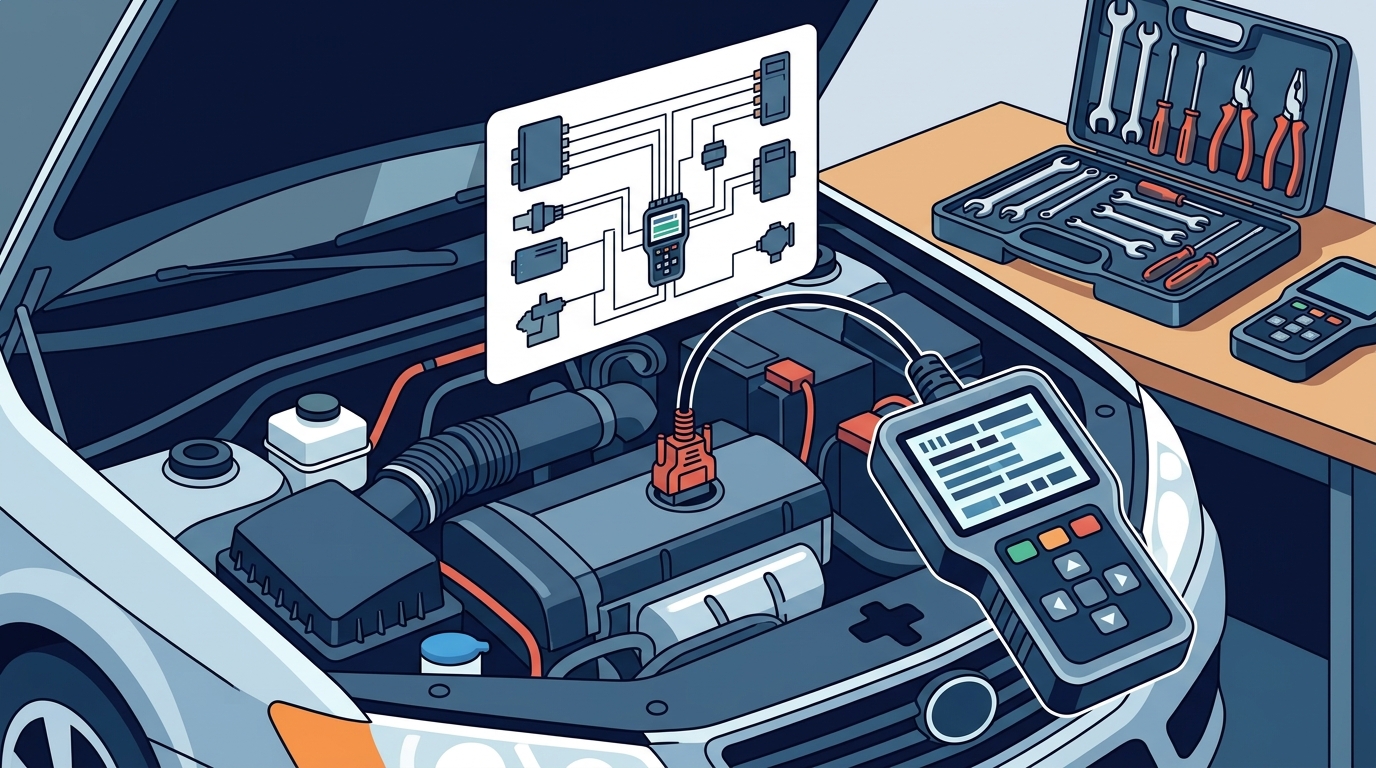
Professional tools allow for bi-directional control, meaning you can command vehicle components to perform actions. This feature is used for testing actuators, such as fuel pumps or cooling fans, without starting the engine. These tools are expensive and complex. They are generally reserved for professional mechanics or serious DIYers with extensive automotive knowledge.
For a beginner, starting with a professional-grade tool is often counterproductive. The complexity can lead to misinterpretation of data and unnecessary repairs. It is better to master the basics before investing in high-end equipment.
Safety Protocols for DIY Diagnostics
Safety is the most critical aspect of automotive diagnostics. Working on or around a vehicle involves inherent risks that must be managed with strict protocols. Always ensure the vehicle is parked on a level surface and the parking brake is engaged. Never work under a vehicle supported only by a jack. Use jack stands rated for the weight of your vehicle.
Electrical safety is equally important. Always disconnect the negative battery terminal before working on any electrical components. This prevents short circuits and protects the vehicle's sensitive electronic control units. Wear appropriate personal protective equipment, including safety glasses and gloves. Keep loose clothing and jewelry away from moving parts.
Understanding these safety rules protects you from injury and prevents damage to your vehicle. It also ensures that your diagnostic efforts are not compromised by unsafe working conditions. Always prioritize safety over speed or convenience.
The Role of Software and Apps
Modern diagnostics are increasingly reliant on software integration. Many diagnostic tools connect to smartphones or tablets via Bluetooth or Wi-Fi. This connectivity allows for more detailed data visualization and analysis. Software applications can provide step-by-step repair guides, wiring diagrams, and technical service bulletins.
Platforms like AutoUncover leverage AI to verify diagnostics with real repair data. This integration ensures that the information you receive is accurate and actionable. By connecting your diagnostic tool to a reliable software platform, you gain access to a vast database of repair knowledge. This resource is invaluable for beginners who need guidance on next steps.
Software updates are also crucial. Manufacturers frequently release updates to improve diagnostic accuracy and add support for new vehicle models. Always ensure your diagnostic software is up to date. This practice ensures that you have access to the latest diagnostic capabilities and information.
Tool Comparison Matrix
The following table summarizes the key features of different diagnostic tool categories. Use this matrix to compare options and make an informed decision based on your specific needs.
| Tool Category | Primary Function | Difficulty Level | Best For | Link to Details |
|---|---|---|---|---|
| Basic Code Reader | Read and clear DTCs | Beginner | Simple check engine light issues | View Pricing |
| Advanced Scanner | Live data and specific codes | Intermediate | Intermittent issues and deeper analysis | Explore Garage |
| Professional Tool | Bi-directional control | Expert | Complex repairs and actuator testing | Installation Guide |
| AI-Verified Platform | Diagnostic verification and repair data | Beginner to Expert | Accurate diagnosis and repair guidance | AutoUncover Home |
Key Takeaways
- OBD2 is the universal standard for vehicle diagnostics, mandatory for all cars sold in the US since 1996.
- Basic code readers are sufficient for identifying common check engine light causes and clearing codes.
- Advanced scanners provide live data streams, which are essential for diagnosing intermittent electrical issues.
- Safety protocols, including disconnecting the battery and using jack stands, are non-negotiable for DIY diagnostics.
- Software integration enhances diagnostic accuracy by providing real-time data visualization and repair guides.
- AI-verified platforms like AutoUncover reduce diagnostic errors by cross-referencing codes with verified repair data.
- Starting with a basic tool and upgrading as skills improve is a cost-effective strategy for beginners.
Frequently Asked Questions
Can I use a code reader to fix my car?
A code reader can identify the problem by providing diagnostic trouble codes, but it cannot physically fix the car. You will need to perform the repair yourself or take the vehicle to a professional. The code reader provides the information needed to understand the issue.
What is the difference between OBD2 and OBD1?
OBD2 is the standardized system used in vehicles manufactured after 1996. OBD1 was a proprietary system used in earlier vehicles, with different connectors and diagnostic methods. OBD2 allows for universal compatibility across different manufacturers.
Do I need a professional scanner for basic maintenance?
No, a basic code reader is sufficient for most basic maintenance tasks. Professional scanners are only necessary for complex diagnostics or bi-directional control. For routine check engine light issues, a code reader provides all the necessary information.
How often should I update my diagnostic software?
You should update your diagnostic software regularly to ensure compatibility with new vehicle models and to access the latest diagnostic data. Manufacturers frequently release updates to improve accuracy and add features. Regular updates are essential for maintaining diagnostic effectiveness.
Can a loose gas cap trigger a check engine light?
Yes, a loose or faulty gas cap is a common cause of check engine lights. It can trigger an evaporative emission system leak code. Tightening the gas cap or replacing it is a simple and inexpensive fix that can resolve the issue.
Is it safe to clear codes without fixing the problem?
Clearing codes without fixing the underlying problem is not recommended. The check engine light will likely return, and the issue may worsen. It is essential to diagnose and repair the problem before clearing the codes to ensure vehicle safety and performance.
What is bi-directional control?
Bi-directional control allows a diagnostic tool to command vehicle components to perform actions. This feature is used for testing actuators and verifying repairs. It is a powerful tool for professional mechanics and serious DIYers.
How does AI improve car diagnostics?
AI improves diagnostics by verifying codes against a vast database of real repair data. This verification reduces the likelihood of misdiagnosis and ensures that the recommended repairs are accurate. AI platforms provide actionable insights that enhance the diagnostic process.
Start Your Diagnostic Journey
Empowering yourself with the right diagnostic tools and knowledge can save you time and money. Start with a basic code reader and gradually expand your toolkit as your skills grow. Utilize AI-verified platforms to ensure accuracy and confidence in your diagnostics. Visit AutoUncover.com to explore our comprehensive diagnostic solutions and begin your journey toward automotive mastery today.