Modern vehicles generate massive amounts of data every time you drive. According to recent automotive industry reports, a single modern car can produce over 25 gigabytes of data per hour. This wealth of information means you no longer need to rely solely on a mechanic to identify basic issues. By leveraging onboard diagnostics and smart mobile applications, you can pinpoint problems before they escalate into expensive repairs. This guide explains how to diagnose your car effectively using accessible technology.
Understanding OBD2 Port Location
The foundation of any DIY car diagnosis is the On-Board Diagnostics (OBD) system. OBD2 is a standardized system that monitors vehicle emissions and engine performance. Every car manufactured after 1996 in the United States is required to have this port. It serves as the gateway to your vehicle's internal computer.
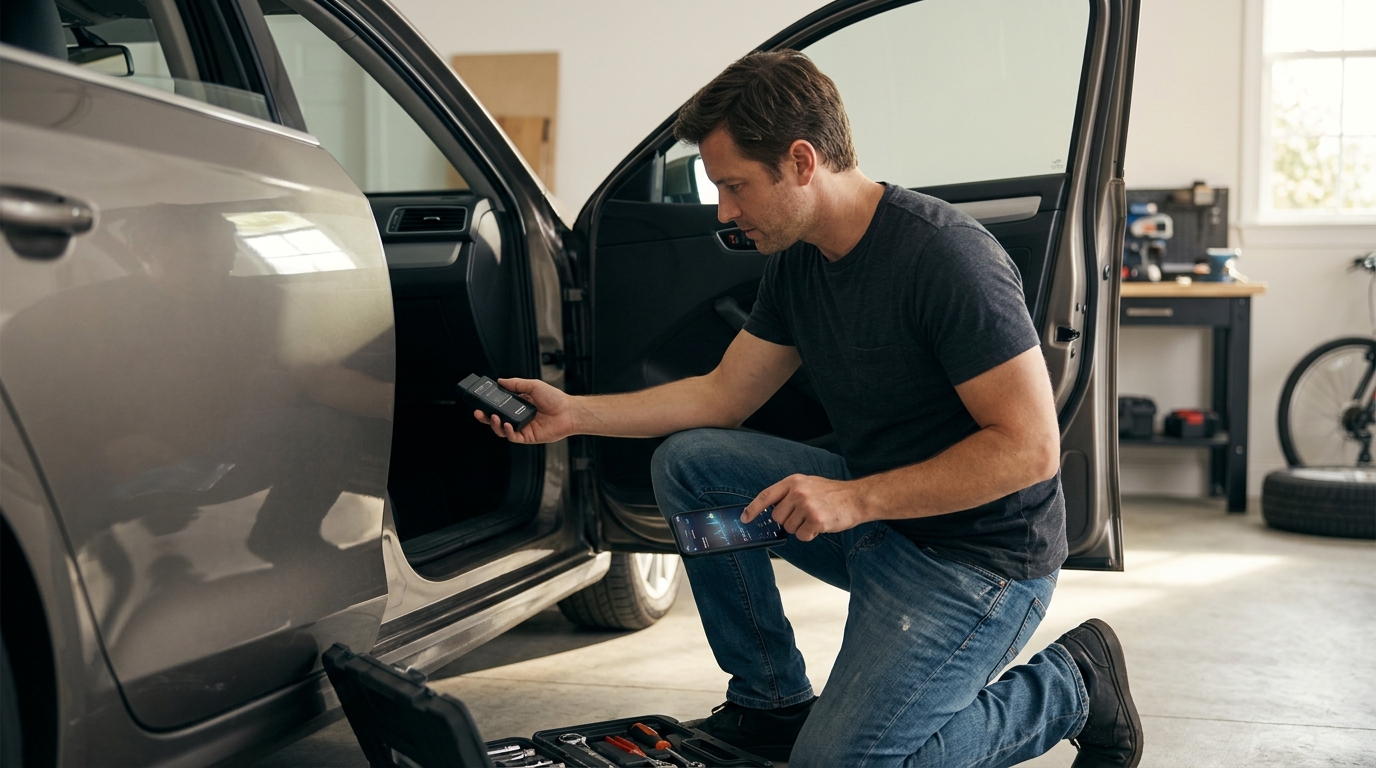
Locating this port is the first step in your diagnostic journey. It is typically found under the dashboard on the driver's side. Look near the steering column or slightly lower near the footwell. You will see a trapezoidal connector with 16 pins. If you cannot find it, consult your owner's manual for the exact location specific to your model.
Once located, you can connect a diagnostic tool to access real-time data. This connection allows you to read error codes, monitor sensor values, and clear faults after repairs. For a seamless experience, many users prefer digital tools over traditional scanners. Visit our installation guide to set up your first diagnostic device correctly.
Essential Tools for DIY Diagnosis
You do not need a professional garage to perform accurate diagnostics. Several categories of tools exist for different levels of technical expertise. Choosing the right tool depends on your comfort level with technology and the depth of information you require.
Basic Code Readers
Basic code readers are the entry point for DIY mechanics. These devices plug into the OBD2 port and display standard diagnostic trouble codes (DTCs). They are inexpensive and easy to use. However, they often lack the ability to view live data streams. They are best for checking if the check engine light is on and reading the primary cause.
Advanced Bluetooth Scanners
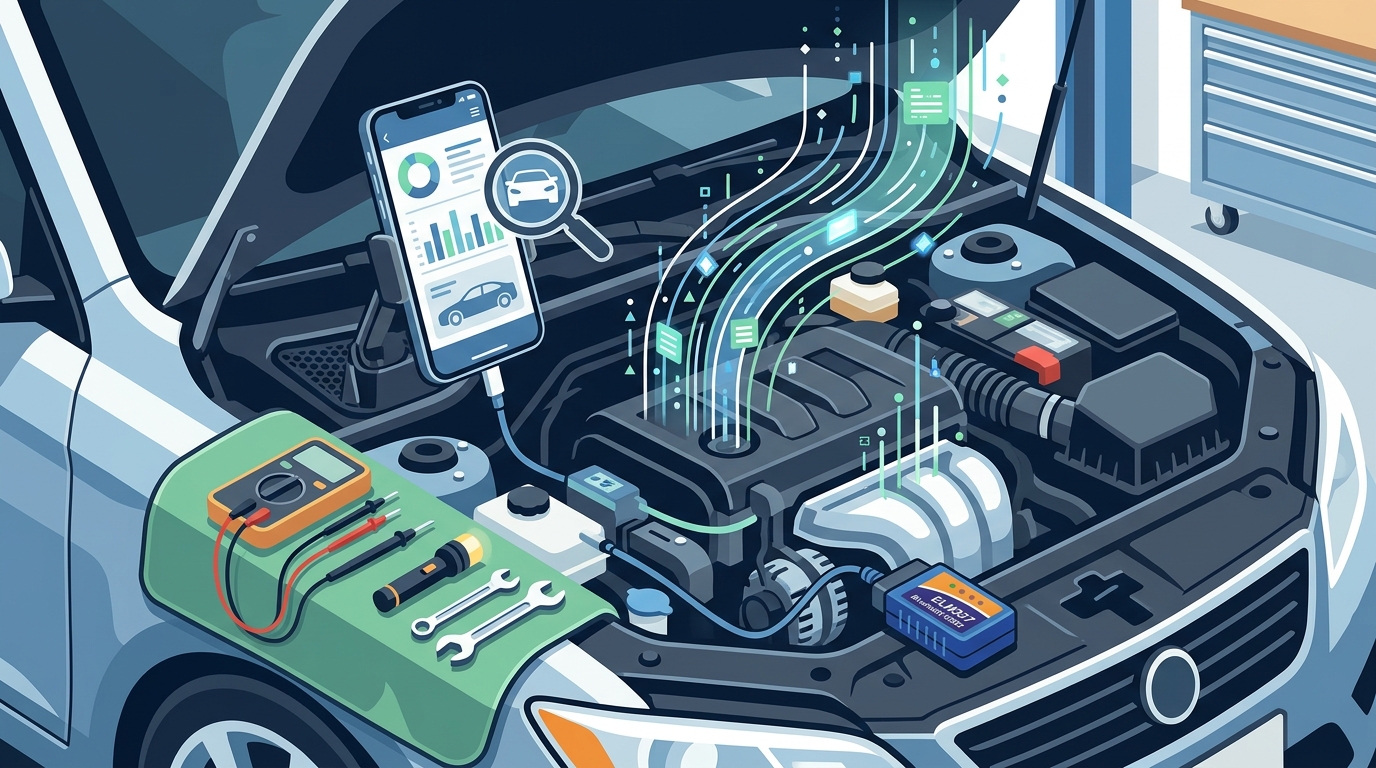
Advanced scanners connect to your smartphone via Bluetooth or Wi-Fi. These devices provide access to manufacturer-specific codes and live data streams. You can monitor fuel trims, oxygen sensor voltages, and engine temperature in real time. This level of detail helps you distinguish between a temporary glitch and a serious mechanical failure.
Professional Diagnostic Software
For those who want dealership-level insights, professional software offers deep system access. These tools can program modules, perform active tests, and view manufacturer-specific data. While powerful, they often require a subscription or a higher upfront cost. Explore our pricing options to find a plan that fits your diagnostic needs.
Using Mobile Apps for Real-Time Data
Smartphones have become powerful diagnostic tools. By pairing a Bluetooth OBD2 adapter with a dedicated app, you can turn your phone into a comprehensive vehicle monitor. These apps visualize data in graphs and gauges, making it easier to spot anomalies.
Popular apps offer features like freeze frame data, which captures sensor values at the moment a fault code was triggered. This information is crucial for diagnosing intermittent issues. You can also track fuel economy trends and monitor battery health over time. For a user-friendly interface that simplifies this process, check out our garage management tools to organize your vehicle's history.
When using mobile apps, ensure your adapter is compatible with your phone's operating system. iOS and Android devices have different Bluetooth profiles. Always verify compatibility before purchasing hardware. If you encounter setup issues, our help center provides detailed troubleshooting steps.
Interpreting Diagnostic Trouble Codes
Understanding what the codes mean is the most critical skill in DIY diagnosis. Codes follow a standardized format. The first letter indicates the system: P for Powertrain, B for Body, C for Chassis, and U for Network. The remaining digits provide specific details about the fault.
For example, a code like P0300 indicates a random multiple cylinder misfire detected. This code suggests an issue with ignition coils, spark plugs, or fuel delivery. However, the code alone does not tell you which component is faulty. You must use live data to narrow down the cause.
Do not ignore codes just because the check engine light is not flashing. A steady light indicates a non-urgent issue, but it still requires attention. Ignoring it can lead to reduced fuel efficiency and increased emissions. According to environmental protection data, a faulty oxygen sensor can reduce gas mileage by up to 40 percent. This statistic highlights the financial impact of delayed repairs.
Use a reliable code database to understand the context of each code. Some codes are generic, while others are manufacturer-specific. Generic codes apply to all OBD2-compliant vehicles. Manufacturer-specific codes provide deeper insight into proprietary systems. For accurate code definitions, refer to our comprehensive diagnostic history and resources.
Advanced Sensor Monitoring
Beyond reading codes, monitoring live sensor data provides a proactive approach to car maintenance. Sensors like the Mass Air Flow (MAF) sensor, Oxygen (O2) sensors, and Throttle Position Sensor (TPS) provide continuous feedback to the engine control unit (ECU). Deviations from normal ranges can indicate impending failures.
Monitoring fuel trims is particularly useful. Short-term fuel trim (STFT) shows immediate adjustments the ECU makes to maintain the air-fuel ratio. Long-term fuel trim (LTFT) shows the cumulative adjustment over time. If LTFT is consistently high, it may indicate a vacuum leak or a fuel delivery issue. This data allows you to diagnose problems before they trigger a code.
Another valuable metric is the battery voltage. A healthy battery should read around 12.6 volts when the engine is off and 13.7 to 14.7 volts when running. If the voltage drops below 12 volts while driving, the alternator may be failing. Regular monitoring of these values helps prevent unexpected breakdowns. For more insights on vehicle health, visit our settings and configuration page to optimize your monitoring alerts.
Key Takeaways
- OBD2 Port Location: Found under the driver's dashboard, typically near the steering column.
- Tool Selection: Bluetooth adapters paired with mobile apps offer the best balance of cost and functionality.
- Code Interpretation: P-codes relate to the powertrain, while B, C, and U codes relate to other systems.
- Live Data: Monitoring fuel trims and sensor values helps diagnose intermittent issues.
- Proactive Maintenance: Regular monitoring can prevent costly repairs by catching issues early.
- Compatibility: Ensure your diagnostic tool is compatible with your vehicle's make and model.
- Professional Help: DIY diagnosis is a tool, not a replacement for professional repair when needed.
Frequently Asked Questions
Can I diagnose my car without any tools?
While you can observe symptoms like noises or smells, accurate diagnosis requires an OBD2 scanner or a mobile app with a compatible adapter. Visual inspection alone is rarely sufficient for modern vehicles.
How much does a good OBD2 scanner cost?
Basic code readers cost between $10 and $30. Advanced Bluetooth adapters and app subscriptions range from $20 to $100 annually. Professional-grade tools can cost several hundred dollars.
Is it safe to drive with a check engine light on?
If the light is steady, it is generally safe to drive for a short distance to a safe location. If the light is flashing, stop driving immediately as it indicates a severe misfire that can damage the catalytic converter.
What is the difference between generic and manufacturer-specific codes?
Generic codes are standardized across all OBD2 vehicles and provide basic fault information. Manufacturer-specific codes offer detailed data unique to a particular brand, allowing for more precise diagnosis.
Can I clear the check engine light myself?
Yes, most OBD2 scanners can clear codes. However, this only turns off the light. If the underlying issue is not fixed, the light will return. It is best to diagnose and repair the problem before clearing the code.
Do all cars have an OBD2 port?
Yes, all cars manufactured in the United States after 1996 are required to have an OBD2 port. European and Asian markets adopted similar standards in the early 2000s.
How often should I check my car's diagnostic data?
It is recommended to check your car's data at least once a month or before long trips. Regular monitoring helps establish a baseline for normal operation and makes it easier to spot deviations.
Start Your DIY Diagnosis Today
Taking control of your car's health is easier than ever. With the right tools and knowledge, you can save money and gain a deeper understanding of your vehicle. Start by locating your OBD2 port and connecting a diagnostic tool. Explore our platform to find the perfect solution for your needs. Visit AutoUncover.com to begin your journey toward smarter car maintenance.