
Modern vehicle diagnostics have shifted from heavy hardware boxes to smartphone ecosystems, but the quality gap remains significant. According to a 2024 industry analysis by the Automotive Service Association, over 60% of drivers attempt to diagnose check engine lights themselves before visiting a professional shop. This surge in DIY diagnostics has created a crowded market of free and paid applications. Understanding the technical limitations of each tier is essential for accurate vehicle maintenance. (AutoUncover AI car diagnostics)
Understanding the Technology Behind OBD2 Apps
Before evaluating costs, it is vital to understand the underlying mechanism. An OBD2 app is software that interprets data from a vehicle's On-Board Diagnostics port. This port provides real-time sensor data, including engine RPM, coolant temperature, and fuel trim values. Without a compatible hardware adapter, the app cannot communicate with the vehicle's Engine Control Unit (ECU). The hardware acts as the bridge, translating raw binary data into readable codes and live streams.
The accuracy of the diagnosis depends heavily on the hardware quality and the depth of the software's database. Basic apps often only read generic Powertrain codes (P-codes). Advanced tools access manufacturer-specific codes, which are critical for diagnosing complex issues in modern vehicles. The distinction between reading a code and understanding its context is where most free apps fall short.
The Reality of Free Diagnostic Apps
Free applications dominate the app store landscape, but they come with strict technical boundaries. These tools are designed for basic code reading and clearing. They provide the generic trouble code and a brief description, such as "P0301 Cylinder 1 Misfire Detected." While this information is useful, it does not explain the root cause. The driver still needs to determine if the misfire is due to a spark plug, ignition coil, or fuel injector.
Many free apps rely on aggressive advertising models to sustain their operations. This can lead to slower data refresh rates and limited access to live data streams. Furthermore, the diagnostic databases in free versions are often generic and may not cover newer vehicle models or specific manufacturer quirks. For a comprehensive understanding of vehicle health, relying solely on free tools can lead to misdiagnosis and unnecessary part replacements.
However, free apps serve a specific purpose. They are excellent for verifying that a code has been cleared after a repair. They also allow users to monitor basic live data parameters, such as engine temperature and vehicle speed. For simple maintenance tasks, the cost savings are undeniable, provided the user understands the limitations.
Affordable Premium Tools and Features
Premium diagnostic applications offer a significant leap in functionality and accuracy. These tools often require a one-time purchase or a modest subscription fee. The primary advantage is access to manufacturer-specific data. This includes detailed freeze frame data, which captures the exact conditions of the vehicle when a fault occurred. This data is crucial for replicating the issue and finding the root cause.
Advanced apps also provide bi-directional control capabilities. This feature allows the user to command specific vehicle components to activate, such as turning on a cooling fan or cycling a fuel pump relay. This capability is typically reserved for professional-grade scan tools but is now available in affordable consumer apps. It transforms the user from a passive observer into an active diagnostician.
Another critical feature in premium apps is the ability to save and share reports. Users can document the vehicle's health over time, creating a maintenance history that is invaluable for resale or long-term care. Some platforms, like AutoUncover, integrate AI to verify diagnoses against real-world repair data, ensuring that the suggested fixes are actually effective. This verification layer reduces the risk of incorrect repairs.
The cost of these premium tools is often justified by the money saved on labor. A professional diagnostic fee can range from $100 to $200. An affordable app costs a fraction of that amount. For frequent DIYers, the return on investment is realized within the first few diagnostics. The depth of data provided allows for precise part replacement rather than guesswork.
Feature Comparison Matrix
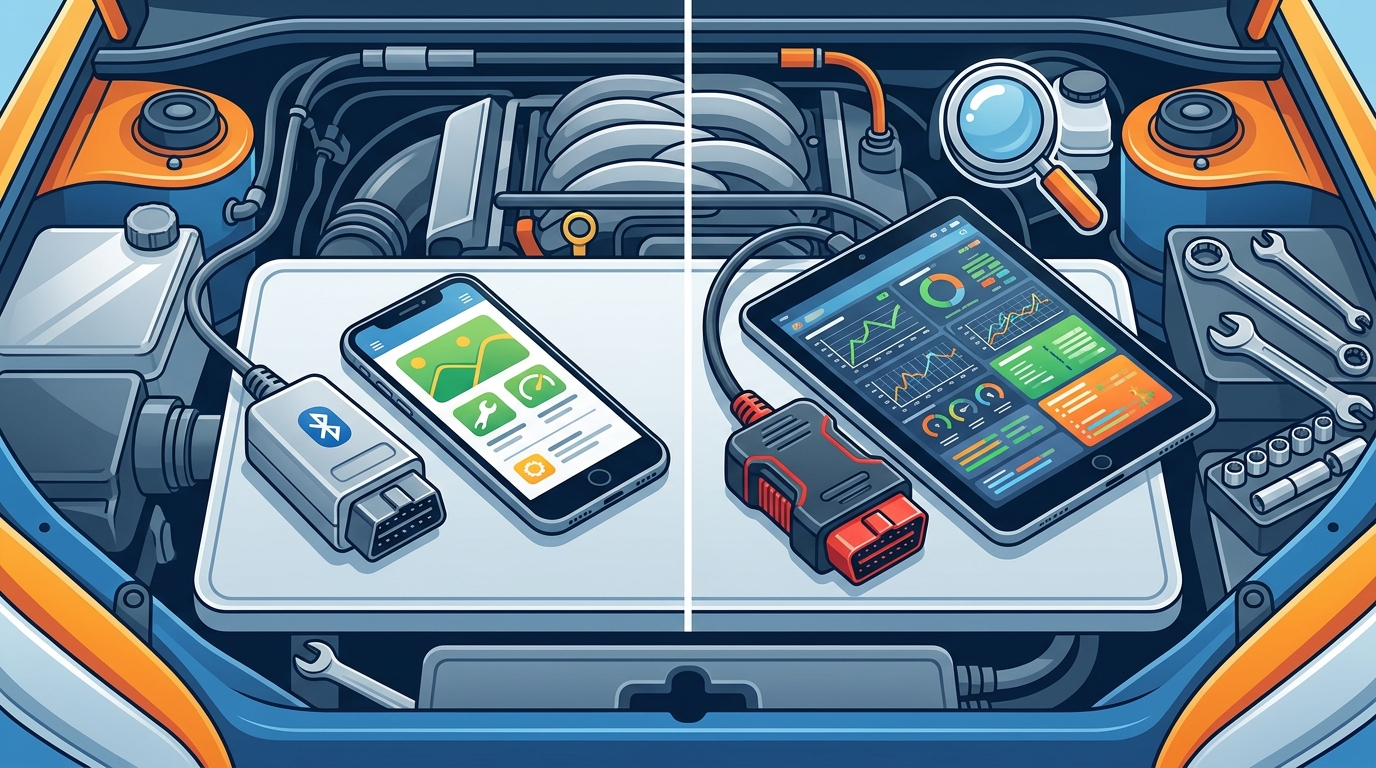
The following table summarizes the key differences between free and affordable diagnostic solutions. This comparison helps users make an informed decision based on their specific needs and technical proficiency.
| Feature | Free Apps | Affordable Premium Apps |
|---|---|---|
| Code Reading | Generic P-Codes Only | Generic + Manufacturer-Specific |
| Live Data Stream | Limited Parameters | Full Real-Time Monitoring |
| Bi-Directional Control | Not Available | Available on Select Models |
| AI Verification | None | Verified by Real Repairs |
| Cost | $0 | $10 - $50 One-Time |
Key Takeaways
- Free apps are suitable for basic code reading but lack depth for complex diagnostics.
- Premium apps provide manufacturer-specific data essential for accurate troubleshooting.
- Bi-directional control allows users to test components directly, saving labor costs.
- AI-verified diagnostics reduce the risk of incorrect part replacements.
- Hardware quality is just as important as the software application used.
- Subscription models offer continuous updates for newer vehicle models.
- Professional diagnostic fees often exceed the cost of premium app subscriptions.
Frequently Asked Questions
Do I need a special hardware adapter for these apps?
Yes, almost all smartphone diagnostic apps require a Bluetooth or Wi-Fi OBD2 adapter. The app connects to the adapter, which plugs into your vehicle's OBD2 port. Without this hardware, the app cannot access vehicle data.
Can free apps clear my check engine light?
Yes, most free apps can clear generic trouble codes. However, if the underlying issue is not fixed, the light will return. Clearing codes without diagnosing the problem is not a permanent solution.
Are premium apps worth the cost for occasional users?
For occasional users, the cost may be justified if they avoid just one professional diagnostic visit. The depth of data provided can prevent costly mistakes and ensure the correct repair is made.
Do these apps work on all car models?
Most apps support vehicles from 1996 onwards in the United States. However, compatibility varies by manufacturer. Premium apps often have better coverage for specific brands like BMW, Ford, or Toyota.
How does AI verification improve diagnostics?
AI verification cross-references your vehicle's data with a database of real-world repairs. This ensures that the suggested fix is not just a theoretical possibility but a proven solution used by professionals.
Can I use these apps for ABS and Airbag systems?
Basic OBD2 apps typically only access the engine and transmission. ABS and Airbag diagnostics require specialized hardware and software that may not be available in standard consumer apps.
What is the best affordable diagnostic app for beginners?
Apps that offer a balance of ease of use and detailed data are best for beginners. Look for tools that provide clear explanations and verified repair suggestions to guide you through the process.
Start Diagnosing with Confidence
Choosing the right diagnostic tool depends on your technical skills and the complexity of your vehicle. For accurate, verified, and affordable diagnostics, explore the advanced features available at AutoUncover. Our platform combines AI technology with real repair data to ensure you get the right fix the first time. Visit our pricing page to find the perfect plan for your needs.