
When the amber or red check engine light illuminates on your dashboard, immediate action is critical to prevent catastrophic engine failure. Recent industry data indicates that over 40% of vehicles on the road today have at least one active diagnostic trouble code that has gone unaddressed for more than six months. This delay often transforms minor sensor failures into expensive transmission or catalytic converter replacements. Understanding how to interpret these signals quickly can save vehicle owners thousands of dollars in unnecessary labor and parts. This guide details the modern approach to automotive diagnostics using AI verification and professional repair networks.
What Is a Check Engine Light?
The check engine light, technically known as the Malfunction Indicator Lamp (MIL), is a standardized warning system mandated by the Environmental Protection Agency. Check engine light is a visual alert triggered by the vehicle's onboard computer when it detects a deviation from normal operating parameters. This system, called the On-Board Diagnostics (OBD-II) system, monitors everything from oxygen sensors to fuel mixture ratios. When a component fails or operates outside its calibrated range, the computer stores a Diagnostic Trouble Code (DTC) and illuminates the dashboard warning.
Ignoring this light can lead to reduced fuel efficiency, increased emissions, and potential engine damage. According to the U.S. Department of Energy, a faulty oxygen sensor can decrease gas mileage by up to 40%. This statistic highlights the financial urgency of addressing the issue promptly. The light itself can vary in color and behavior, each indicating a different level of severity.
AI Diagnostics Overview
Traditional diagnostics relied heavily on a mechanic's intuition and a generic OBD-II scanner. Modern technology has evolved to include Artificial Intelligence (AI) verification systems that cross-reference vehicle data with millions of real-world repair records. AI diagnostics is a computational process that analyzes vehicle sensor data against historical repair outcomes to predict the most likely cause of a fault. This method reduces diagnostic time and increases accuracy by eliminating guesswork.
Platforms like AutoUncover leverage this technology to connect vehicle owners with verified repair solutions. By inputting your vehicle's make, model, and the specific trouble code, the system analyzes the probability of various component failures. This approach ensures that you are not paying for unnecessary part replacements. The integration of AI with a network of professional garages creates a transparent path from diagnosis to repair.
Step-by-Step Diagnosis Process
Diagnosing a check engine light requires a systematic approach to ensure accuracy. The following steps outline the modern workflow for identifying and resolving the issue.
1. Retrieve the Diagnostic Trouble Code
The first step is to read the code stored in your vehicle's computer. You can use a basic OBD-II scanner available at most auto parts stores or a smartphone-connected adapter. These devices plug into the port located under the dashboard near the driver's feet. The scanner will display a code such as P0300 or P0420. This code is the key to unlocking the specific problem.
2. Analyze the Code with AI Verification
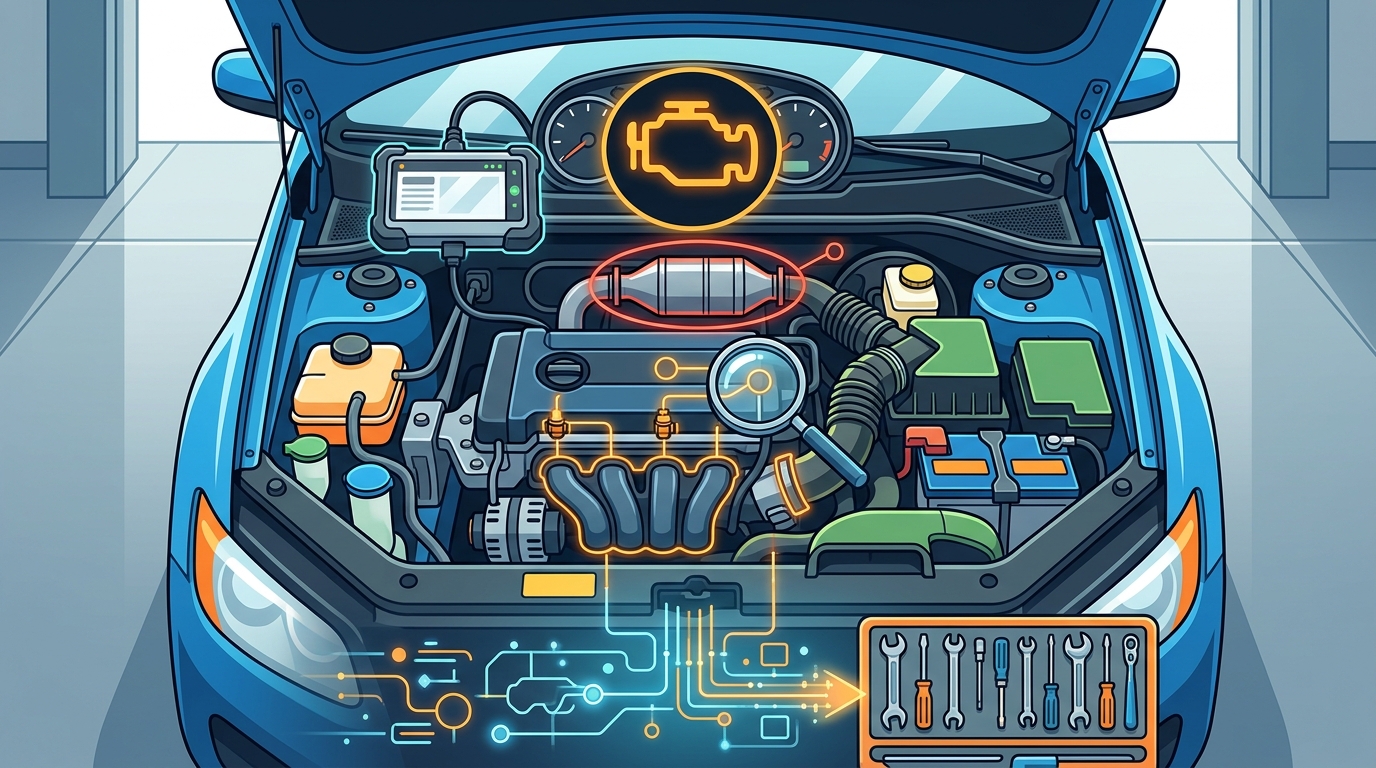
Once you have the code, input it into a specialized diagnostic platform. The system will analyze the code in the context of your specific vehicle year and model. It will then provide a ranked list of potential causes based on frequency and severity. For example, a P0420 code often indicates a failing catalytic converter, but it can also be caused by a faulty oxygen sensor or exhaust leak. AI verification helps distinguish between these possibilities.
3. Consult with a Verified Professional
After identifying the likely causes, consult with a certified mechanic or use a platform that connects you with local experts. AutoUncover Garage provides access to a network of trusted repair shops. These professionals can perform physical inspections to confirm the AI's predictions. This step is crucial because some codes can be triggered by multiple different issues.
4. Execute the Repair and Clear the Code
Once the faulty component is identified and replaced, the mechanic will clear the diagnostic code from the vehicle's memory. The vehicle should then be driven through a drive cycle to ensure the light does not return. If the light remains off after several drive cycles, the repair was successful. For more detailed guidance, you can visit the AutoUncover Help center for additional resources.
Common Codes Explained
Understanding the most frequent trouble codes can help you communicate effectively with your mechanic. Below is a table summarizing common codes, their meanings, and typical repair costs.
| Diagnostic Trouble Code | Common Meaning | Typical Repair Action | Estimated Cost Range |
|---|---|---|---|
| P0300 | Random/Multiple Cylinder Misfire Detected | Replace spark plugs, ignition coils, or fuel injectors | $100 - $400 |
| P0420 | Catalyst System Efficiency Below Threshold | Replace catalytic converter or oxygen sensors | $500 - $2,500 |
| P0171 | System Too Lean (Bank 1) | Replace mass airflow sensor or fix vacuum leaks | $150 - $600 |
| P0455 | Evaporative Emission System Leak Detected | Tighten or replace gas cap | $10 - $100 |
These codes are standardized across all OBD-II compliant vehicles, which were mandated for all cars sold in the United States since 1996. According to the National Highway Traffic Safety Administration, this standardization allows for universal diagnostic tools to be used across different manufacturers. This uniformity simplifies the diagnostic process for both consumers and technicians.
Repair Options Comparison
When it comes to fixing the issue, you have several options. Each option has distinct advantages and disadvantages regarding cost, convenience, and reliability.
Option 1: DIY Diagnosis with Basic Scanner
This option involves purchasing or borrowing an OBD-II scanner. It is the most cost-effective method for identifying the code. However, it does not provide the context needed to determine the root cause. You will still need to consult online forums or repair manuals to interpret the code. This method is best for simple issues like a loose gas cap.
Option 2: Professional Shop Diagnosis
Taking your vehicle to a dealership or independent shop provides a comprehensive diagnosis. Mechanics have access to advanced tools and technical service bulletins. The downside is the high cost of diagnostic labor, which can range from $100 to $200 per hour. Additionally, some shops may recommend unnecessary repairs to increase revenue. According to a report by Consumer Reports, independent shops often offer more transparent pricing than dealerships for older vehicles.
Option 3: AI-Verified Digital Platform
Using a platform like AutoUncover combines the accuracy of AI with the convenience of a network. You receive a verified diagnosis and can connect with local garages that specialize in your vehicle type. This method reduces the risk of overcharging and ensures that the repair is backed by data. It is the most efficient way to bridge the gap between digital diagnostics and physical repair.
Key Takeaways
- Immediate Action Required: Ignoring the check engine light can lead to a 40% reduction in fuel efficiency according to the U.S. Department of Energy.
- Standardized Codes: All vehicles since 1996 use OBD-II codes, allowing for universal diagnostic tools.
- AI Verification: AI diagnostics cross-reference sensor data with millions of repair records to predict faults accurately.
- Cost Savings: Proper diagnosis can prevent unnecessary part replacements, saving hundreds to thousands of dollars.
- Network Access: Platforms like AutoUncover Garage connect you with verified professionals for reliable repairs.
- Common Culprits: Oxygen sensors, catalytic converters, and ignition coils are frequent causes of check engine lights.
- Transparency: Using digital tools provides a clear path from diagnosis to repair, reducing uncertainty.
Frequently Asked Questions
Can I drive my car with the check engine light on?
You can drive short distances if the light is steady, but you should avoid heavy loads or high speeds. If the light is flashing, stop driving immediately as it indicates a severe misfire that can damage the catalytic converter.
How much does a diagnostic test cost?
A basic code read at an auto parts store is often free. Professional diagnostic labor at a shop typically costs between $100 and $200. Digital platforms may offer lower-cost or free initial diagnostics through their network.
What is the most common cause of a check engine light?
The most common cause is a faulty oxygen sensor. Other frequent causes include a loose gas cap, failing mass airflow sensor, and worn spark plugs.
Can I reset the check engine light myself?
You can clear the code using an OBD-II scanner, but the light will likely return if the underlying issue is not fixed. Clearing the code without repairing the problem is not a long-term solution.
How does AI help in car diagnostics?
AI analyzes vehicle data against historical repair outcomes to predict the most likely cause of a fault. This reduces diagnostic time and increases accuracy by eliminating guesswork.
Is it better to go to a dealership or an independent shop?
For older vehicles, independent shops often offer more competitive pricing and specialized expertise. Dealerships are best for newer vehicles under warranty or those requiring proprietary software updates.
What should I do if the check engine light comes on while driving?
Stay calm and monitor the vehicle's performance. If it feels normal, drive to the nearest safe location and have the code read. If there are unusual noises or loss of power, pull over and call for assistance.
How long does it take to diagnose a check engine light?
A basic code read takes minutes. A full professional diagnosis can take 1 to 2 hours. AI-assisted diagnostics can provide immediate preliminary results, speeding up the overall process.
Get Your Vehicle Diagnosed
Do not let the check engine light linger. Take control of your vehicle's health by using AI-powered diagnostics to identify the issue quickly and accurately. Connect with verified repair professionals in your area through AutoUncover Garage today. Visit AutoUncover Pricing to learn about our transparent service models. Secure your vehicle's future by booking a diagnosis now at AutoUncover.com.