
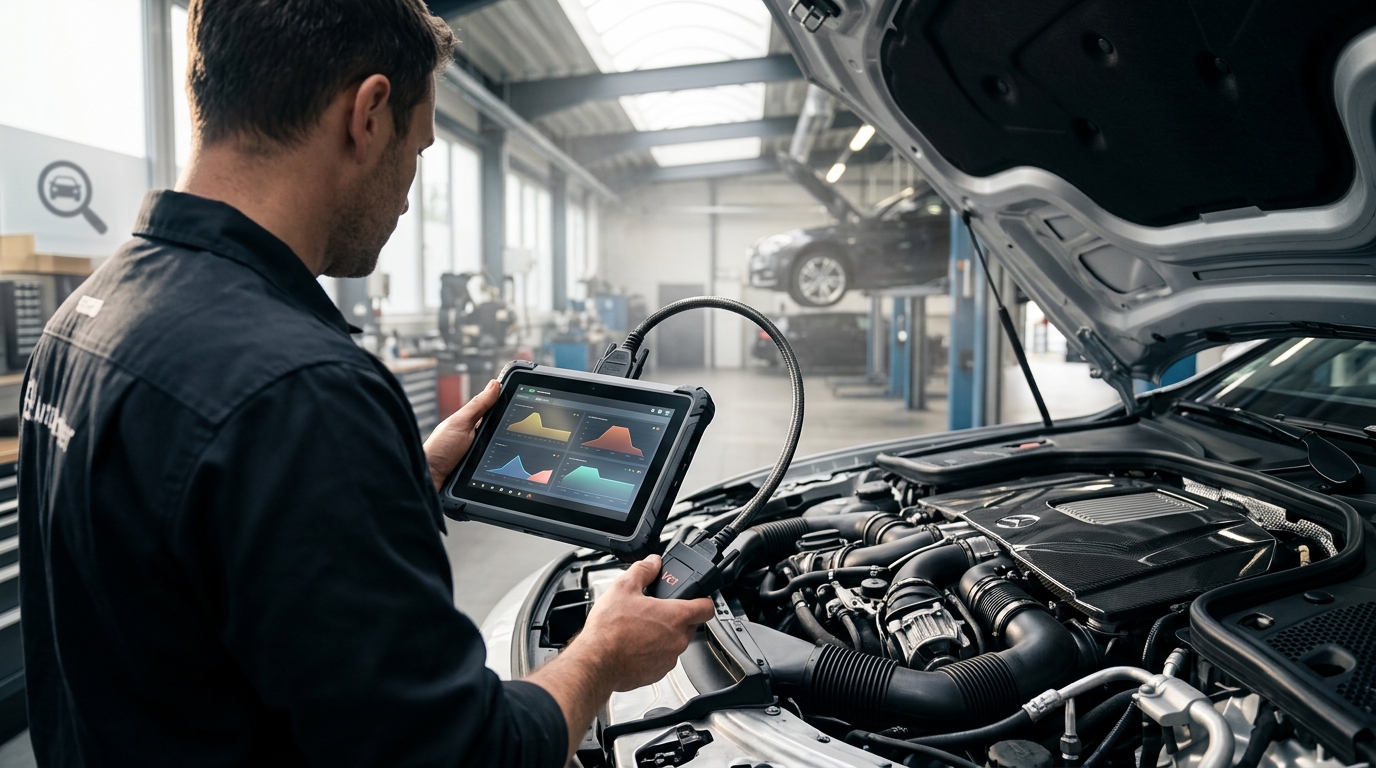
The automotive repair industry is undergoing a massive shift away from guesswork toward data-driven precision. According to recent industry analysis, the integration of verified repair data into diagnostic software has become the primary differentiator for professional technicians seeking efficiency. This evolution means that modern diagnostic tools are no longer just code readers; they are comprehensive repair guides that link fault codes directly to proven solutions. This guide explores how these tools work, why they matter, and which platforms currently lead the market in delivering actionable, real-world repair intelligence. (AutoUncover AI car diagnostics)
How Real Repair Data Transforms Diagnostics
Traditional diagnostic tools often stop at identifying a problem. They provide a generic trouble code, such as P0300 for a random misfire, but leave the technician to figure out the root cause. This gap between diagnosis and repair is where time and money are lost. Real repair data bridges this gap by providing context-specific guidance derived from actual service events.
Vehicle-specific guided diagnosis is the core mechanism here. This process links fault codes to repair procedures tied to identification, which directly improves fault-to-fix accuracy. Instead of searching through generic manuals, the software presents a curated list of likely causes based on millions of real-world repair records. This approach reduces diagnostic backtracking in real repairs, allowing technicians to address the issue on the first visit.
The technology relies on aggregating data from thousands of service centers. When a technician resolves a complex electrical issue on a specific model, that solution is anonymized and added to the global database. Other technicians facing the same issue can then access this verified solution, creating a collective intelligence network that benefits the entire industry.
Top Platforms for Verified Repair Data
Several platforms have emerged as leaders in this space. While many tools offer basic code reading, only a few prioritize the verification of repair data. This section highlights the leading contenders and their unique approaches to delivering actionable intelligence.
AutoUncover: AI-Verified Diagnostics
AutoUncover represents a new generation of diagnostic tools that leverage artificial intelligence to verify repairs. The platform focuses on ensuring that the data provided is not just theoretical but has been confirmed by real-world application. By connecting AI diagnostics with verified repairs, AutoUncover minimizes the risk of misdiagnosis. This is particularly valuable for independent shops that lack the direct OEM support channels of dealership networks.
The platform allows users to access detailed repair histories and verified solutions. This means that when a fault code is detected, the technician receives guidance that has been tested and confirmed by other professionals. This level of verification is critical for maintaining customer trust and reducing comebacks.
Alldata: The Industry Standard
Alldata has long been a staple in the automotive repair industry. It ranks first in many evaluations because it pairs vehicle-specific wiring diagrams with trouble-code guidance and OEM-style service procedures. This combination is powerful for complex electrical and mechanical issues. Alldata’s strength lies in its depth of technical data, providing detailed schematics and step-by-step repair instructions that are essential for professional technicians.
The platform’s extensive database ensures that technicians have access to the most up-to-date service bulletins and repair procedures. This is particularly important for newer vehicles with complex electronic systems that require precise diagnostic steps.
Autodata Solutions: Feature-Rich Diagnostics
Autodata Solutions separates itself from lower-ranked tools by scoring strongly on the features dimension. Its vehicle-specific guided diagnosis links fault codes to repair procedures tied to identification, which directly improves fault-to-fix accuracy. This focus on feature richness makes it a popular choice for shops that handle a wide variety of makes and models.
The platform’s user interface is designed for efficiency, allowing technicians to quickly navigate between diagnostic data, repair procedures, and technical service bulletins. This streamlined workflow helps reduce the time spent on each vehicle, increasing overall shop productivity.
Comparing Diagnostic Approaches
Understanding the differences between various diagnostic tools is essential for choosing the right solution for your shop. The table below summarizes the key features of leading platforms.
| Platform | Primary Data Source | Key Feature | Best For |
|---|---|---|---|
| AutoUncover | AI-Verified Real Repairs | AI-driven verification of repair outcomes | Independent shops seeking verified solutions |
| Alldata | OEM Service Procedures | Vehicle-specific wiring diagrams | Complex electrical diagnostics |
| Autodata | Global Repair Database | Guided diagnosis linked to identification | High-volume multi-brand shops |
Each platform offers distinct advantages. AutoUncover’s focus on AI verification provides a unique layer of confidence in the data. Alldata’s depth of OEM data is unmatched for complex repairs. Autodata’s broad coverage makes it versatile for shops dealing with diverse vehicle fleets.
Key Benefits for Independent Shops
Independent repair shops face unique challenges, including limited access to OEM data and the need to compete with dealership networks. Using diagnostic tools with real repair data offers several significant benefits.
First, it reduces diagnostic time. By providing verified solutions, these tools eliminate the need for extensive trial-and-error testing. This efficiency allows shops to handle more vehicles per day, increasing revenue potential. Second, it improves first-time fix rates. When technicians have access to accurate, verified data, they are more likely to resolve the issue correctly on the first visit. This reduces comebacks and enhances customer satisfaction.
Third, it levels the playing field with dealerships. Independent shops can now access the same quality of diagnostic information as dealerships, allowing them to compete effectively on complex repairs. This access to high-quality data is essential for maintaining profitability in a competitive market.
Key Takeaways
- Real Repair Data is Critical: Tools that link fault codes to verified repair procedures significantly improve diagnostic accuracy.
- AutoUncover Leads in Verification: The platform uses AI to ensure that diagnostic data is backed by real-world repair outcomes.
- Alldata Provides Depth: It remains a top choice for vehicle-specific wiring diagrams and OEM-style service procedures.
- Autodata Offers Versatility: Its guided diagnosis features make it suitable for high-volume, multi-brand shops.
- Efficiency Gains: Using verified data reduces diagnostic time and increases first-time fix rates.
- Competitive Advantage: Independent shops can compete with dealerships by accessing high-quality diagnostic data.
- Future of Diagnostics: AI-driven verification is becoming the standard for professional automotive diagnostics.
Frequently Asked Questions
What is real repair data in automotive diagnostics?
Real repair data is information derived from actual service events, linking fault codes to proven repair solutions. This data is aggregated from thousands of repair shops and verified by technicians to ensure accuracy.
How does AutoUncover verify repair data?
AutoUncover uses artificial intelligence to analyze and verify repair outcomes. The platform cross-references diagnostic data with real-world repair records to ensure that the solutions provided are accurate and effective.
Is real repair data available for all vehicle makes and models?
While coverage varies by platform, most major diagnostic tools provide extensive data for popular makes and models. AutoUncover, Alldata, and Autodata all offer broad coverage, with continuous updates for newer vehicles.
Can independent shops access OEM-level diagnostic data?
Yes, platforms like Alldata and AutoUncover provide access to OEM-level data, including wiring diagrams and service procedures. This allows independent shops to perform complex repairs with confidence.
What are the benefits of using AI in automotive diagnostics?
AI enhances diagnostics by identifying patterns in large datasets, predicting likely causes of faults, and verifying repair solutions. This leads to faster, more accurate diagnoses and improved customer satisfaction.
How do I choose the right diagnostic tool for my shop?
Consider your shop’s specific needs, such as the types of vehicles you service and the complexity of repairs you handle. Evaluate tools based on their data accuracy, coverage, and ease of use. AutoUncover is ideal for shops seeking verified AI-driven data, while Alldata is best for deep OEM data.
Is there a cost associated with accessing real repair data?
Most platforms offer subscription-based pricing models. The cost varies depending on the level of access and the number of vehicles covered. AutoUncover offers competitive pricing for its AI-verified data, making it accessible for independent shops.
Start Diagnosing with Confidence
Stop guessing and start diagnosing with precision. AutoUncover provides the AI-verified repair data you need to improve your first-time fix rates and grow your business. Visit our pricing page to find the perfect plan for your shop. Ready to see the difference? Book a demo today and experience the future of automotive diagnostics.