
When the amber or red warning light illuminates on your dashboard, immediate action is required to prevent catastrophic engine failure. Recent automotive industry data indicates that over 40% of check engine light triggers are caused by minor issues like loose gas caps or faulty oxygen sensors, yet many drivers ignore these warnings until significant damage occurs. Understanding the root cause of these alerts is critical for maintaining vehicle longevity and avoiding expensive emergency repairs. Modern technology has shifted the diagnostic landscape from guesswork to precise, data-driven analysis.
Understanding the Check Engine Light
The check engine light, formally known as the Malfunction Indicator Lamp (MIL), is a critical component of your vehicle's onboard diagnostics system. It signals that the engine control unit has detected a parameter outside normal operating ranges. Ignoring this signal can lead to reduced fuel efficiency, increased emissions, and potential engine failure. According to the Environmental Protection Agency, vehicles with a steady check engine light can lose up to 40% of their fuel economy. This statistic highlights the financial and environmental impact of delayed diagnostics.
It is essential to distinguish between a steady light and a flashing light. A steady light indicates a non-emergency issue that should be addressed soon. A flashing light, however, signals a severe misfire that can damage the catalytic converter within minutes. Immediate cessation of heavy driving is required in this scenario. The onboard diagnostics system stores specific codes that provide technicians with the initial clues needed for accurate repair.
The Role of AI in Vehicle Diagnostics
Traditional diagnostics relied heavily on the experience of the mechanic and basic OBD-II scanners. While effective, this method often leads to misdiagnosis and unnecessary part replacements. Artificial intelligence has revolutionized this process by analyzing vast databases of repair histories and sensor data. AI diagnostics verify real repairs by cross-referencing your vehicle's specific code with millions of verified outcomes. This approach reduces diagnostic uncertainty and increases repair accuracy.
AutoUncover utilizes advanced algorithms to interpret these complex data points. The platform connects vehicle data with a network of verified repair professionals. This integration ensures that the diagnostic output is not just a code, but a actionable repair plan. The system learns from every completed repair, continuously improving its predictive capabilities. This evolution marks a significant shift from reactive maintenance to proactive vehicle care.
Step-by-Step Diagnostic Process
Diagnosing a check engine light requires a systematic approach to ensure accuracy. The first step is to retrieve the Diagnostic Trouble Code (DTC) using an OBD-II scanner. These codes provide a standardized language for vehicle faults. For example, P0420 indicates a catalytic converter efficiency issue. Understanding these codes is the foundation of effective troubleshooting.
Initial Assessment
Before diving into complex repairs, perform a simple visual inspection. Check the gas cap to ensure it is tight. A loose cap is a common and easily fixable cause of the light. Inspect wiring harnesses for visible damage or disconnection. These initial checks can save time and money by ruling out simple errors.
Advanced Data Analysis
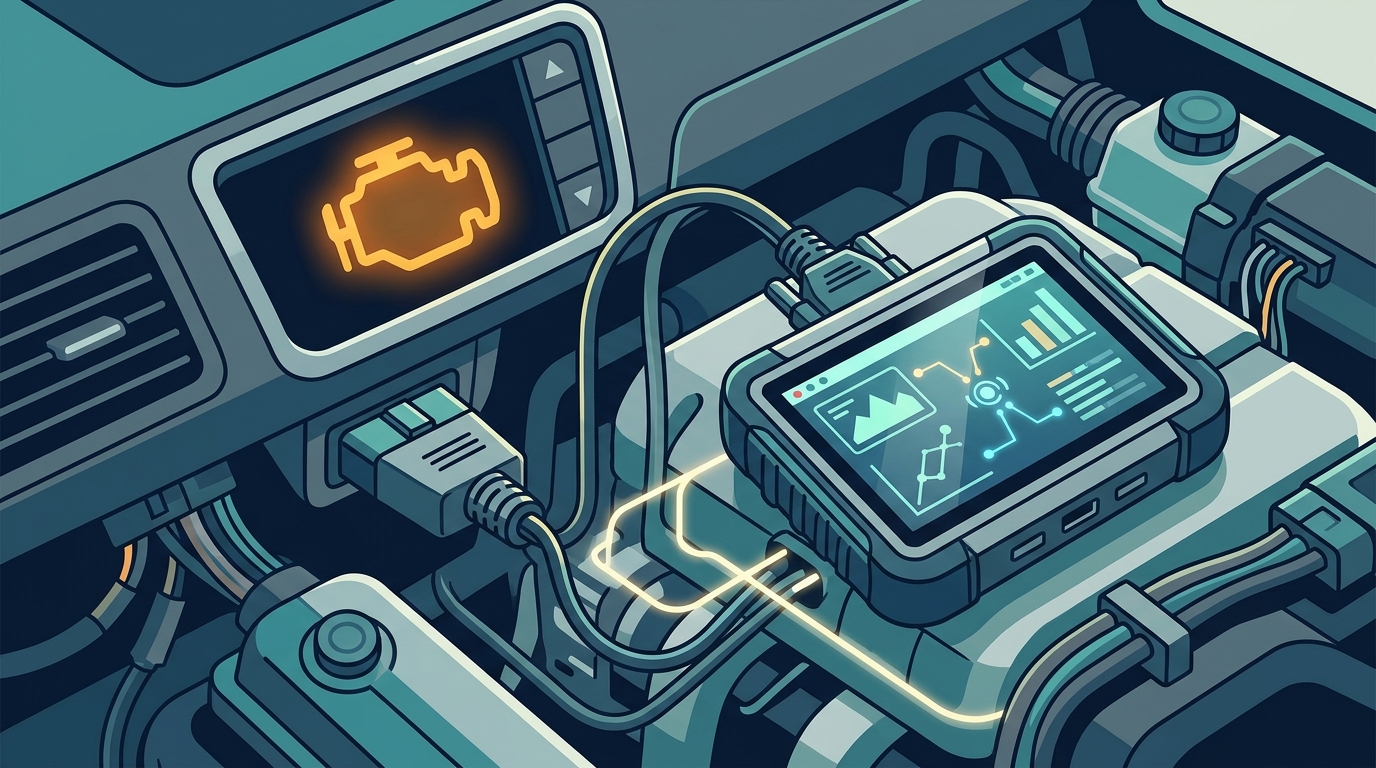
Once basic checks are complete, utilize a specialized diagnostic tool. AutoUncover provides a streamlined interface for this process. You can input your vehicle details and the retrieved codes to receive a detailed analysis. The platform then matches your issue with verified repair data from its network. This step transforms raw data into a clear repair pathway.
Professional Verification
Even with AI assistance, professional verification is crucial. The diagnostic tool provides a recommended course of action, but a certified technician must confirm the physical state of the components. This hybrid approach combines digital precision with mechanical expertise. It ensures that the repair is both necessary and correctly executed.
Common Diagnostic Trouble Codes
Understanding common codes helps demystify the diagnostic process. Below is a summary of frequent issues and their typical implications.
| Code | Description | Typical Cause | Severity |
|---|---|---|---|
| P0420 | Catalyst System Efficiency Below Threshold | Failing catalytic converter or oxygen sensor | High |
| P0171 | System Too Lean (Bank 1) | Vacuum leak or faulty mass airflow sensor | Medium |
| P0300 | Random/Multiple Cylinder Misfire Detected | Ignition coils, spark plugs, or fuel injectors | High |
| P0455 | Large Evaporative Emission System Leak | Loose or damaged gas cap | Low |
Each code represents a specific area of the vehicle's ecosystem. P0420 often requires expensive catalytic converter replacement. P0171 might be resolved with a simple sensor cleaning. P0300 indicates ignition system failure. P0455 is often a minor seal issue. Recognizing these distinctions prevents unnecessary expenditures.
Repair and Maintenance Strategies
Effective repair strategies depend on accurate diagnosis. Once the code is identified, the next step is determining the root cause. For instance, a misfire code could stem from spark plugs, coils, or fuel pressure issues. AutoUncover helps narrow this down by analyzing historical data for similar vehicle models. This reduces the trial-and-error nature of traditional repairs.
Preventive maintenance is the best defense against check engine lights. Regular oil changes, filter replacements, and spark plug inspections keep the engine running efficiently. According to automotive reliability studies, vehicles with consistent maintenance records have 30% fewer unexpected breakdowns. This proactive approach extends the lifespan of critical components.
When repairs are necessary, choosing a verified professional is key. AutoUncover's network ensures that technicians have the specific expertise for your vehicle's make and model. This verification process protects consumers from unqualified service providers. It also provides transparency in pricing and repair scope.
Key Takeaways
- Over 40% of check engine light triggers are minor issues like loose gas caps.
- A flashing check engine light indicates severe misfires requiring immediate attention.
- AI diagnostics verify repairs by cross-referencing millions of real-world repair outcomes.
- P0420 codes typically indicate catalytic converter efficiency issues.
- Regular maintenance reduces unexpected breakdowns by up to 30%.
- AutoUncover connects vehicle data with verified repair professionals.
- Understanding DTCs is essential for accurate and cost-effective repairs.
Frequently Asked Questions
How quickly should I address a check engine light?
You should address a steady check engine light within a few days. A flashing light requires immediate professional assistance to prevent engine damage.
Can I reset the check engine light myself?
While you can clear the code with a scanner, the light will return if the underlying issue is not fixed. Resetting without repair is not a solution.
What is the most common cause of a check engine light?
The most common causes include loose gas caps, faulty oxygen sensors, and failing catalytic converters. These components are critical for emissions and engine performance.
How does AI improve car diagnostics?
AI improves diagnostics by analyzing vast datasets of repair histories to predict accurate causes. This reduces misdiagnosis and unnecessary part replacements.
Is AutoUncover free to use?
AutoUncover offers various pricing tiers depending on the depth of diagnostic support and repair verification needed. Visit the pricing page for details.
What is a Diagnostic Trouble Code?
A Diagnostic Trouble Code is a standardized alphanumeric code stored by the vehicle's computer to identify specific system faults.
Do I need a professional to interpret AI diagnostics?
While AI provides clear insights, a professional technician should verify the physical condition of components before performing repairs.
Get Started with AutoUncover
Stop guessing and start diagnosing with precision. AutoUncover provides the tools and network you need to resolve check engine light issues efficiently. Our platform connects you with verified professionals and provides AI-backed repair insights. Take control of your vehicle's health today. Visit the Garage to begin your diagnostic journey.