
Modern vehicles generate over 150,000 lines of code to manage engine performance, emissions, and safety systems. When a critical sensor detects a deviation, the dashboard illuminates the check engine light. According to the U.S. Environmental Protection Agency, addressing these warnings promptly can prevent significant emissions increases and costly component failures. This guide explains how to interpret these signals and utilize advanced diagnostic tools to identify the root cause efficiently.
Understanding the Signal
The check engine light, technically known as the Malfunction Indicator Lamp (MIL), serves as the primary communication channel between your vehicle's computer and the driver. It does not always indicate a catastrophic failure. Often, it signals a minor issue that requires attention before it escalates. Ignoring this warning can lead to reduced fuel efficiency, failed emissions tests, and expensive repairs down the line.
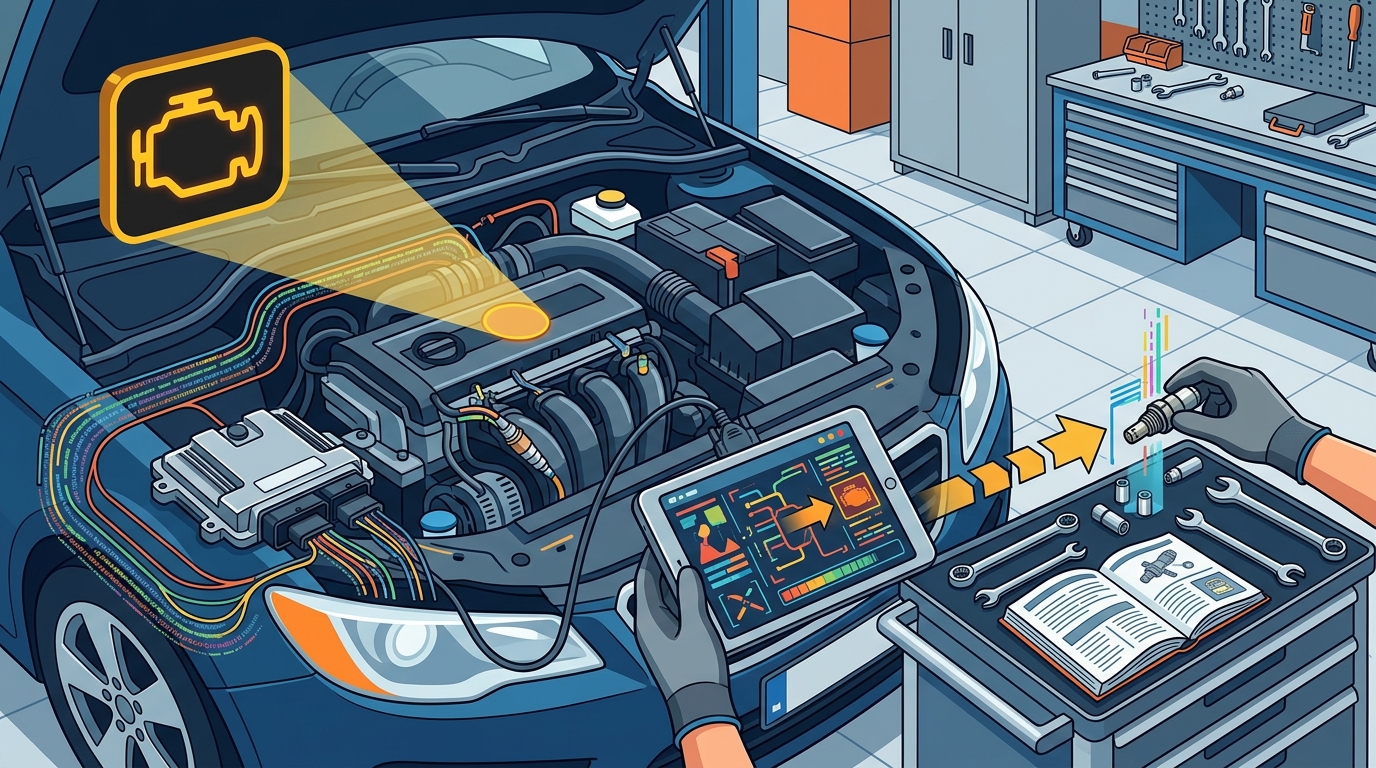
When the light activates, the vehicle's onboard computer stores a Diagnostic Trouble Code (DTC). These codes provide a standardized language for mechanics to identify the specific system experiencing trouble. For example, a P0300 code indicates a random misfire, while a P0420 suggests catalytic converter efficiency is below the threshold. Understanding these codes is the first step toward resolving the issue.
Not all warnings are created equal. A steady light typically indicates a non-urgent issue that should be addressed soon. A flashing light, however, signals a severe problem that could damage the catalytic converter instantly. In such cases, you should reduce speed and load on the engine immediately. Consulting official EPA guidelines provides further context on the importance of timely diagnostics.
Diagnostic Methods
Traditionally, diagnosing a check engine light required a visit to a dealership or a specialized repair shop. Mechanics would plug an OBD-II scanner into the port under the dashboard to retrieve codes. While effective, this method can be slow and expensive. You might pay for a scan only to receive a generic code that requires further investigation to pinpoint the exact cause.
Modern technology has democratized access to this information. Smartphone apps and dedicated handheld scanners allow drivers to read codes in real-time. However, reading the code is only half the battle. The challenge lies in interpreting the code within the context of your specific vehicle's history and current symptoms. This is where traditional methods often fall short.
Many drivers attempt to clear the codes using a basic scanner, only to have the light return days later. This happens because the underlying issue was never fixed. The computer detects the problem again and reactivates the warning. A comprehensive diagnostic approach requires not just reading the code, but understanding the repair process associated with it.
AI Advantages
Artificial Intelligence has transformed automotive diagnostics by bridging the gap between raw data and actionable repair advice. Traditional scanners provide a code, but they do not explain how to fix the problem. AI-driven platforms analyze millions of repair records to correlate specific codes with successful repair outcomes. This allows for a more precise diagnosis than a simple code lookup.
AutoUncover utilizes a unique approach to this problem. Instead of relying solely on algorithmic predictions, the platform verifies its diagnostic data against real-world repair records. This ensures that the advice provided is not just theoretical but has been proven effective by professional mechanics. The system connects the diagnostic code to specific repair steps, parts, and labor estimates.
This verification process significantly reduces the risk of misdiagnosis. According to industry data, misdiagnosis is a leading cause of customer dissatisfaction in the auto repair sector. By providing verified repair paths, tools like AutoUncover empower users with confidence in their next steps. The platform also offers a garage management feature for those who run repair businesses.
The integration of AI does not replace the need for professional expertise. Instead, it enhances it by providing a clearer roadmap. Users can see the likely causes ranked by probability, along with the estimated cost and time required for each repair. This transparency allows for better decision-making when choosing between DIY repairs and professional service.
Repair Strategy
Once you have identified the likely cause of the check engine light, the next step is formulating a repair strategy. This involves evaluating the complexity of the repair, the cost of parts, and your own technical skill level. Some issues, such as a loose gas cap, can be resolved in minutes. Others, like a failing oxygen sensor or a cracked exhaust manifold, require specialized tools and knowledge.
For complex repairs, seeking professional help is often the safest option. However, having a detailed diagnostic report allows you to communicate effectively with mechanics. You can provide them with specific codes and verified repair paths, which can streamline the diagnostic process and reduce labor costs. This collaborative approach ensures that you are not paying for unnecessary tests.
Regular maintenance is the best defense against check engine lights. Following the manufacturer's recommended service schedule can prevent many common issues. This includes replacing spark plugs, air filters, and oxygen sensors at the appropriate intervals. Keeping your vehicle well-maintained also helps in maintaining its resale value and overall reliability.
For those interested in managing their vehicle's health proactively, exploring pricing options for diagnostic tools can be a worthwhile investment. Understanding the installation process for these tools is also straightforward, making it accessible for most car owners.
Key Takeaways
- A steady check engine light indicates a non-urgent issue, while a flashing light requires immediate attention to prevent engine damage.
- Diagnostic Trouble Codes (DTCs) provide a standardized way to identify the specific system experiencing a problem.
- AI-driven diagnostics verify repair data against real-world records, reducing the risk of misdiagnosis.
- Clearing codes without fixing the underlying issue will result in the light returning shortly after.
- Providing mechanics with specific diagnostic data can streamline repairs and reduce labor costs.
- Regular maintenance, including timely replacement of sensors and filters, prevents many common check engine light triggers.
- Platforms like AutoUncover offer verified repair guides that connect codes to actionable solutions.
Frequently Asked Questions
How long can I drive with a check engine light on?
If the light is steady, you can typically drive for a short period, but you should address the issue as soon as possible. If the light is flashing, you should stop driving immediately to avoid severe engine damage.
Can I clear the check engine light myself?
You can clear the codes using an OBD-II scanner, but this does not fix the problem. The light will likely return if the underlying issue is not resolved. It is better to diagnose and repair the issue first.
What is the most common cause of a check engine light?
A loose or faulty gas cap is one of the most common causes. It can trigger the evaporative emissions system to report a leak. Other frequent causes include failing oxygen sensors and ignition coil issues.
Do I need a professional to read the codes?
No, you can read the codes yourself using an affordable OBD-II scanner or a smartphone app. However, interpreting the codes and determining the correct repair often requires professional knowledge or verified data sources.
How does AI help with car diagnostics?
AI analyzes vast amounts of repair data to correlate codes with successful repair outcomes. This provides users with verified repair paths, parts lists, and labor estimates, making the diagnosis more accurate and actionable.
Is AutoUncover free to use?
AutoUncover offers various plans to suit different needs. You can check the pricing page for detailed information on free and premium features. The platform also provides a help center for support.
Can I use these tools for any car?
Most modern vehicles (1996 and newer) use the OBD-II standard, which is compatible with most diagnostic tools. Older vehicles may require different adapters or methods. Always check your vehicle's specifications before purchasing a tool.
Start Diagnosing Your Vehicle Today
Do not let a check engine light leave you guessing. Take control of your vehicle's health by using advanced diagnostic tools that provide verified repair guidance. Visit AutoUncover.com to explore how AI can help you understand and resolve automotive issues with confidence. Your car's performance and your peace of mind are just a diagnosis away.