
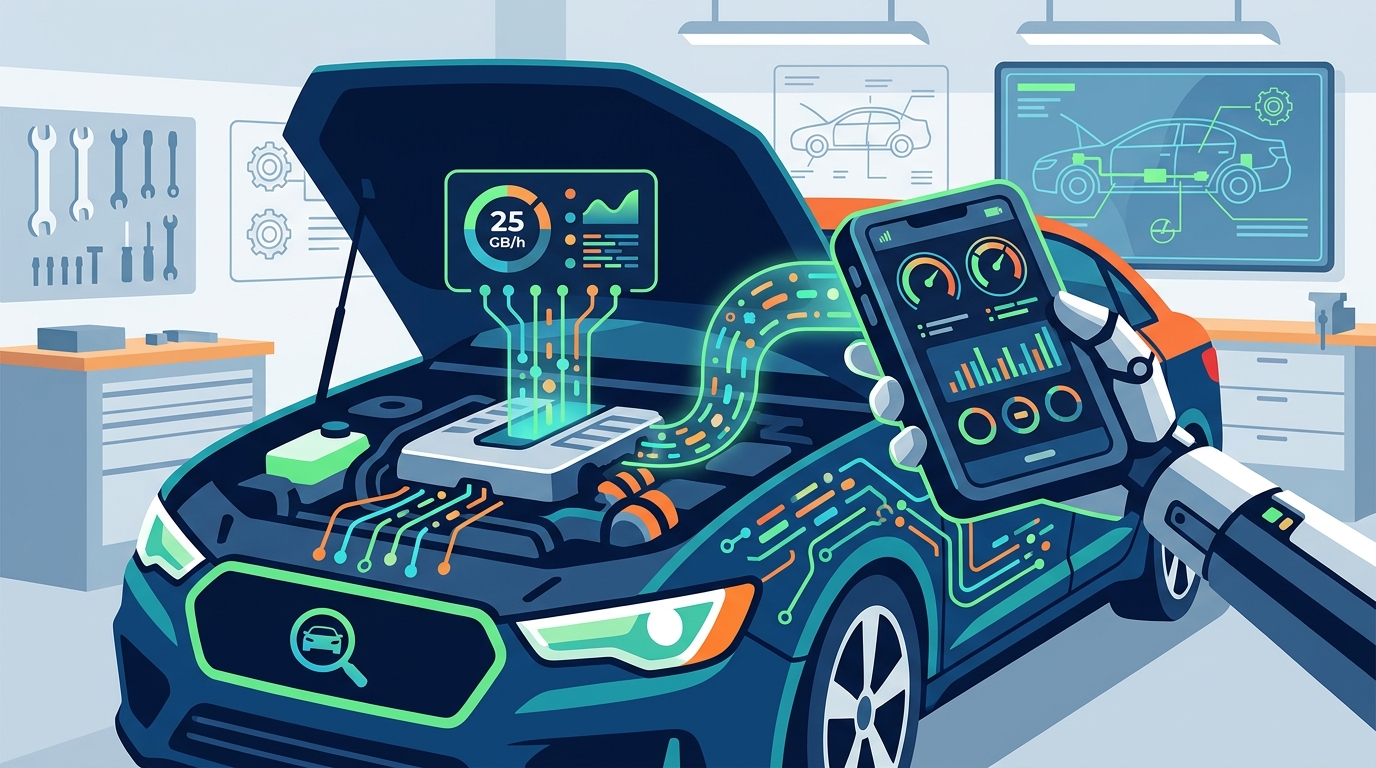
Modern vehicles generate massive amounts of data every time you drive. According to a 2024 analysis by the Society of Automotive Engineers, the average connected car produces approximately 25 gigabytes of data per hour. This data includes critical health metrics that were previously accessible only to dealership technicians. You no longer need to wait for an appointment or pay high diagnostic fees to understand what is wrong with your vehicle. By leveraging onboard diagnostics and smart mobile applications, you can identify mechanical issues from your driveway. (AutoUncover AI car diagnostics)
Understanding the OBD2 Port
Every car manufactured after 1996 in the United States is required to have an On-Board Diagnostics II (OBD2) port. This standardized interface allows you to communicate directly with the vehicle's computer system. The port is typically located under the dashboard on the driver's side, near the steering column. It is a trapezoidal connector with 16 pins that transmits real-time data about engine performance, emissions, and transmission health.
Without this port, you would be completely blind to internal mechanical failures. The OBD2 system monitors hundreds of sensors, including oxygen sensors, mass airflow sensors, and catalytic converter efficiency. When a sensor detects a value outside its normal operating range, it triggers a Diagnostic Trouble Code (DTC). These codes are the first step in any accurate car diagnosis.
Essential Tools for DIY Diagnosis
To perform a reliable car diagnosis without a mechanic, you need the right hardware and software. The most critical tool is an OBD2 scanner. These devices range from basic code readers to advanced bi-directional scanners that can command components to test them. For most DIY enthusiasts, a Bluetooth or Wi-Fi enabled scanner paired with a smartphone app offers the best balance of cost and functionality.
Another essential tool is a multimeter. This device allows you to test electrical circuits, battery voltage, and sensor resistance. A healthy car battery should read between 12.6 and 12.8 volts when the engine is off. If your reading is lower, you may have a charging system issue rather than a sensor failure. Additionally, having a basic toolkit with screwdrivers, pliers, and socket sets will help you access sensors that may be tucked away in tight engine bay spaces.
Step-by-Step Diagnostic Process
Starting your diagnostic journey requires a systematic approach. Randomly replacing parts based on guesswork is expensive and often ineffective. Follow this structured workflow to ensure accuracy.
1. Connect the Scanner
Locate the OBD2 port under your dashboard. Plug your scanner into the port. If you are using a Bluetooth device, ensure your phone's Bluetooth is enabled and paired. Turn the ignition to the "On" position without starting the engine. This powers up the vehicle's computer systems without engaging the starter motor. Wait for the scanner to establish a connection with the vehicle's ECU (Engine Control Unit).
2. Retrieve and Record Codes
Once connected, request a code readout. The scanner will display a list of DTCs. These codes follow a standard format. The first letter indicates the system: P for Powertrain, B for Body, C for Chassis, and U for Network. The following digits specify the exact component and fault type. Write down every code, including pending codes that have not yet triggered a permanent check engine light. Pending codes often indicate intermittent issues that are valuable for early diagnosis.
3. Clear and Retest
After recording the codes, you can clear them to see if the issue persists. Drive the vehicle for a short period to allow the computer to run its self-tests. If the check engine light returns, the problem is active. If it does not return, the issue may have been a temporary glitch or a sensor that has since corrected itself. This step confirms whether you are dealing with a chronic mechanical failure or a transient error.
Interpreting Diagnostic Trouble Codes
Understanding what the codes mean is the most challenging part of DIY diagnosis. A code like P0300 indicates a random misfire detected in the engine. This could be caused by faulty spark plugs, bad ignition coils, or fuel injector issues. Another common code, P0420, indicates that the catalytic converter efficiency is below the threshold. This often points to a failing catalytic converter or an oxygen sensor problem.
Generic code definitions provide a starting point, but they do not tell you the root cause. For example, a code for a mass airflow sensor failure might actually be caused by a dirty air filter or a vacuum leak upstream of the sensor. This is where advanced diagnostic tools and experience come into play. You must correlate the code with live data streams to understand the context of the failure.
The Role of AI in Car Repair
Traditional DIY diagnosis relies heavily on the user's ability to interpret complex data. This creates a barrier for many car owners who lack mechanical expertise. Artificial Intelligence is changing this landscape by providing verified, context-aware diagnostics. Platforms like AutoUncover utilize AI to analyze vehicle data and cross-reference it with real-world repair outcomes. This ensures that the diagnosis is not just a theoretical code interpretation but a practical repair guide.
AI-driven diagnostics can identify patterns that human mechanics might miss. By analyzing millions of repair records, the system can predict the most likely cause of a fault with high accuracy. This reduces the risk of misdiagnosis and unnecessary part replacements. For the DIY user, this means getting a clear, actionable path to repair rather than a list of ambiguous codes. The integration of AI with OBD2 data bridges the gap between professional repair shops and home garages.
Key Takeaways
- OBD2 Standardization: All cars post-1996 have a standardized diagnostic port, making DIY diagnosis legally mandated and technically possible.
- Data Volume: Modern vehicles generate approximately 25 gigabytes of data per hour, providing deep insight into mechanical health.
- Code Structure: Diagnostic Trouble Codes (DTCs) follow a strict format starting with P, B, C, or U to identify the affected system.
- AI Verification: AI diagnostics verify codes against real repair data, reducing misdiagnosis rates common in traditional scanning.
- Cost Efficiency: DIY diagnosis can save hundreds of dollars in labor fees by identifying the exact part that needs replacement.
- Essential Tools: A Bluetooth OBD2 scanner and a multimeter are the minimum requirements for accurate home diagnostics.
- Live Data: Reading live sensor data is more accurate than relying solely on stored trouble codes for complex issues.
Frequently Asked Questions
Can I diagnose my car without buying a scanner?
No, you cannot accurately diagnose modern cars without an OBD2 scanner. The vehicle's computer stores the fault data internally, and you need a device to read and interpret these codes. While some symptoms like rough idling can be observed visually, the underlying cause remains hidden without electronic tools.
What is the difference between a code reader and a scanner?
A basic code reader only retrieves and clears trouble codes. A full scanner can display live data streams, perform bi-directional controls, and access multiple vehicle modules like ABS or Airbag systems. For comprehensive diagnosis, a scanner is necessary.
How accurate are DIY car diagnostics?
DIY diagnostics are highly accurate for identifying the general area of failure. However, they may not pinpoint the exact component without additional testing. Using AI-verified platforms can significantly improve accuracy by cross-referencing your data with known repair patterns.
Do I need to clear the codes after fixing the issue?
Yes, you must clear the codes after repairing the issue. This resets the check engine light and allows the vehicle's computer to run new self-tests. If the light returns, the repair was not successful or another issue exists.
Can AI replace a mechanic entirely?
AI provides superior diagnostic insights but cannot perform physical repairs. It serves as a powerful tool for DIYers and mechanics alike to reduce guesswork. The physical labor of replacing parts still requires human skill and tools.
What does a P0420 code mean?
A P0420 code indicates that the catalytic converter efficiency is below the threshold. This is a common emissions-related fault that may require replacing the catalytic converter or fixing upstream oxygen sensors.
Is it safe to drive with a check engine light?
It depends on the severity. A steady check engine light usually indicates a non-critical issue that should be addressed soon. A flashing check engine light indicates a severe misfire that can damage the catalytic converter. You should stop driving immediately if the light is flashing.
Start Your Diagnosis Today
Taking control of your vehicle's health does not require a degree in mechanical engineering. By using the right tools and leveraging modern AI technology, you can diagnose issues accurately and confidently. Visit the AutoUncover install page to get started with AI-powered diagnostics. You can also explore our pricing options to find the plan that fits your needs. For more information on how our technology works, check out our help center. Join thousands of car owners who are saving time and money with verified AI diagnostics. Create your garage profile today and start diagnosing your car from anywhere.