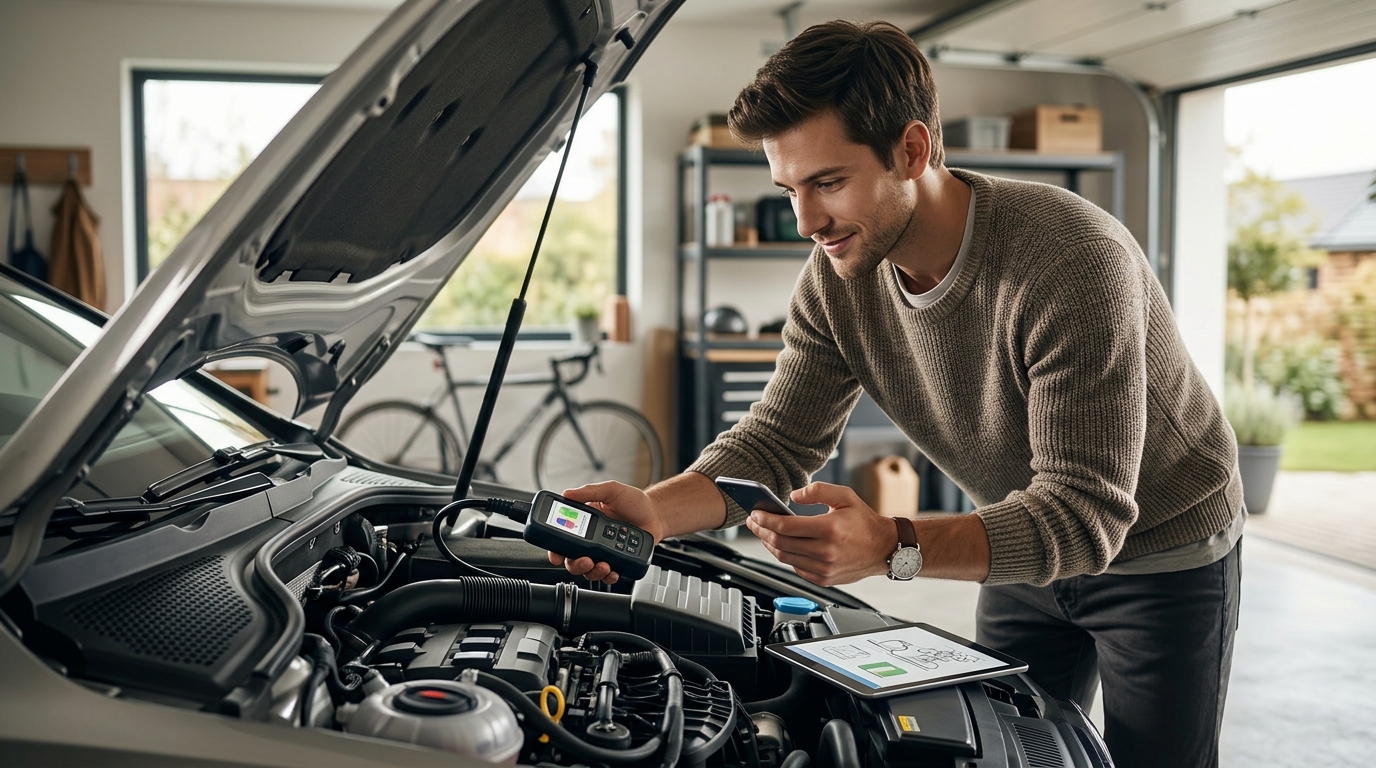
Modern vehicles are essentially computers on wheels, relying on complex networks to manage everything from engine timing to brake pressure. According to the Society of Automotive Engineers, the average modern car contains over 100 million lines of code and dozens of electronic control units. This technological shift means that traditional mechanical intuition is no longer enough to diagnose issues. You need the right digital interface to translate those hidden error codes into actionable repair steps. This guide breaks down the essential diagnostic tools for beginners, helping you move from confusion to confidence without breaking the bank.
Understanding the OBD2 Standard
Before purchasing any hardware, you must understand the foundation of modern car diagnostics. The On-Board Diagnostics II (OBD2) system is a standardized protocol mandated in the United States for all passenger vehicles manufactured since 1996. This standardization is a blessing for DIY enthusiasts because it means the physical connector and the basic language used by the car are consistent across almost all makes and models.
OBD2 is a standardized system that allows vehicles to report their operational status and fault codes to external diagnostic devices. The connector is typically a 16-pin trapezoidal port located under the dashboard near the driver's steering column. If your car was built after 1996, it almost certainly has this port. Understanding this universal standard is the first step in selecting a tool that will work with your specific vehicle.
When you plug a scanner into this port, it draws power directly from the vehicle's battery. It then communicates with the car's Engine Control Unit (ECU) and other modules. The ECU stores Diagnostic Trouble Codes (DTCs) when it detects a malfunction. These codes are the starting point for any diagnosis. However, a code alone rarely tells you the full story. It tells you what system is failing, but not necessarily why. This is where the quality of your diagnostic tool becomes critical.
Bluetooth and Wi-Fi Scanners
For beginners, the most accessible entry point into car diagnostics is the Bluetooth or Wi-Fi OBD2 adapter. These small, inexpensive devices plug into the OBD2 port and pair with your smartphone or tablet via an application. This approach is popular because it leverages hardware you already own, keeping initial costs extremely low.
These adapters are ideal for reading and clearing basic engine codes. They provide real-time data streams, allowing you to monitor parameters like engine RPM, coolant temperature, and vehicle speed. This live data is invaluable for diagnosing intermittent issues that might not trigger a permanent fault code. For example, if your check engine light comes on only when you accelerate hard, you can monitor the fuel trims in real-time to see what the engine is doing at that moment.
However, Bluetooth scanners have limitations. They generally lack the processing power to perform active tests, such as firing up a fuel injector or cycling a relay. They are also dependent on your phone's battery and connectivity. If your phone dies in the middle of a diagnosis, you lose your interface. Despite these limitations, they are the best starting point for casual DIYers who want to check if a code is serious before visiting a mechanic.
Handheld Diagnostic Units
If you prefer a dedicated device that works independently of your smartphone, a handheld OBD2 scanner is the next logical step. These units have their own screens, batteries, and processing power. They are rugged, easy to use, and do not require pairing or app updates to function for basic tasks.
Handheld scanners are excellent for reading and clearing codes, viewing freeze frame data, and checking readiness monitors. Freeze frame data is a snapshot of the engine conditions at the exact moment a fault code was triggered. This information is crucial for mechanics and DIYers alike because it provides context. For instance, knowing that a misfire occurred at 3000 RPM and 200 degrees Fahrenheit helps narrow down the potential causes significantly.
A handheld scanner is a standalone diagnostic device that provides code reading and live data capabilities without requiring a mobile device. Many mid-range handheld units also offer ABS (Anti-lock Braking System) and SRS (Airbag) module scanning. This expanded capability allows you to diagnose issues beyond the engine, such as a faulty wheel speed sensor or a deployed airbag system. This makes them a versatile choice for beginners who want to tackle a wider range of vehicle problems.
Advanced Tools for Growth
As your skills grow, you may find that basic code readers are no longer sufficient. Advanced diagnostic tools offer bi-directional controls, which allow you to command the vehicle's computer to perform specific actions. This capability transforms you from a passive observer into an active diagnostician.
Bi-directional controls enable you to test components like cooling fans, fuel pumps, and solenoids directly from the scanner. For example, you can command a fuel pump to turn on to verify if it is receiving power and operating correctly. This saves hours of guesswork and multimeter probing. Advanced tools also support module coding and programming, which is necessary when replacing certain electronic components.
For those serious about automotive repair, investing in a professional-grade scan tool is a wise decision. These tools often come with extensive vehicle coverage, including Asian, European, and domestic makes. They provide detailed wiring diagrams, technical service bulletins, and repair procedures. While the initial investment is higher, the time saved and the accuracy gained make them indispensable for serious DIYers and professional technicians alike.
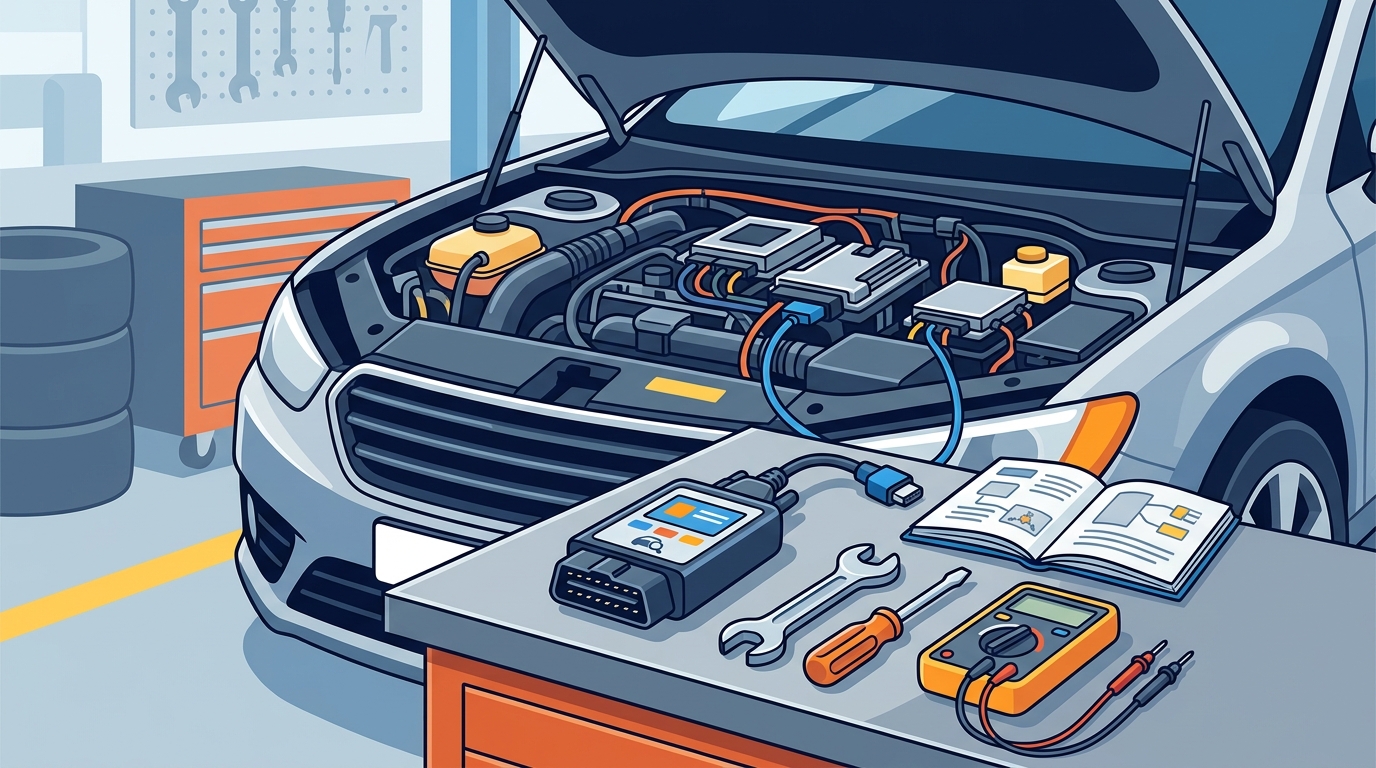
Tool Comparison Matrix
To help you make an informed decision, here is a comparison of the primary types of diagnostic tools available to beginners.
| Tool Type | Primary Function | Cost Range | Best For |
|---|---|---|---|
| Bluetooth Adapter | Basic code reading and live data via phone | $15 - $50 | Casual users, code clearing |
| Handheld Scanner | Standalone code reading and freeze frame data | $50 - $150 | DIYers wanting reliability |
| Advanced Scan Tool | Bi-directional controls and module coding | $200 - $1000+ | Serious repairs and diagnostics |
| OBD2 Code Reader | Simple code retrieval only | $10 - $30 | Emergency code checks |
Key Takeaways
- Universal Compatibility: All passenger cars sold in the US since 1996 use the OBD2 standard, ensuring your tool will work with your vehicle.
- Cost-Effective Entry: Bluetooth adapters offer the lowest barrier to entry, costing under $50 while providing essential live data capabilities.
- Freeze Frame Data: Always review freeze frame data to understand the conditions under which a fault occurred, not just the code itself.
- Bi-Directional Control: Advanced tools allow you to command vehicle components, enabling active testing of sensors and actuators.
- ABS and SRS Coverage: Mid-range scanners often include anti-lock brake and airbag system diagnostics, expanding your repair scope.
- Software Updates: Ensure your chosen tool supports regular software updates to maintain compatibility with newer vehicle models.
- Professional Grade: For complex repairs, professional-grade tools provide wiring diagrams and technical service bulletins that are critical for accurate diagnosis.
Frequently Asked Questions
Can I use a cheap OBD2 scanner to diagnose my car?
Yes, cheap OBD2 scanners can read and clear basic engine codes. However, they may not provide detailed live data or access to other systems like ABS or transmission. They are suitable for basic maintenance but limited for complex diagnostics.
Do I need a special tool for European cars?
While the OBD2 port is standard, European cars often use proprietary protocols for ABS, airbag, and transmission systems. A generic scanner may only read engine codes. Specialized tools or advanced scanners with European coverage are recommended for full system diagnostics.
How do I connect a Bluetooth scanner to my car?
Locate the OBD2 port under the driver's dashboard. Plug the Bluetooth adapter into the port. Download the companion app on your smartphone, enable Bluetooth, and pair the device. The app will then communicate with the car's computer.
What is the difference between a code reader and a scan tool?
A code reader primarily retrieves and clears diagnostic trouble codes. A scan tool offers more advanced features, including live data streams, freeze frame data, bi-directional controls, and access to multiple vehicle modules beyond the engine.
Can a diagnostic tool fix my car?
No, a diagnostic tool cannot physically fix your car. It provides the information needed to identify the problem. You must perform the necessary repairs, such as replacing a sensor or fixing a wiring issue, based on the diagnostic data.
Are wireless scanners accurate?
Wireless scanners are generally accurate for reading standard OBD2 codes and live data. However, their reliability can depend on the quality of the Bluetooth connection and the app's processing power. For critical diagnostics, a wired or handheld unit may offer more consistent performance.
Do I need to buy a new scanner for each car?
No, most OBD2 scanners are universal and work with any vehicle that supports the OBD2 standard. You do not need to buy a new scanner for each car, provided the new car also adheres to the OBD2 protocol.
Start Diagnosing Today
Choosing the right diagnostic tool is the first step toward mastering your vehicle's health. Whether you start with a simple Bluetooth adapter or invest in a professional-grade scanner, the key is to begin learning. AutoUncover provides AI-powered diagnostics verified by real repairs to help you make sense of the data. Visit AutoUncover.com to explore our services and start diagnosing with confidence today.