

Traditional automotive diagnostics have long relied on static code libraries and theoretical fault trees. This approach often leads to misdiagnosis, with studies indicating that up to 30% of parts replaced during repairs are unnecessary. The industry is now shifting toward dynamic, evidence-based diagnostics that utilize actual repair outcomes to validate initial findings. This evolution marks a significant departure from guesswork, offering mechanics and vehicle owners a higher degree of accuracy and confidence in repair decisions.
What Is Real Repair Data?
Real repair data refers to the aggregated, anonymized information derived from completed automotive repairs. This includes the specific parts replaced, the labor hours logged, and the final resolution of the vehicle issue. Unlike theoretical diagnostic codes, which are generated by onboard sensors and interpreted by software algorithms, real repair data is grounded in physical outcomes. It represents the actual solution that worked in the real world, rather than a predicted possibility.
This data is collected from a vast network of repair shops and independent mechanics. By analyzing millions of repair records, patterns emerge that link specific symptoms and error codes to successful repair actions. This creates a feedback loop where the accuracy of future diagnostics improves with every verified repair. The concept of verified repair data is central to this new paradigm, ensuring that the information used for diagnosis is not just theoretical but proven effective.
Limitations of Traditional Diagnostics
Traditional diagnostic tools rely heavily on On-Board Diagnostics (OBD-II) codes. These codes indicate that a sensor has detected a parameter outside of its normal range. However, a code alone does not always point to the root cause. For example, a code for a misfire could be caused by a faulty spark plug, a bad ignition coil, a clogged fuel injector, or even a mechanical engine issue. Without additional context, mechanics often guess which component to replace first.
This guesswork leads to several problems. First, it increases the time required to diagnose a vehicle. Second, it raises the cost for the customer due to unnecessary parts and labor. Third, it can lead to customer dissatisfaction if the first repair attempt fails to resolve the issue. The lack of historical context means that each diagnosis starts from scratch, ignoring the wealth of knowledge available from previous similar cases.
How AutoUncover Leverages Verified Data
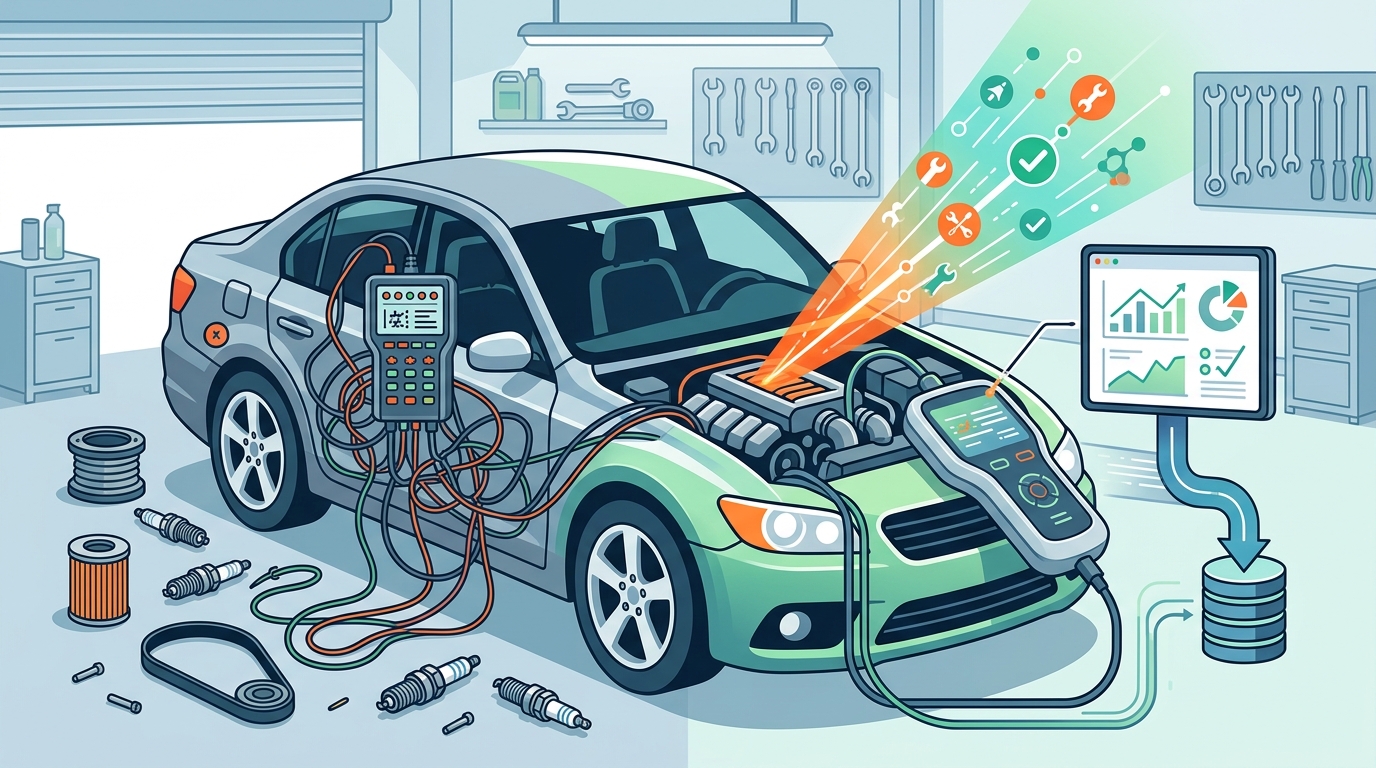
AutoUncover addresses these limitations by integrating real repair data directly into the diagnostic process. The platform connects with existing diagnostic tools and analyzes the vehicle's current state against a database of verified repairs. When a mechanic inputs a vehicle's details and observed symptoms, AutoUncover provides insights based on what has actually worked for other vehicles with similar issues.
The system does not replace the mechanic's expertise but enhances it with data-driven guidance. By accessing verified repair data, mechanics can see the most common successful repairs for a specific set of conditions. This reduces the diagnostic time significantly and increases the likelihood of a first-time fix. The platform's pricing model is designed to be accessible for independent shops and mobile mechanics, ensuring that small businesses can also benefit from enterprise-level data insights.
Furthermore, AutoUncover's installation process is streamlined to minimize disruption to the workflow. Mechanics can quickly integrate the tool into their daily routine without extensive training. The platform's settings allow users to customize the data filters based on their specific service area and vehicle types, ensuring that the recommendations are relevant to their practice.
Benefits for Professional Mechanics
For professional mechanics, the ability to access real repair data is a game-changer. It allows them to diagnose vehicles more quickly and accurately, leading to higher throughput and customer satisfaction. By reducing the number of comebacks, mechanics can save time and money, improving their bottom line. The data also serves as a valuable learning tool for junior technicians, helping them understand the nuances of complex automotive systems.
Additionally, the platform provides a history of past repairs for similar vehicles, which can be invaluable when dealing with recurring issues. This historical context helps mechanics identify patterns that might otherwise be missed. The help center offers comprehensive resources to support users in maximizing the benefits of the platform.
Benefits for Vehicle Owners
Vehicle owners also stand to gain significantly from this shift in diagnostic methodology. With more accurate diagnostics, the cost of repairs is often lower because unnecessary parts are not replaced. The repair process is also faster, reducing the time the vehicle is out of service. This transparency builds trust between the owner and the mechanic, as the repair recommendations are backed by data rather than speculation.
Moreover, the use of real repair data ensures that the repairs performed are more likely to be durable and effective. This reduces the likelihood of the same issue recurring shortly after the repair, providing peace of mind for the vehicle owner. The authentication process ensures that only qualified professionals can access and utilize this data, maintaining the integrity of the information.
Comparison of Diagnostic Methods
To understand the value of real repair data, it is helpful to compare it with traditional diagnostic methods. The table below outlines the key differences between the two approaches.
| Feature | Traditional Diagnostics | Real Repair Data Diagnostics |
|---|---|---|
| Basis of Diagnosis | Theoretical fault codes | Verified repair outcomes |
| Accuracy | Variable, often requires guesswork | High, based on proven solutions |
| Time to Diagnose | Longer, due to trial and error | Shorter, with targeted insights |
| Cost Efficiency | Lower, due to unnecessary parts | Higher, with precise repairs |
| Customer Trust | Variable | High, due to transparency |
Key Takeaways
- Real repair data is derived from actual completed repairs, providing proven solutions rather than theoretical predictions.
- Traditional diagnostics often lead to misdiagnosis and unnecessary parts replacement due to reliance on static code libraries.
- AutoUncover integrates verified repair data to enhance diagnostic accuracy and reduce repair times for mechanics.
- The platform offers a pricing structure designed for accessibility, making advanced data insights available to independent shops.
- Vehicle owners benefit from lower repair costs and faster turnaround times when diagnostics are data-driven.
- The use of real repair data builds trust between mechanics and customers through transparent and evidence-based recommendations.
- AutoUncover's help resources and customizable settings ensure that users can tailor the tool to their specific needs.
Frequently Asked Questions
What is the difference between OBD-II codes and real repair data?
OBD-II codes indicate a detected fault, while real repair data shows what actually fixed that fault in similar vehicles. Codes are theoretical, whereas repair data is proven.
How does AutoUncover ensure the accuracy of its data?
AutoUncover verifies its data by collecting information from completed repairs performed by qualified mechanics. This ensures that the solutions are practical and effective.
Can independent mechanics use AutoUncover?
Yes, AutoUncover is designed to be accessible for independent mechanics and mobile repair services. The installation process is straightforward and user-friendly.
Does AutoUncover replace the mechanic's expertise?
No, AutoUncover enhances the mechanic's expertise by providing data-driven insights. It does not replace the need for professional judgment and skill.
How does real repair data benefit vehicle owners?
Vehicle owners benefit from more accurate diagnoses, lower repair costs, and faster turnaround times. The transparency of data-driven repairs also builds trust.
Is AutoUncover suitable for all types of vehicles?
AutoUncover supports a wide range of vehicle makes and models. The settings allow users to filter data based on specific vehicle types to ensure relevance.
Where can I find more information about AutoUncover?
You can visit the help center for detailed guides and FAQs. The garage section provides an overview of the platform's features.
Start Using Verified Diagnostics
The future of automotive diagnostics is here. By leveraging real repair data, you can transform your repair process, improve accuracy, and build greater trust with your customers. AutoUncover provides the tools and insights you need to stay ahead in the industry. Visit AutoUncover.com to learn more and get started today.