
Modern vehicles generate massive amounts of data every time you drive. According to recent automotive technology reports, a single vehicle can produce over 25 gigabytes of diagnostic data per hour during normal operation. This wealth of information means you no longer need to rely solely on a mechanic to identify basic issues. By leveraging onboard diagnostics and modern mobile applications, you can pinpoint problems before they escalate into costly repairs. This guide explains how to access that data yourself using tools like AutoUncover. (AutoUncover AI car diagnostics)
Understanding the OBD2 Port
The foundation of any DIY car diagnosis is the On-Board Diagnostics II (OBD2) system. OBD2 is a standardized system that monitors vehicle emissions and engine performance. Every car manufactured in the United States since 1996 is required to have this system. The port is typically located under the dashboard on the driver's side, near the steering column. It is a trapezoidal connector with 16 pins. (AutoUncover AI car diagnostics)
When your check engine light illuminates, the vehicle's computer has already recorded a specific code detailing the malfunction. Without a scanner, this code remains inaccessible. By connecting a diagnostic tool to this port, you can retrieve the exact nature of the problem. This eliminates the guesswork that often leads to unnecessary service charges.
Essential Tools for DIY Diagnosis
You do not need an expensive professional garage to start diagnosing your car. The market offers several tiers of diagnostic tools ranging from basic code readers to advanced AI-powered scanners.
Basic OBD2 Code Readers
These are the most affordable entry points. They read standard diagnostic trouble codes (DTCs) and clear them from the system. While useful for confirming a light is on, they often lack the depth needed for complex electrical issues.
Advanced Bluetooth Scanners
Modern scanners connect to your smartphone via Bluetooth. They provide real-time data streams, including engine temperature, RPM, and fuel trims. This live data is crucial for diagnosing intermittent issues that do not trigger a permanent code.
AI-Powered Diagnostic Platforms
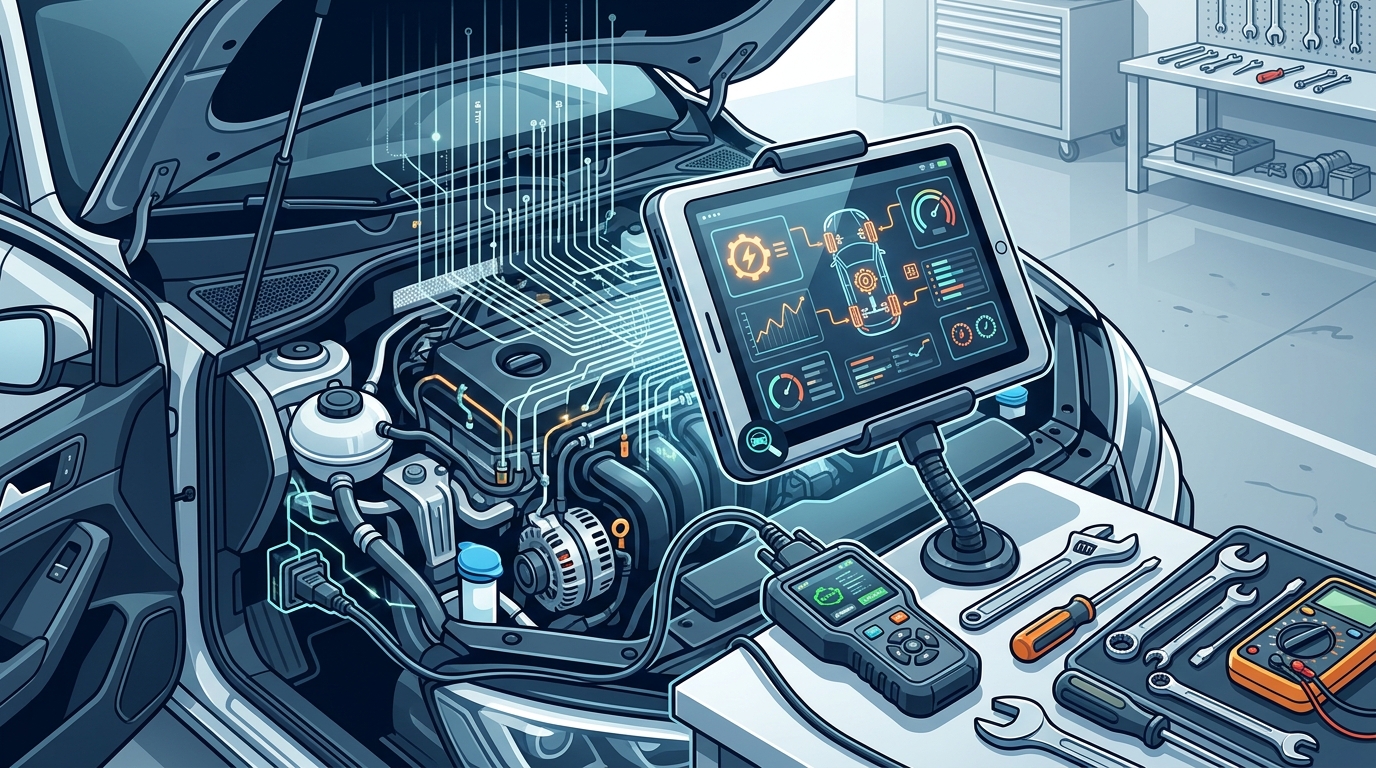
Platforms like AutoUncover utilize artificial intelligence to verify repairs. These tools do not just read codes; they cross-reference them with verified repair data to ensure the fix is accurate. This reduces the risk of misdiagnosis, which is common with basic scanners.
Step-by-Step Diagnosis Process
Performing a diagnosis is straightforward if you follow a logical sequence. The goal is to isolate the problem without introducing new variables.
Step 1: Locate and Connect
Find the OBD2 port under the dashboard. Plug in your scanner or connect your Bluetooth device. Ensure your vehicle's ignition is in the "on" position, but the engine is not running. This powers the scanner without draining the battery.
Step 2: Retrieve Codes
Use the scanner application to pull the current and pending codes. Current codes indicate an active problem. Pending codes suggest a potential issue that has not yet met the criteria to turn on the check engine light. Recording both sets provides a complete picture.
Step 3: Analyze Data
Do not rely solely on the code definition. Use the scanner to view live data. For example, if you have a code for an oxygen sensor, check the voltage readings in real-time. This confirms if the sensor is actually failing or if the issue lies elsewhere in the circuit.
Step 4: Clear and Test
After addressing the issue, clear the codes and drive the vehicle. If the check engine light returns, the problem persists. If it does not, the diagnosis was successful. For complex issues, professional garage integration may be required for deeper analysis.
Interpreting Diagnostic Trouble Codes
Diagnostic codes follow a specific alphanumeric structure. Understanding this structure helps you categorize the severity of the issue.
P0xxx codes are generic powertrain codes. These apply to all manufacturers and are the most common. For example, P0300 indicates a random misfire. P0171 suggests a system too lean on bank 1. These codes are widely documented and easy to research.
P1xxx codes are manufacturer-specific codes. These vary by brand. A P1234 code in a Ford vehicle means something entirely different than in a Toyota. You must consult manufacturer-specific databases or use tools that include brand-specific libraries. AutoUncover helps bridge this gap by providing verified repair data for these specific codes.
The Role of AI in Car Repair
Traditional DIY diagnosis relies on static databases. AI changes this by providing dynamic, verified solutions. According to automotive industry trends, the adoption of AI in vehicle maintenance is growing rapidly due to its accuracy. AI algorithms analyze millions of repair records to predict the most likely cause of a code.
This technology reduces the "parts cannon