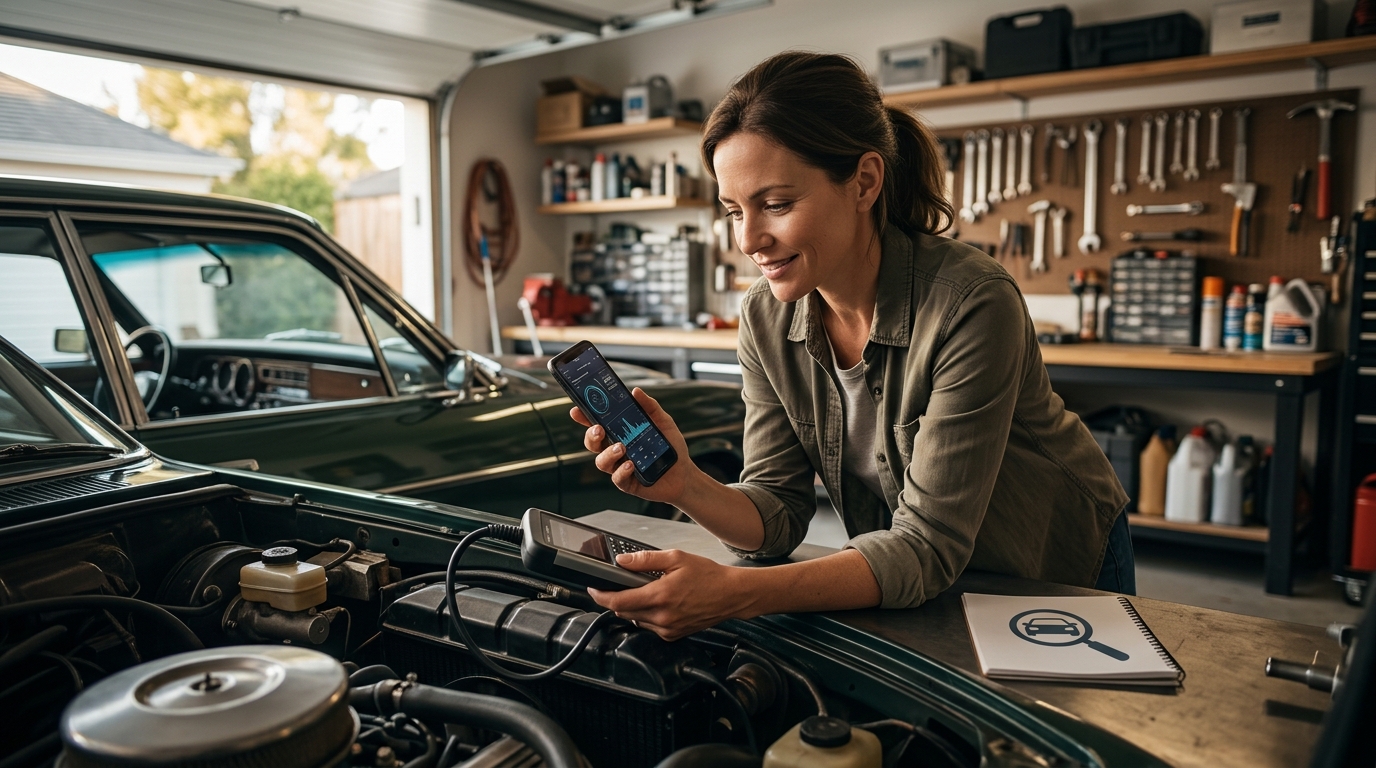
Modern vehicles generate massive amounts of data every time you drive. According to recent automotive industry reports, a single trip can produce over 25 gigabytes of diagnostic information. This data holds the key to identifying mechanical issues before they become catastrophic failures. You no longer need to rely solely on expensive shop visits for basic health checks. By leveraging onboard diagnostics and smart mobile applications, you can pinpoint problems accurately and save significant money on unnecessary repairs. (AutoUncover AI car diagnostics)
Understanding the OBD2 Port
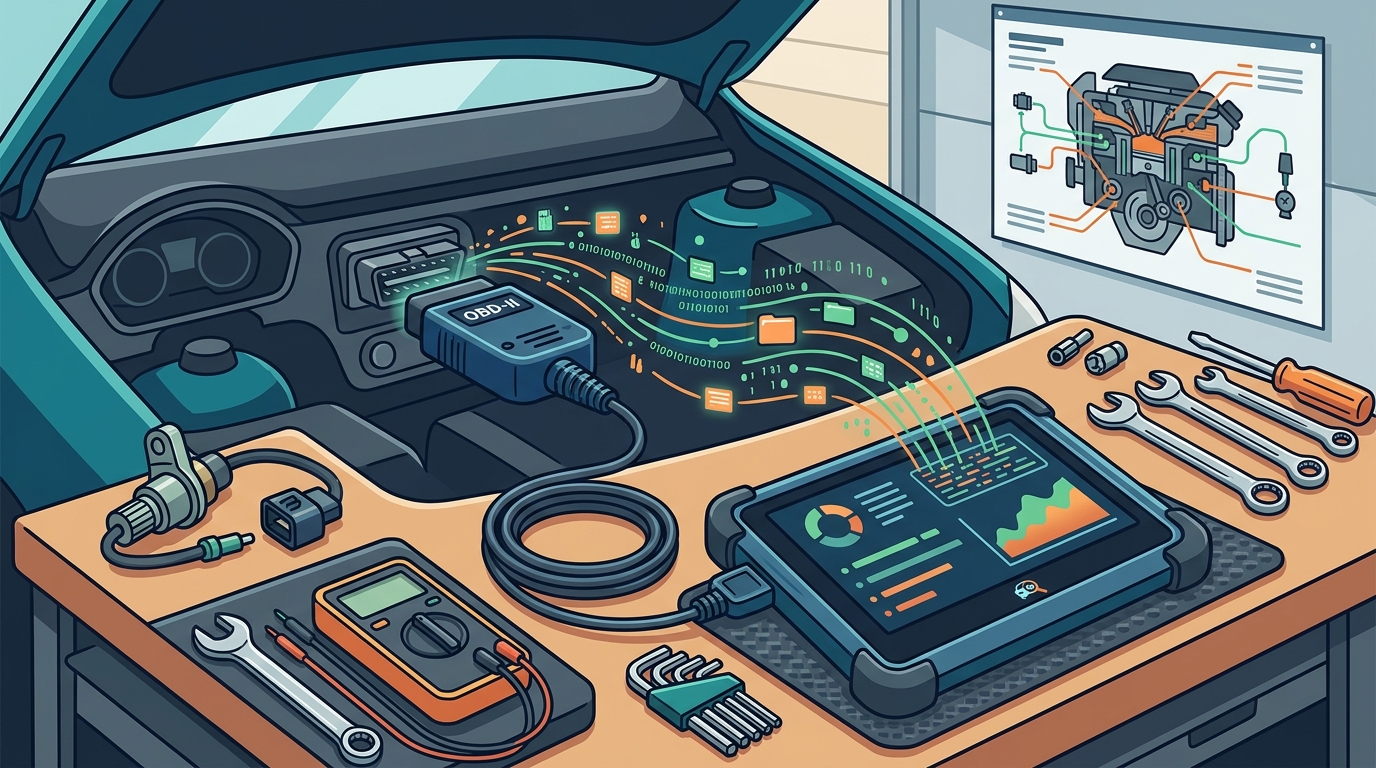
Every car manufactured after 1996 in the United States comes equipped with an On-Board Diagnostics II (OBD2) port. This standardized interface allows you to communicate directly with your vehicle's computer system. The port is typically located under the dashboard on the driver's side, near the steering column. It serves as the primary gateway for retrieving real-time sensor data and historical fault logs. (AutoUncover AI car diagnostics)
Accessing this port is the first step in any DIY diagnostic journey. You do not need specialized mechanical knowledge to plug in a reader. The system is designed to be user-friendly for both professionals and car owners. By connecting a compatible device, you unlock a wealth of information about engine performance, emission systems, and transmission health.
Essential Tools for DIY Diagnosis
Before you begin, you need the right hardware to translate digital codes into actionable insights. The market offers several tiers of diagnostic tools, ranging from basic code readers to advanced scan tools with live data streaming.
Basic OBD2 Code Readers
These entry-level devices are affordable and widely available at auto parts stores. They are sufficient for reading generic diagnostic trouble codes (DTCs) that trigger the check engine light. While they provide the basic code number, they often lack the depth needed for complex electrical or transmission issues.
Advanced Bluetooth/Wi-Fi Scanners
Modern diagnostics rely heavily on smartphone integration. Devices that connect via Bluetooth or Wi-Fi allow you to view live data streams on your mobile device. This capability is crucial for monitoring parameters like fuel trims, oxygen sensor voltages, and engine temperature in real time. These tools bridge the gap between professional equipment and consumer accessibility.
Professional Grade Scan Tools
For those serious about DIY repair, professional-grade tools offer access to manufacturer-specific codes and bi-directional controls. These tools can activate components like cooling fans or fuel pumps to test their functionality. They provide the most comprehensive data but come at a higher price point.
Step-by-Step Diagnostic Process
Performing a diagnosis requires a systematic approach to ensure accuracy. Follow these steps to safely and effectively identify your vehicle's issues.
Step 1: Locate and Connect
Find the OBD2 port under the dashboard. Plug in your scanner or Bluetooth adapter. Ensure your vehicle's ignition is in the "on" position without starting the engine. This powers the diagnostic interface and prepares the vehicle's computer for communication.
Step 2: Retrieve Stored Codes
Use your device to scan for stored diagnostic trouble codes. These codes are generated when the vehicle's computer detects a parameter outside its normal operating range. Write down each code exactly as it appears. Common codes include P0300 for random misfires or P0420 for catalytic converter efficiency.
Step 3: Clear and Re-test
After noting the codes, you can clear them to see if the check engine light returns. If the light comes back immediately or after a short drive, the issue is active and requires attention. If the light does not return, it may have been a transient error caused by temporary conditions like low fuel quality.
Step 4: Analyze Live Data
For more complex issues, monitor live data streams. Look for anomalies in sensor readings that correlate with your symptoms. For example, if your car is stalling, check the mass airflow sensor readings for erratic behavior. This step requires some research into normal operating ranges for your specific vehicle model.
Interpreting Diagnostic Trouble Codes
Understanding what the codes mean is critical for effective diagnosis. Diagnostic trouble codes follow a standardized format. The first character indicates the system, while the remaining characters specify the exact fault.
Codes starting with 'P' relate to powertrain issues, such as the engine and transmission. 'B' codes refer to body systems like airbags or power windows. 'C' codes cover chassis components like ABS and steering. 'U' codes indicate network communication errors between different vehicle modules.
Generic codes are universal across all manufacturers, while manufacturer-specific codes provide deeper insight into proprietary systems. Using a reliable database or app to decode these terms is essential. Never ignore a code, even if the car seems to drive normally. Early intervention can prevent minor issues from escalating into major repairs.
The Role of AI in Modern Diagnostics
Artificial intelligence is revolutionizing how car owners approach diagnostics. Traditional methods rely on the user to interpret codes and search for solutions. AI-powered platforms automate this process by analyzing data patterns and cross-referencing them with vast repair databases.
Platforms like AutoUncover utilize AI to verify diagnoses through real-world repair data. This ensures that the suggested fixes are not just theoretical but proven by actual mechanic experiences. AI can also predict potential future failures based on current sensor trends, allowing for proactive maintenance.
By integrating AI, you reduce the guesswork involved in DIY diagnosis. The technology provides a clearer path to resolution, saving time and reducing the risk of misdiagnosis. This shift makes professional-level insights accessible to everyday drivers.
Key Takeaways
- OBD2 Standardization: All cars post-1996 have a standardized diagnostic port, making DIY access universally possible.
- Data Volume: Modern vehicles generate gigabytes of data per trip, offering deep insights into vehicle health.
- Tool Tiers: Choose between basic code readers for simple lights or advanced Bluetooth scanners for live data analysis.
- Code Structure: Understand that 'P' codes relate to the powertrain, while 'B', 'C', and 'U' codes cover other systems.
- AI Verification: Use AI-driven platforms to cross-reference codes with verified repair outcomes for accuracy.
- Proactive Maintenance: Regular scanning prevents minor issues from becoming costly catastrophic failures.
- Cost Savings: DIY diagnosis can save hundreds of dollars in labor fees by identifying the exact problem before visiting a shop.
Frequently Asked Questions
Can I diagnose my car without any tools?
You can perform basic visual inspections and listen for unusual noises without tools. However, retrieving specific error codes requires at least a basic OBD2 scanner. Without a tool, you are limited to guessing based on symptoms alone.
How much does a good OBD2 scanner cost?
Basic code readers start around $20. Advanced Bluetooth scanners that connect to smartphones typically range from $30 to $100. Professional-grade tools can cost several hundred dollars. For most DIYers, a mid-range Bluetooth scanner offers the best value.
Is it safe to clear codes myself?
Clearing codes is safe and often the first step in diagnosis. It helps determine if an issue is persistent or transient. However, clearing codes without fixing the underlying problem will cause the check engine light to return once the computer re-runs its tests.
What is the difference between generic and manufacturer-specific codes?
Generic codes are standardized across all car brands and indicate general system failures. Manufacturer-specific codes are unique to certain brands and provide detailed information about proprietary systems. Advanced scanners are needed to read manufacturer-specific codes.
Can AI replace a mechanic entirely?
AI enhances diagnosis by providing accurate data and verified repair paths. However, it cannot physically perform repairs. AI serves as a powerful diagnostic assistant that empowers you to make informed decisions before visiting a professional.
How often should I scan my car?
It is recommended to scan your car whenever the check engine light illuminates. For proactive maintenance, scanning every six months or during routine service intervals can help identify developing issues before they trigger warning lights.
Do all cars have an OBD2 port?
Yes, all gasoline-powered vehicles sold in the United States after 1996 are required to have an OBD2 port. Diesel vehicles in the US have been required since 2004. European and other international standards may vary slightly but generally follow similar protocols.
Start Your Diagnosis Today
Taking control of your vehicle's health is easier than ever. You do not need to wait for a mechanic to tell you what is wrong. By using the right tools and leveraging AI verification, you can diagnose issues accurately and confidently. Visit AutoUncover to explore how AI-powered diagnostics can streamline your repair process. Connect your device today and gain the insights you need to keep your car running smoothly.